
Showing posts with label The Prairie has a Memory. Show all posts
Showing posts with label The Prairie has a Memory. Show all posts
Sunday, June 28, 2026

Saturday, June 6, 2026
Saturday, May 23, 2026
The Dome of the Prairie
The prairie has a memory and it echos like a dome. I first felt it when I was alone out here at night, in a pull camper, waiting. I'd sit at the table, the light from the sliding glass door created a halo of illumination that terminated at the long grass, where I perceived its rustling as large animals passing in the darkness.
The pre-Katrina nights out here I was afraid of the wilderness of this place. It was the camp. I was never sure how near or far I was from civilization. I stayed quietly in the camper, barely wanting to alert the prairie of my presence. But the Tuesday New Orleans flooded, like so many others, I fled north and took refuge in the prairie like no other place before. The long gravel road was my moat, the orb of light in the field around the camper became my world, the safest place in south Louisiana.
We planted the prairie edge with a ring of thousands of native trees: sweet gum, live oak, cypress, persimmon, pecan, mulberry etc., keeping the center pasture open in different rotations. The trees created a little wood where we maintained a path, and formed a semi-circle around the perimeter of the property. The higher the edge trees grew, the more my prairie view was obstructed, but also the more the birdsong echoed within the dome of the prairie. I sat at the base of the cypress tree and imagined the life I would lead here. Somewhere, floating in the air above the prairie ground were the rooms of a castle-home not yet built, where I would live blissfully, conceive and become a mother, raise my children, where I would birth this very blog and all of the notions in it, where I would deny myself the world for the protection of the prairie.
I became one with this place, instinctually returning all fertility to her ground. It's here where my children's nombrils are buried, under a live oak in the western yard. I ate the flowers and fruits and roots produced here. I gathered and made medicines daily. I made perfume oils and sprays of the prairie flowers and balms with the pine sap. I caught rainwater and collected dew on resonant days. In the late afternoons in fall, I could hear a faint rumble, like thunder, of the Beau Chene drum line echoing in the dome. The prairie remembered drums.
I settled into the natural law of this land. We grew and lost both plants and animals without getting too sentimental. We allowed nature to rule, even a little wildly. Out of this natural kingdom many realms were born in me. We planted gardens but I never had a green thumb. It was the native plants that resonated because they were not reliant on me, except for my understanding of them and their environment and my dedication to their growth and protection. As time when on plants like honeysuckle, chassepareille, elderflower and blackberry crowded themselves through every crack of the fence, waving wildly to be noticed, to be made of use, and I listened.
There was an unassuming charm here at prairie, an enchanted, forgotten country east of Opelousas. It was in the juxtaposition of her beauty and humility, of how she is treated now, and the dignity in the story of who she was before. She remembered the millennia of seasons, and despite the modern agriculture, the cutting and poisoning and the forgetting of the old ways and the old languages, the plants remembered the cycles and seeds still remained in the ground who, despite the loss of so much rhizome, also remembered how to grow, especially after a prairie burn.
There was information in the silence and the space that I lived in, the movements of the plants and animals, the sunrises and sunsets, the position the moon rose at different phases adn in relation to the cypress tree. Sometimes when the prairie sky domed around the edge trees I could feel the different birdsongs that echoed within this protectorate. Slowly I learned that language, too.
 |
| My red ballet flats with prairie dirt in the camper, 2004 |
 |
| Decorations of dog fennel and a bottle of red liquid we found in the house, room party 2004 |
 |
| Me and Paul in the orb, 2005 |
 |
| The camper and the room, summer 2005 |
 |
| the pull camper |
Thursday, May 21, 2026
Evangeline
"Beautiful is the land, with its prairies and forests of fruit-trees;
Under the feet a garden of flowers, and the bluest of heavens
Bending above, and resting its dome on the walls of the forest.
They who dwell there have named it the Eden of Louisiana.”
"

Fuller of fragrance than they, and as heavy with shadows and night-dews,
Hung the heart of the maiden. The calm and the magical moonlight
Seemed to inundate her soul with indefinable longing;
As, through the garden gate, and beneath the shade of the oak-trees,
Passed she along the path to the edge of the measureless prairie.
Silent it lay, with a silvery haze upon it, and fire-flies
Gleaming and floating away in mingled and infinite numbers.
Over her head the stars, the thoughts of God in the heavens,
Shone on the eyes of man who had ceased to marvel and worship,
Save when a blazing comet was seen on the walls of that temple,
As if a hand had appeared and written upon them, “Upharsin.”
And the soul of the maiden, between the stars and the fire-flies,
Wandered alone, and she cried,—“O Gabriel! O my beloved!
Art thou so near unto me, and yet I cannot behold thee?
Art thou so near unto me, and yet thy voice does not reach me?
Ah! how often thy feet have trod this path to the prairie!
Ah! how often thine eyes have looked on the woodlands around me!
Ah! how often beneath this oak, returning from labor,
Thou hast lain down to rest and to dream of me in thy slumbers!
When shall these eyes behold, these arms be folded about thee?”
Loud and sudden and near the note of a whippoorwill sounded
Like a flute in the woods; and anon, through the neighboring thickets,
Farther and farther away it floated and dropped into silence.
“Patience!” whispered the oaks from oracular caverns of darkness


Fuller of fragrance than they, and as heavy with shadows and night-dews,
Hung the heart of the maiden. The calm and the magical moonlight
Seemed to inundate her soul with indefinable longing;
As, through the garden gate, and beneath the shade of the oak-trees,
Passed she along the path to the edge of the measureless prairie.
Silent it lay, with a silvery haze upon it, and fire-flies
Gleaming and floating away in mingled and infinite numbers.
Over her head the stars, the thoughts of God in the heavens,
Shone on the eyes of man who had ceased to marvel and worship,
Save when a blazing comet was seen on the walls of that temple,
As if a hand had appeared and written upon them, “Upharsin.”
And the soul of the maiden, between the stars and the fire-flies,
Wandered alone, and she cried,—“O Gabriel! O my beloved!
Art thou so near unto me, and yet I cannot behold thee?
Art thou so near unto me, and yet thy voice does not reach me?
Ah! how often thy feet have trod this path to the prairie!
Ah! how often thine eyes have looked on the woodlands around me!
Ah! how often beneath this oak, returning from labor,
Thou hast lain down to rest and to dream of me in thy slumbers!
When shall these eyes behold, these arms be folded about thee?”
Loud and sudden and near the note of a whippoorwill sounded
Like a flute in the woods; and anon, through the neighboring thickets,
Farther and farther away it floated and dropped into silence.
“Patience!” whispered the oaks from oracular caverns of darkness
Longfellow, Evangeline
Wednesday, April 16, 2025
Wednesday, February 12, 2025
La Prairie a une Mémoire
The Prairie Has a Memory
Ashlee Wilson, 2024
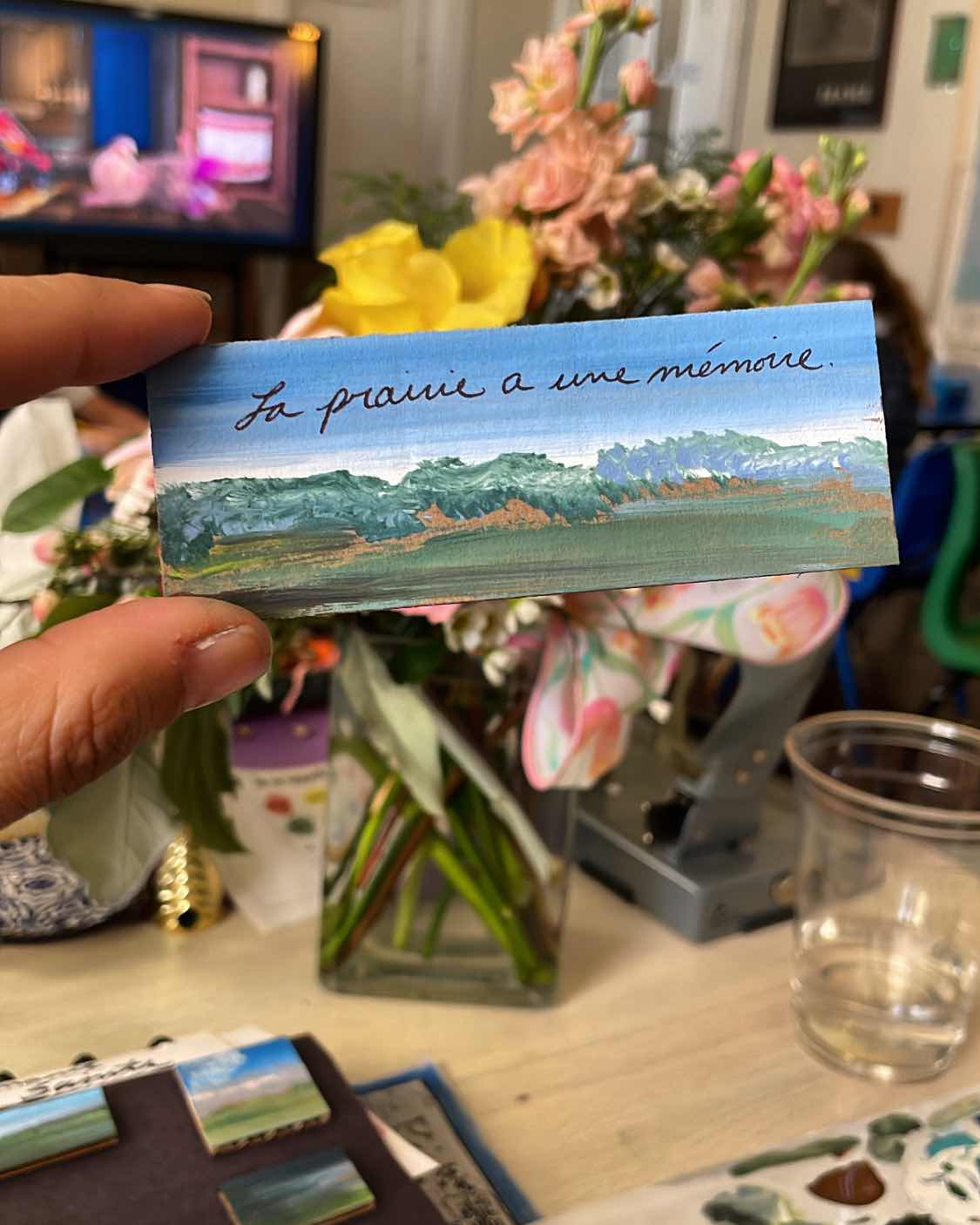
La prairie a une mémoire. The prairie has a memory.
The prairie has a memory. Places retain une souvenance of what was before. There is memory in the presence of the plants that remain, the seeds in the ground, and if we are present enough it is revealed. In our stewardship of this environment we are invited to remember. The indigenous tribes of Louisiana were masters at management practices such as prairie burning and worked with the seasons and cycles of the year to maximize productivity with minimal impact. In colonial times settlers traveled by ship across oceans and made linguistic parallels between the prairie landscape and the open sea. Despite the decline of this habitat, the prairie retains its memory and so do we.
The feminine imagery displayed across the Cajun Prairie in the form of Marian grottos is a visible symbol of our reverence for the feminine as well as the deeper indigenous matriarchy that permeates our cultural memory. Cultures over the world recognize water goddesses as protectoresses over long voyages. In South Louisiana perhaps the most visible of these is Our Lady of the Assumption, known in Acadian culture as the Maris Stella or Star of the Sea, but also in Yemayá, the Yoruba water goddess.
The prairie has an outer and inner life. On the visible outside the folklore is French, American, Cajun or Creole, but underneath the deep-rooted grasses there are native seeds, as well as sacred indigenous relics that remain. Research of the origin of the name Prairie des Femmes (Prairie of the Women) has led to the story of it being a place where indigenous women stayed when their men left. This research has also manifested on a personal level into a tangible reverence for the land and recognition of the fragility of the loss of not just the prairie soils, but also the stories and the languages that existed here.
My act of restoration for the prairie has been to inhabit the Prairie des Femmes and act as a scribe for her folklore as well as a steward by encouraging her native flora and fauna. One of the proofs of this work has been the appearance in my overworked sweet potato field of the native medicinal pseudognaphalium obtousifolium, fragrant rabbit tobacco, known locally as vinéraire (vulneraire). I found it by its fragrance in the back of my prairie in 2011, and in a similar way to the gathering of Prairie des Femmes origin stories, I have begun to share this medicine with locals who have memories and need of it.
Ashlee Wilson, a native of Ville Platte, Louisiana, is a teacher, artist, and self-taught Louisiana French speaker. She is widely recognized for her writing, photography, and visual journals documenting her journey in learning Louisiana French, as well as her work with native plants and folk herbalism. Ashlee created the Prairie des Femmes blog in 2012 to chronicle daily life on her historical prairie. She is also the author of The Plains of Mary (2014) and the Ô Malheureuse collection (2019, UL Press). She currently teaches French at the Academy of the Sacred Heart in Grand Coteau.
The Prairie Has a Memory pays homage to her home, La Prairie des Femmes, in St. Landry Parish. This historic prairie, documented in records from the mid- to late 18th century, lies near the boundaries of the Attakapas-Ishak and Opelousas territories, just east of the sacred hills of Grand Coteau. Once a sweet potato farm, the land has become a site of restoration under Ashlee’s care. For over 20 years, she and her family have cultivated native plants, reintroduced traditional land stewardship practices such as periodic burns, minimal mowing, and abstaining from chemical herbicides, all in an effort to restore the prairie’s natural balance and preserve its memory.
Sunday, September 8, 2024
The Protection of the Academy
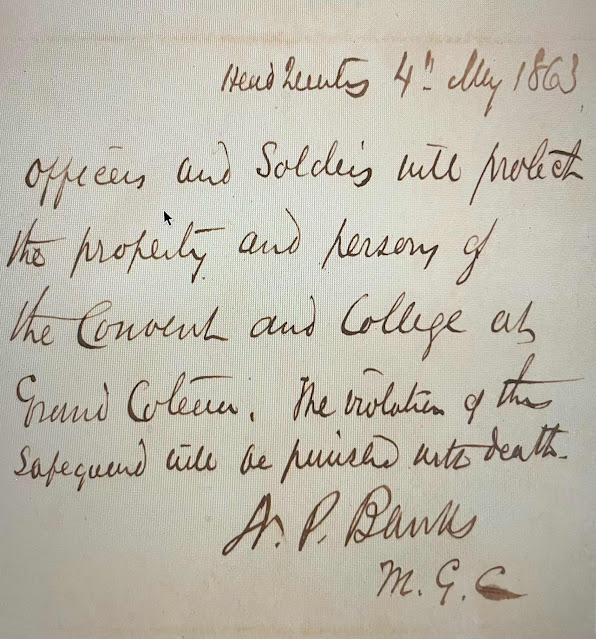
The Grand Coteau was high holy ground before the Jesuits settled it for Catholic formation of their religious and then the religious of the Sacred Heart. There is an oral history that says it was there native men went to fight with honor. At the westernmost ridge of the old Mississippi River, and near the tribal boundary of the Attakapas-Ishak and Opelousas, this seems plausible. The elevation alone made this land some of the finest and safest around. Grand Coteau is found at the uppermost limits of the Prairie Carencro, on land on the Teche Ridge that was also called Prairie des Grands Coteaux. Despite some overlap in orientation, both topographically and culturally, the Grand Coteau is singular and known as holy land in south Louisiana folklore.
The prairies, ridges, swamps and coves of south Louisiana overlap and interplay. The edges of the Prairie des Femmes have a liminal quality that matches her landscape and they mystery of the women's protection she provides. Grand Coteau is the high ridge directly east and adjacent to Prairie des Femmes, and the same stretch of Bayou Bourbeaux that acts as PDF's western limit also runs through the Academy of the Sacred Heart at Grand Coteau's realm, less than a half mile from the school. No place is closer to the Praire des Femmes both physically and spiritually, as Grand Coteau, as they share this history of being a mystical place of women's protection. The Academy is the second oldest institution of learning west of the Mississippi River and also the site of a shrine to Saint John Berchman, who appeared there to novice Mary Wilson and healed her through his intercession. This is the reason the Academy is the only place where a recognized miracle took place in North America. Today as I write, the shrine sits directly above my classroom.
The Academy served as a safe haven for women and children through the Civil War. The school was protected by the Union and instruction of the girls never ceased. Because of this protection, within the Sacred Heart, and also due to the communication of industrious women, it was not burned, and the Academy and town of Grand Coteau stand still in operation today.
The convent of the Sacred Heart was founded in Grand Coteau in 1821 by the Religious of the Sacred Heart and had five students that year. In 1861 the Civil War's skirmishes around Bayou Bourbeaux (Battle of Buzard's Prairie at Chretien Point and east along the bayou) were audible from the school and the nuns reported seeing the battle from the third floor gallery. They began to fear for the school and the girls' safety.
In 1862 General Nathaniel Prentice Banks became the commander of the Department of the Gulf. He and his wife Mary Theodosia Palmer Banks had a daughter in a Sacred Heart school at Manhattanville, New York.
The following is correspondence between Mother Jouve and General Banks concerning the protection of the Academy:
Notes from Reverend Mother Jouve, July 1864
Thanks to the protection of the generals, or rather to the Heart of Jesus, our property has been respected, and guards have been sent by the officers to protect us from the marauders who infest the area. For more than two months, we heard the noise of the cannons; some of the skirmishes took place on the road which leads to the convent, and from our gallery we were able to follow the phases of a real battle between the Confederate guerillas and the Federal troops.
In these moments of crisis, prayer was constantly our recourse, the Way of the Cross, adoration all day and the Holy Hour at night, the most exact practice of the Rule. Finally, the certitude that our Mothers and Sisters were praying for us, all combined to sustain our courage, and to help us to live through this time of trial with calm and confidence."
20 April 1863
To the Superior of the Convent of the Sacred Heart-
If you desire to send letters to New York, you will please forward them to me by the bearer who is instructed to wait for them. I send a safeguard that will protect your school from the stragglers in the rear of my column and if you desire it will leave a guard. I regret that I cannot call to see you. My daughter is with Madame Hardey at New York.
Mrs. Banks who visited the school but a short time since writes that all are well there.
I am respectfully your obt servant,
N.P. Banks
*Mary Aloysia Hardy ppt compiled by Caroline Richard 2020
The Union did not only protect the Academy with stationed guards, but provided the sisters and the girls food and bolts of fabric for new clothes. As far as oral histories of Prairie des Femmes go, the most available in the mind of the people is the one owes the name to the Civil War. Though the name is older than the war, and probably refers to some native wars also, I often wonder if reports of forts and extreme refuge found here rest in the power of the memory of the protection of the women and children of the Convent of the Sacred Heart at Grand Coteau under penalty of death.

Saturday, September 7, 2024
Our Lady is not Bound by Means: The Borders of Prairie des Femmes
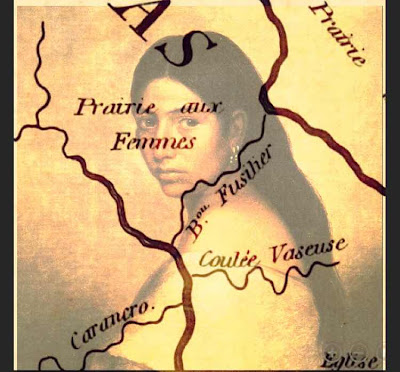
Prairie des Femmes is a small prairie found near the border of the Ishak and Oplousas territory, one of the earliest places found and settled within the colonial Poste des Opelousas. My research of this place has spanned 20 years and continues to grow in profondeur. Prairie des Femmes is a translation of the original Ishak, possibly Choctaw name. In keeping with this momentum, my goal is to find the indigenous name for this land. The possible approximation provided to me by Attakapas-Ishak scholar and poet Jeffery Darensbourg is Lōksh Keshíke, Prairie Women, in Ishak, but we can not know if the French that remains is a true translation of what was originally here, or their interpretation of what they found.
Our Lady is not bound by means but if we must give boundaries she is found at the triangulation of the villages of Grand Coteau to the west, Arnaudville to the east, and Leonville to the north. The historic community of Frozard (Olivier Plantation) is found within the southern boundary of Prairie des Femmes, at an intersection of the old native path we now call Hwy. 93 and Meche-Frozard roads, and extends south to the junction of Bayous Fuselier and Bourbeux. I often say that if Prairie des Femmes had a city or crossroads, it would be Frozard.
PDF is water-bound by an oxbow swamp to the north, Bayou Fuselier to the southeast, Bayou Bourbeaux to the north and west. There are at least two bridges in the interior prairie, one over the Bourbeaux at Hickory and one over La Coulee des Marks known as Marks Bridge at Jules LaGrange.
She is a prairillon among other larger prairies of Louisiana. To the north, in the back, and across the oxbow swamp is the native-Creole enclave of Prairie Laurent, also known as la Côte/l'anse des Mulates. To the northwest, la Prairie des Coteaux where Cypress Valley can be seen east of I49 at Opelousas. To the west of Prairie des Femmes is la Prairie des Grands Coteaux, and to the east, la Pointe Claire and la Prairie des Gros Chevreuils which touches the western levees of the Atchafalaya basin and encompasses Pecaniere. To the south is la Prairie Basse, aka Prairie de Manne (colonially Prairie de la Grosse Patate), with the greater Prairie Carencro further south.
Prairie des Femmes exists in an area congruent with the boundaries of the Attakapas-Ishak tribal lands and the Opelousas tribal lands and there is much evidence of earthworks, mounds, pottery, grindstones and spear points found here. There are pre-historic mound sites that connect to Poverty Point. Despite years of modern agriculture on the prairie, these features, as well as land-memory, persist and continue to reveal themselves.
Tuesday, June 25, 2024
Prairie des Femmes at Botanica
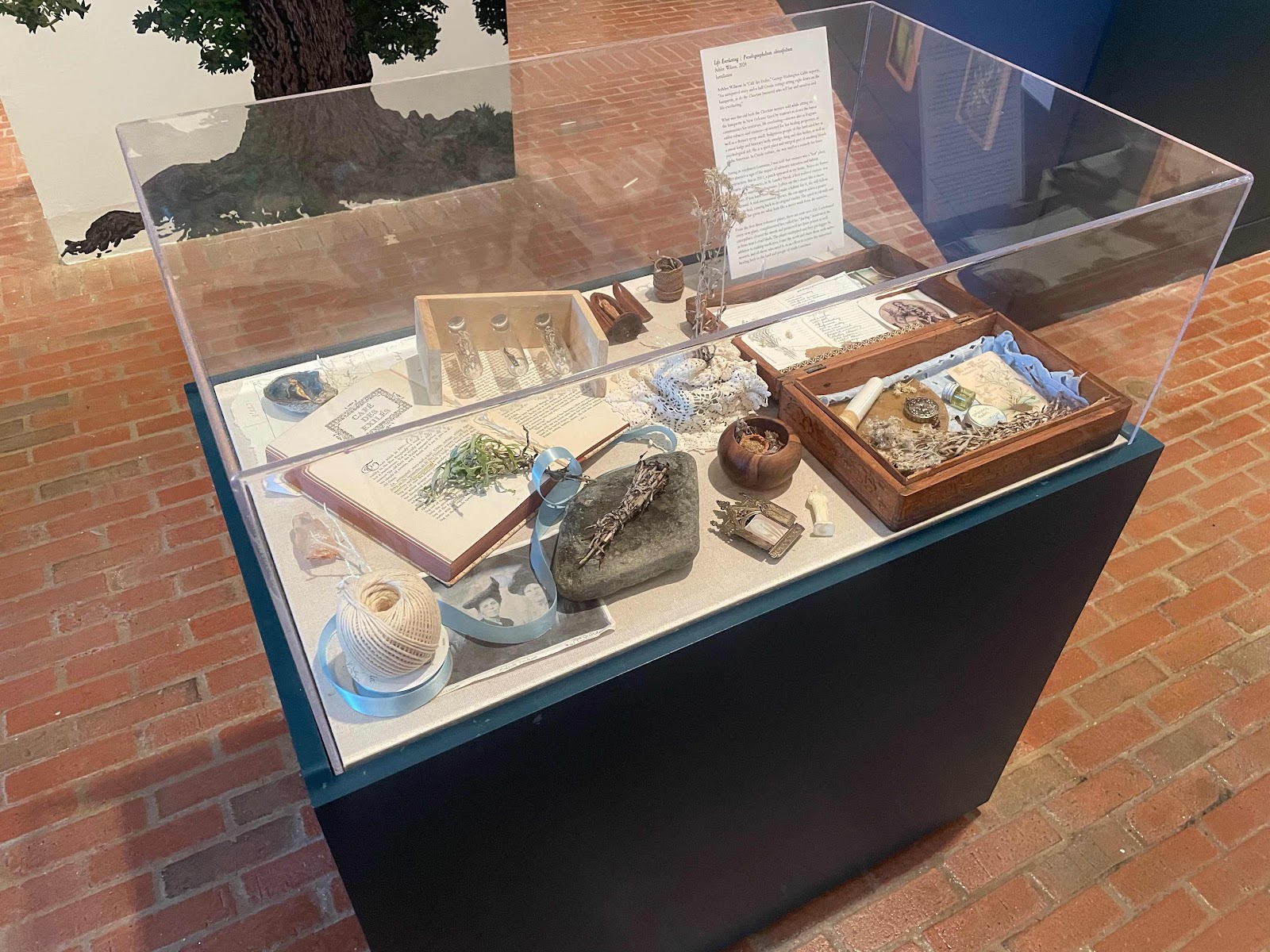
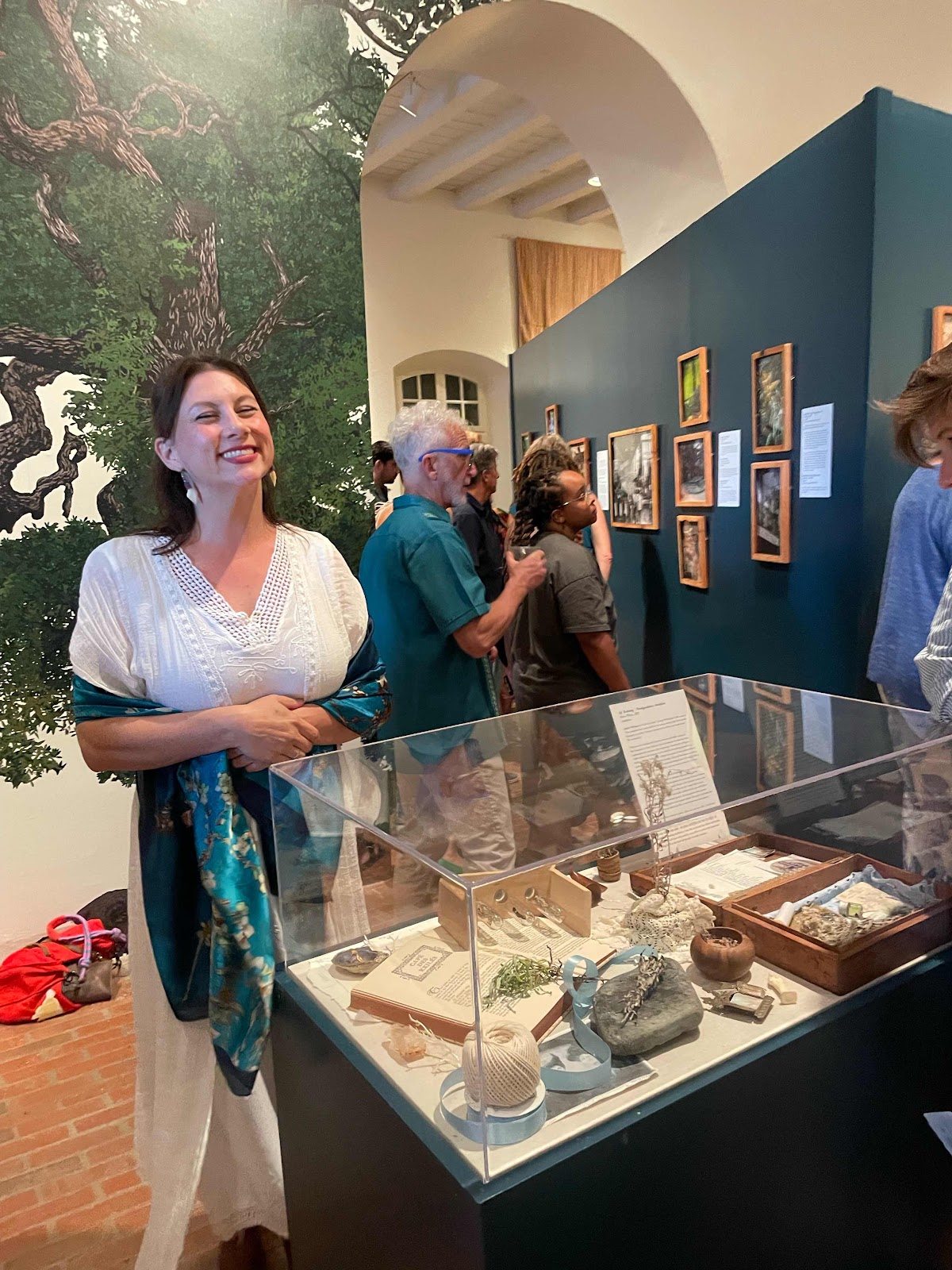
Life Everlasting | Pseudognaphalium obtusifolium
Ashlee Wilson, 2024
Installation
In "Café des Exiles," George Washington Cable reports,
"An antiquated story-and-a-half Creole cottage sitting right down on the banquette, as do the Choctaw (women) who sell bay and sassafras and life-everlasting."
What was this old herb the Choctaw women sold while sitting on the banquette in New Orleans? Used by traiteurs in down the bayou communities for centuries, life everlasting known also as fragrant rabbit tobacco and vinéraire is revered for her healing properties, as well as a distinct syrup smell. Indigenous people of this land used her as a sweat lodge and funerary herb, smudge, lung and skin healer, as well as psychological aid. She is a spirit plant and integral part of smoking blends of the Americas. In Creole culture, she was used as a remedy for fever.
Living in southwest Louisiana, I was told that vinéraire was a "lost" plant, her absence a sign of the impact of saltwater intrusion and habitat destruction. But in 2011, a patch appeared at my home, Prairie des Femmes (Prairie of the Women), in St. Landry Parish. I first realized vinéraire was growing by smelling its fragrance. I often say she's smart like a chaoui (racoon). If you leave food out and make a habitat for it, she will follow you around. A mid-successional species, she can appear when a prairie begins to heal, coming back to its original vitality. The quest to identify and grow her has given me what feels like a secret wink from the universe.
From the first three volunteer plants, there are now over 200. I celebrated every new plant, complimented her, called her "darling," manicured the caterpillars, cleared the weeds and protected her from poison as well as from man's cruel blade. The plants multiplied and they got bigger. In addition to making medicines, I save the seeds and share them with native women, and all those who need it, in an effort to return this important healing herb to the land and people of south Louisiana.
edited by Rachel Breunlin
The Prairie Has a Memory Ashlee Wilson, 2024
Ashlee Wilson is a Ville Platte native and self-taught Louisiana French speaker. She is a teacher and artist known for her writing, photography and visual journals that document her acquisition of Louisiana French, as well as native plants and folk herbalism. She is the creator of the Prairie des Femmes blog (2012), an online space that documents this historical prairie's daily life, as well as The Plains of Mary (2014) and the Ô Malheureuse collection (2019 UL Press). She teaches French at the Academy of the Sacred Heart at Grand Coteau.
The Prairie Has a Memory is an homage to her home, La Prairie des Femmes (Prairie of the Women), in St. Landry Parish. Found in records since the mid to late eighteenth century, the land is located in an area of high native traffic near the boundaries of the Attakapas-Ishak and Opelousas territories, just east of the sacred hills of Grand Coteau. A former sweet potato farm, for more than twenty years, Ashlee has cultivated plants and knowledge of the prairie with her family as an act of restoration- planting native species, and implementing a plan to minimally mow, periodically burn, and forgo poison on the land.



Wednesday, May 29, 2024
Part 9: The prairie has a memory.
Part 9:
Over the two years that I observed this plant I gained an ability to spot her and tell the difference between her and her cousin purple cudweed. In May of 2023 I had Amanda Lafleur, Bill Fontenot and Dr. Charles Ray Brassieur over for what we called a vineraire-coffee summit. I walked them out to the field to see one of the closest plants.
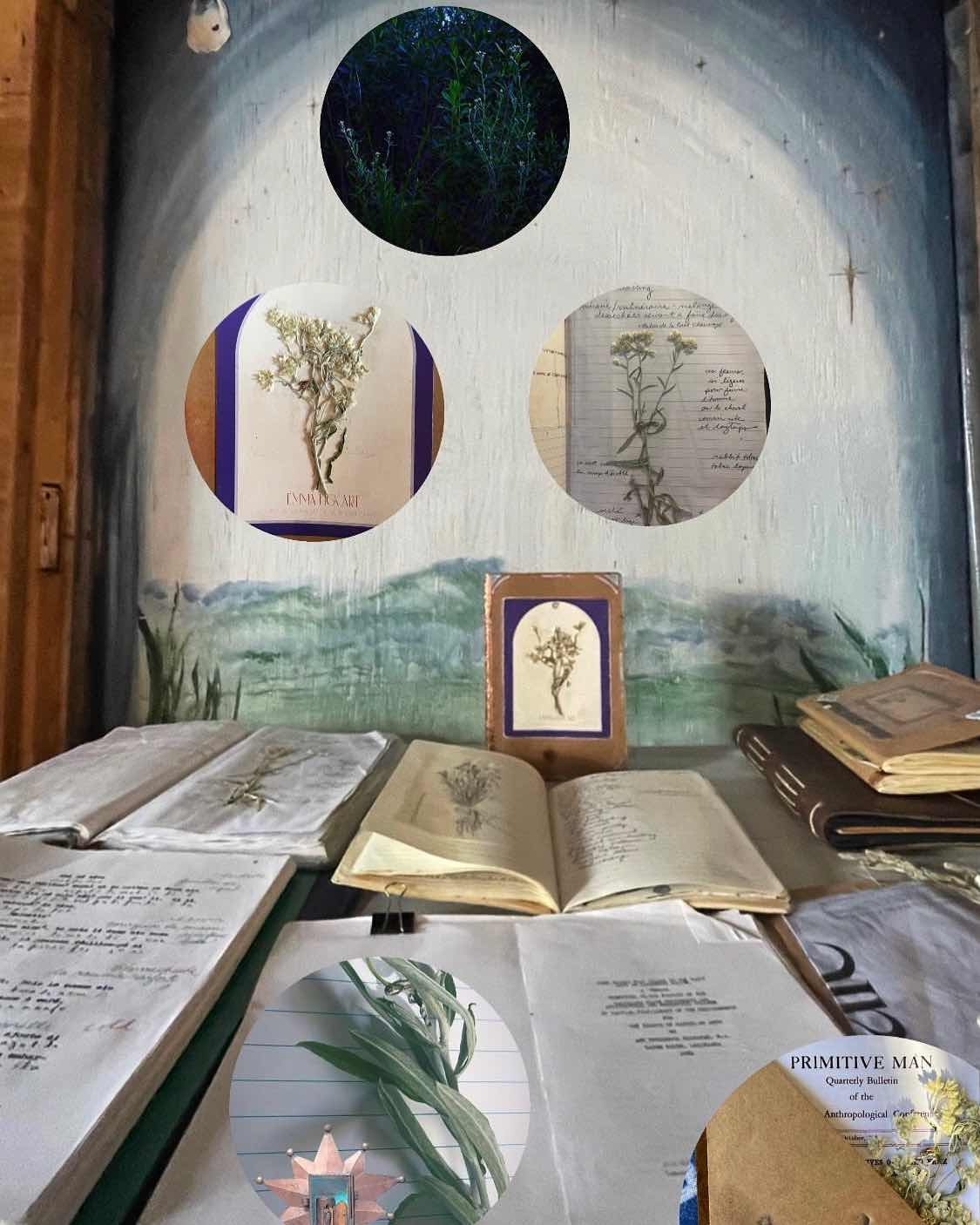
Since I had seen Dr. Allain last winter, every once in a while I would send him a new photograph of the plants. His photos on the USGS survey website were one of my main resources in identification, so we all knew his word was gospel. So finally on a particularly hot day in July I found 13 more plants in the overgrown coton jaune patch to the east side of the field. They were five times the size of the plants in the west yard. With that, I found the courage to call Dr. Allain, who lives 2 miles as the crow flies from me. I explained again what I had growing and encouraged him to come anytime to see the big plants. He was at my field within an hour.
As we walked around he told me that he was initially incredulous because he had never seen this plant just “growing in someone’s yard” like that. He said that it was a mid-successional species, and that they appear halfway to when the prairie habitat is “healed”, that is, back to its original vitality and biodiversity. I found some metaphor in this.
Although Prairie des Femmes is remote, she is hardly untouched. Dr. Allain said that this life everlasting can be found in some of the rehabilitated prairie habitats as well as prairie remnants, and as I understand, needs the biodiversity of the intact prairie soil and root system (never tilled for agriculture) to thrive. Although we are an old and somewhat insulated prairie close to the wild oxbow swamp to the north, our field was not a prairie remnant, but rather a fallow and overworked sweet potato field. In my opinion, this plant must have survived in our place not because it was pristine, but because of the way we managed the land, including planting native species, forgoing poison, minimal mowing and burning periodically.
So my field was not a prairie remnant but maybe the place where I found the first plant in 2011, in the far southwest corner of the yard, was rounded by the plow and retained some type of biodiversity needed for this plant to survive. Perhaps she came on the feet of some bird or deer, or in the fur of the coyotes who passed noisily in the field. Whatever it was, somehow this vineraire patch had survived here. The prairie has a memory.
When we went to the local neighborhood boucherie my neighbor Monique Verdin’s cousins from down the bayou were all there. I gave some of the rabbit tobacco to all the neighbors, Monique’s cousins, as well as her most matriarchal aunt who remembered it. That fall I was put in touch with Marlene Toups who called it the “lost herb” and said she had not seen it in 40 years down the bayou. When I hand delivered a bag to Mrs. Marlene at festivals Acadiens et Creoles, she smelled it and said, “you found it”. Mr. Clovis Billiot said that the salt water intrusion had “tout tue’ en bas”. Hurricane Hilda and Ida were the worst and the water stayed a long time inland, enough time to kill the tender medicinals. I gave the plant and beaucoup seed to Theresa Dardar as well as Janie Luster (or maybe I just called Ms. Janie and offered it).
I was also able to return a big bag to the Attakapas-Ishak tribe through their daughter Maaliyah Papillion, a Creole and Indigenous actress, singer, model, former Ms. Louisiana and third-generation healer. In return her father and uncle gave me information on the ceremonial blend rabbit tobacco was used in, as well as a spear point directly to my eldest son, who had escorted me there.
Saturday, October 4, 2014
Flint Shards at the Olivier Site
Research of the name Prairie des Femmes has pointed me to a particular field near my house, a big open field where milo and soybeans are rotated. It's been farmed for decades at least, but it sure is curious how the whole thing has been left open and otherwise undeveloped. As if there is memory there. It was brought to my attention that there is a slight elevation in the middle of this field that is a plowed Indian mound, possibly a site of the "village" of native women la Prairie des Femmes is named for.
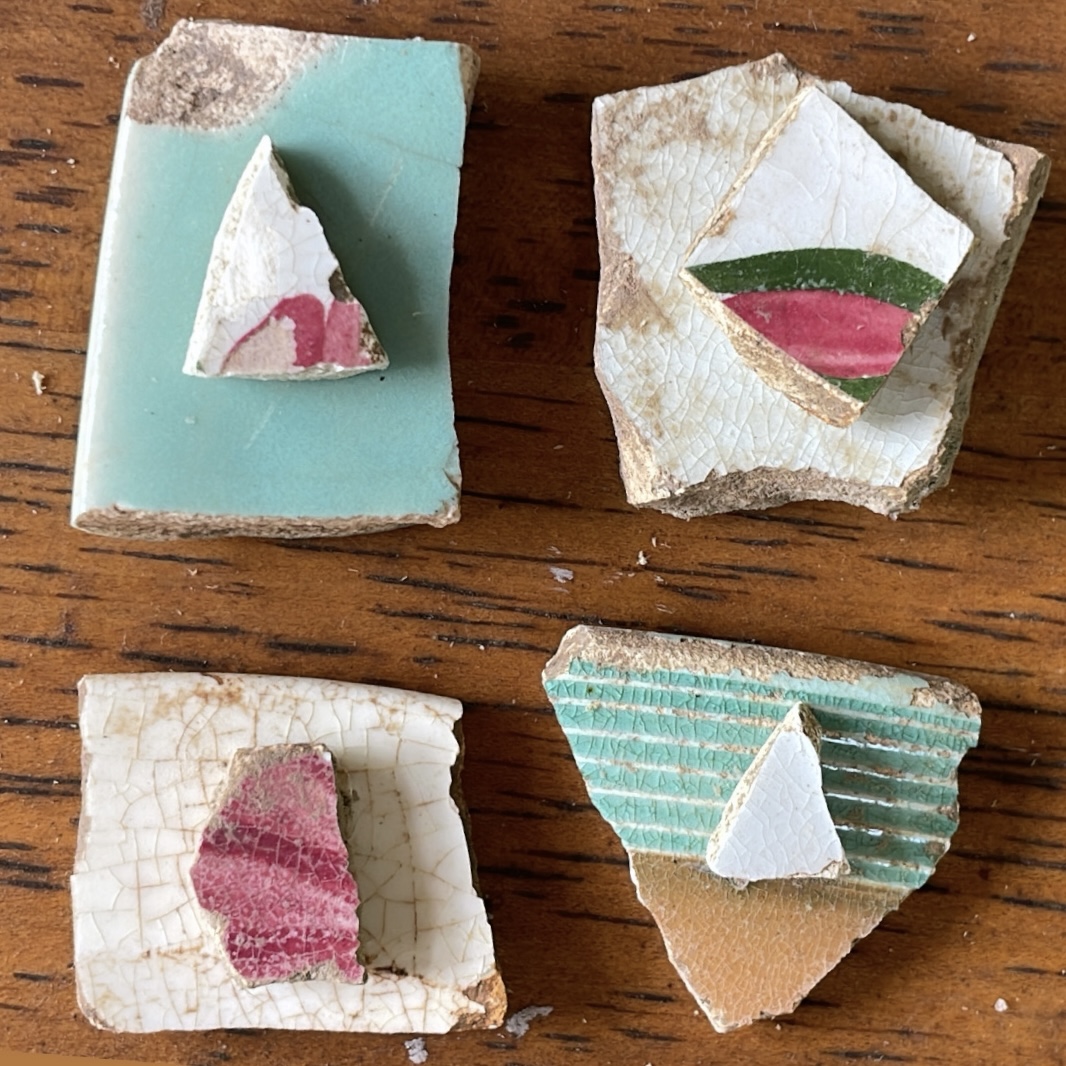
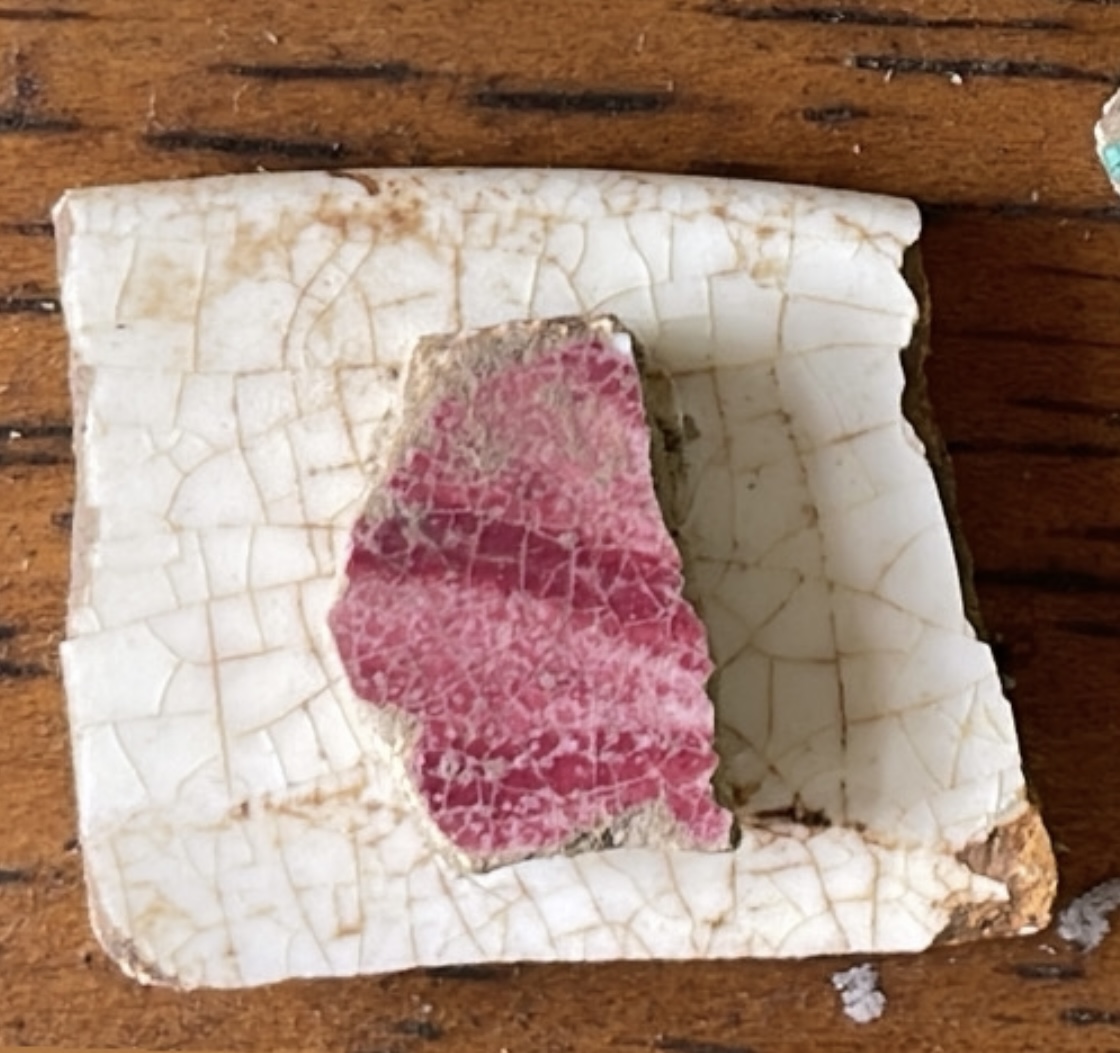
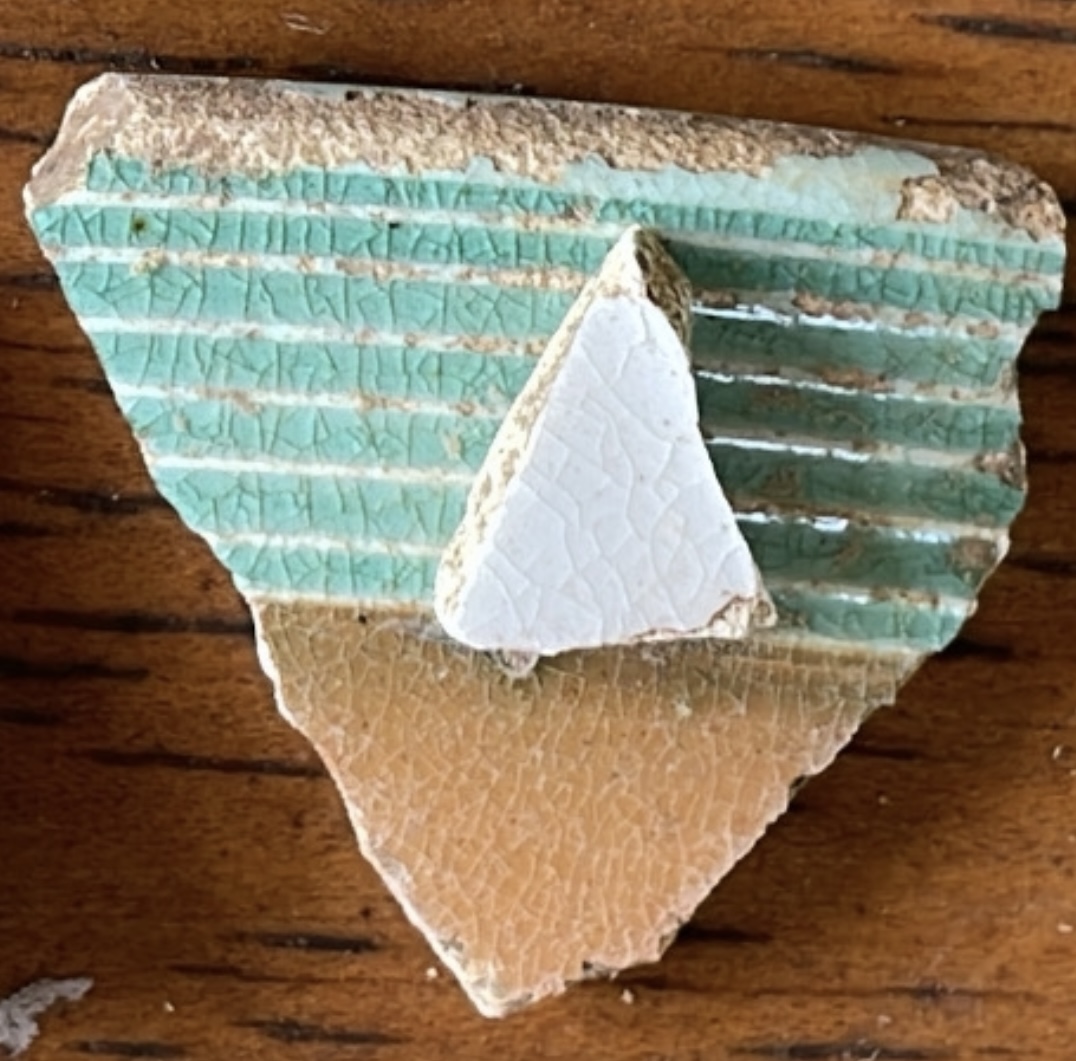
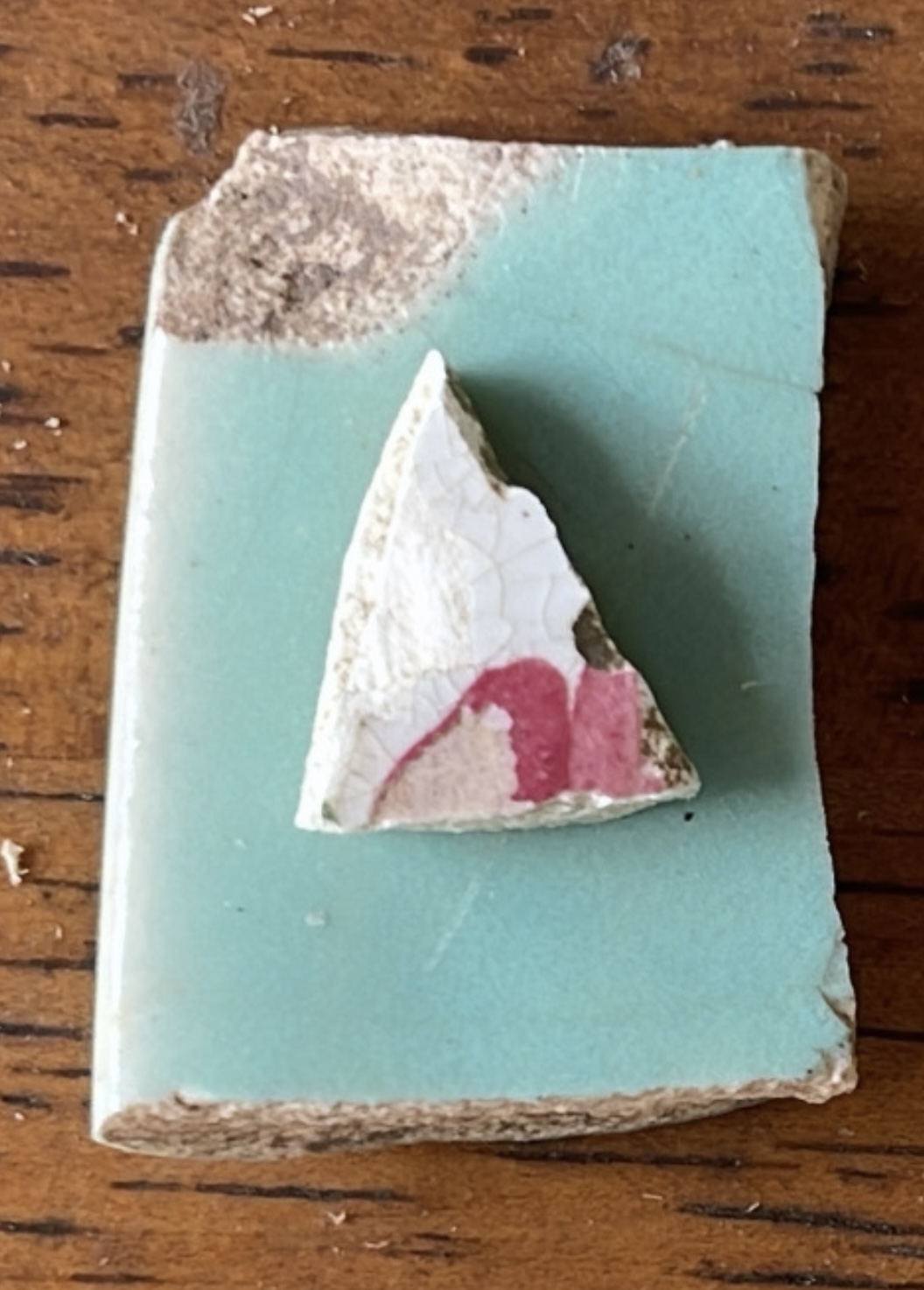
After I found out about the location, I took every chance to pass by this field, in complete awe, seeing at different times of year how the grain undulated out toward the center. You couldn't see it at certain angles, but there is surely a mound out there, even though it has been plowed hundreds of times. I would idle down the dirt road that skirts the south side, I would even stop sometimes just to look and maybe take a picture when the rise was visible, but I never dared to go out into the site until I talked to a neighbor who encouraged me to go, saying that no one would protest my presence there. So I waited for them to plow, and it's as if I felt it when they did; I had a hunch. Sure enough, it was bare dirt, the mound like a long still wave out there. I went. I was woozy to be out there on that sacred ground. But I was too focused on my children and every crunch of gravel from the road to concentrate. I did feel that place, though. I took the clods of dirt in my hands and let them break to the ground. I looked out across the land, purple in sunset, to watch a lone starling flit around, or, to jump, startled by the wind's song in a surviving stalk, or the buzz of an insect, the call of the killdeer. But the field was dusty and coarsely plowed. I needed a big rain to wash it all down and reveal what was underneath. I took a clod of dirt from the apex and went home, happy. I waited a day, and as if on cue, the first cool front of the season came, hand in hand with the opening of squirrel weekend. The front had woken me up at dawn with the thought of arrowhead hunting. The cool snap had everyone out and feeling good. Harvest and the scent of fires were in the air. The moon waxed past half, and I took the chance to go back to the site. This time, the rain had smoothed things out, but the mud was so sticky it felt like I was hauling ten pound boots across the expanse, and my children were covered. We settled on collecting a bag of the biggest and sweetest pecans I have ever found which were falling from the nearest tree to the mound, and even picked up a few pieces of white ceramic from the mud before going home to hose off.
When I told my neighbor that I'd found no artifacts, just big pecans after the rain he said, well you must be lookin with ya eyes closed! I know for a fact that there are shards all over that north side, right over the hump... that field is full of shards.
Well, novice as I was at all this, I didn't know what a shard was, I was looking for arrowheads! I anxiously went back anyway that evening, after the field had dried a little more. This would be the time, I knew it. I knew where to go, I had appeased (or at least tried to appease) the ancestors. Third time's the charm, I said. I started scanning the northside of the mound. The north wind blew through the good pecan tree so loudly it broke my concentration, and there were squirrel hunters in the woods to both sides of the site, their lone shots ringing every few minutes, also breaking the calm of my mud scanning. I felt like I had been training for this my whole life, though, as I normally scan the ground for things (like rocks and snakes), and have found treasures in the dirt (the first was a tiny, ornate key in the compact dirt of the neighbor's dooryard) since I was young. Still not seeing anything in the mud, I began picking up anything that seemed out of sorts, anything hard, not mud or vegetation, and put it in my pocket. Then I saw a little rock... hmmm, it was flat and white and seemed insignificant, a chip. I felt it between my fingers before hastily dropping it behind my back... just as I was bending over and saw two more in front of me. Shards, I thought. I began picking them up. This is the place. They were not densely scattered, but by the time I left, I had a pocketful of strangely shaped rocks, two smooth white marbles that reminded me of the full moon and a planet, white ceramic pieces, and twenty small, very sharp flint shards from arrowhead making at the site. They are all in pastels, sharp as shark's teeth, like jagged wampum, each one impossibly thin and complex. Their texture is so foreign to me, so unlike what I usually find in Louisiana mud, it is old, old rock, traded and chipped centuries, even millennia ago. I now keep the colorful assortment together in a small ceramic dish, examining their elegant shapes and qualities with my fingertips. I find I like their vibration so much when they are stirred, their dry rasp, it's so quiet it's almost like a whipser.

After I found out about the location, I took every chance to pass by this field, in complete awe, seeing at different times of year how the grain undulated out toward the center. You couldn't see it at certain angles, but there is surely a mound out there, even though it has been plowed hundreds of times. I would idle down the dirt road that skirts the south side, I would even stop sometimes just to look and maybe take a picture when the rise was visible, but I never dared to go out into the site until I talked to a neighbor who encouraged me to go, saying that no one would protest my presence there. So I waited for them to plow, and it's as if I felt it when they did; I had a hunch. Sure enough, it was bare dirt, the mound like a long still wave out there. I went. I was woozy to be out there on that sacred ground. But I was too focused on my children and every crunch of gravel from the road to concentrate. I did feel that place, though. I took the clods of dirt in my hands and let them break to the ground. I looked out across the land, purple in sunset, to watch a lone starling flit around, or, to jump, startled by the wind's song in a surviving stalk, or the buzz of an insect, the call of the killdeer. But the field was dusty and coarsely plowed. I needed a big rain to wash it all down and reveal what was underneath. I took a clod of dirt from the apex and went home, happy. I waited a day, and as if on cue, the first cool front of the season came, hand in hand with the opening of squirrel weekend. The front had woken me up at dawn with the thought of arrowhead hunting. The cool snap had everyone out and feeling good. Harvest and the scent of fires were in the air. The moon waxed past half, and I took the chance to go back to the site. This time, the rain had smoothed things out, but the mud was so sticky it felt like I was hauling ten pound boots across the expanse, and my children were covered. We settled on collecting a bag of the biggest and sweetest pecans I have ever found which were falling from the nearest tree to the mound, and even picked up a few pieces of white ceramic from the mud before going home to hose off.
When I told my neighbor that I'd found no artifacts, just big pecans after the rain he said, well you must be lookin with ya eyes closed! I know for a fact that there are shards all over that north side, right over the hump... that field is full of shards.
Well, novice as I was at all this, I didn't know what a shard was, I was looking for arrowheads! I anxiously went back anyway that evening, after the field had dried a little more. This would be the time, I knew it. I knew where to go, I had appeased (or at least tried to appease) the ancestors. Third time's the charm, I said. I started scanning the northside of the mound. The north wind blew through the good pecan tree so loudly it broke my concentration, and there were squirrel hunters in the woods to both sides of the site, their lone shots ringing every few minutes, also breaking the calm of my mud scanning. I felt like I had been training for this my whole life, though, as I normally scan the ground for things (like rocks and snakes), and have found treasures in the dirt (the first was a tiny, ornate key in the compact dirt of the neighbor's dooryard) since I was young. Still not seeing anything in the mud, I began picking up anything that seemed out of sorts, anything hard, not mud or vegetation, and put it in my pocket. Then I saw a little rock... hmmm, it was flat and white and seemed insignificant, a chip. I felt it between my fingers before hastily dropping it behind my back... just as I was bending over and saw two more in front of me. Shards, I thought. I began picking them up. This is the place. They were not densely scattered, but by the time I left, I had a pocketful of strangely shaped rocks, two smooth white marbles that reminded me of the full moon and a planet, white ceramic pieces, and twenty small, very sharp flint shards from arrowhead making at the site. They are all in pastels, sharp as shark's teeth, like jagged wampum, each one impossibly thin and complex. Their texture is so foreign to me, so unlike what I usually find in Louisiana mud, it is old, old rock, traded and chipped centuries, even millennia ago. I now keep the colorful assortment together in a small ceramic dish, examining their elegant shapes and qualities with my fingertips. I find I like their vibration so much when they are stirred, their dry rasp, it's so quiet it's almost like a whipser.
Subscribe to:
Posts
(
Atom
)