
Showing posts with label Femmes. Show all posts
Showing posts with label Femmes. Show all posts
Monday, August 24, 2026

Sunday, August 2, 2026
Mi'kmaw Shamanism and the Sacred Approach

But perhaps the most interesting of Micmac magical herbs is
that known as mededeskooi, or, as the Micmacs translate it, "rattling plant," because its three leaves strike each other constantly
with a sound like that of the rattlesnake. I have not been able
to identify the plant, nor can I positively assert that it really exists.
I have met but one Micmac who claimed to have seen it, and generally the Micmacs are reluctant to talk about it, because of its
highly mystical associations. But it is certainly strongly suggestive of the pasaw, or rattlesnake root, of the Creeks, already referred
to, which occupies the same preeminence, and gives its name to the
whole magic decoction used at initiations.1 The Micmacs describe
the plant as resembling the wild turnip. It stands about knee
high, with leaves about eight inches long, like those of the poplar. Its root is the size of one's fist, and the stalk is surrounded by numerous brownish yellow balls as large as buckshot. Others
describe the plant as being much smaller. Stephen Bartlett, who
thinks he saw the plant, buried some of the yellow balls, but next
morning they and the plant had disappeared. As Stephen admits,
however, that he did not go through any of the ceremonies necessary in approaching the plant, he is considered a doubtful authority,
even by himself.
To find the plant, one must first hear the bird
called cooasoonech ("dwelling in old logs") singing in an interval in the forest, otherwise the plant is invisible. This bird is brown
and very small, but is chosen chief of all the birds because he is
quickest and can hide in the smallest holes. He is sometimes called booöin, "the magician," from his aptitude for quick disappearance,
and his ability to fly through fire without being injured. When he
sings, one should follow him at once, although, like the mystic songster known in Yucatan, he often leads one on and on through the
forest depths, leaving him at last lost and forlorn. But the fortunate
6ne will at length hear the rattling leaves of the magic plant as he
approaches it, and then the plant itself will soon be seen. He must
now gather thirty sticks and lay them in a pile near the plant. Next
he must induce a girl, the more beautiful the better, to accompany
him to the plant. Under circumstances of the greatest temptation,
both must have no wish save to obtain the medicine or the plant will
disappear. They must approach it crawling on hands and knees.
Now the plant is inhabited by the spirit of a rattlesnake, which
comes forth as they near the plant, and circles around it.1 The man
must pick up the serpent, which will then disappear without harming
him. These tests of perseverance, self-control, and courage are all
I have heard, but there may be others. The plant must be divided
in four portions, of which three may be taken, but one must be
left standing. The three parts are scraped and steeped and a portion worn about the person. Some say that, divided in seven parts,
this medicine will cure seven diseases, but the great majority
believe that it will cure any disease and gratify any wish. It is
held to be especially potent as a love-compeller. No woman can
resist it. If the possessor wills it, she will follow him until he
breaks the spell by touching her. This attribute is held also by
the "seven-hued lilies of Te-net-sa-li," already referred to, and by
the flowers of the goddess Xochiquetzal in Mexico, the touch of
which produced everlasting love. It may be worthy of notice that
the mnededeskoo' is a trefoil plant. Many instances of its power over women are related as occurring recently, and for this and other reasons I am told the Micmacs strongly deprecate the knowledge and use of it. If the circumstances of these stories suggest some knowledge of hypnotism amongst them, I simply state the fact. Personally I have not yet seen any evidence of such power there. The rattlesnake which accompanies the plant brings it at once into touch with the mysteries in all parts of the globe. The same species is associated by the Micmacs with a dance which they used to perform only at night. This dance was mystical in a marked degree, and was connected with the Pleiades.
Stansbury Hagar
1 Is it a mere verbal coincidence which connects this plant with the Piasa (pro- nounced piasaw), the winged serpent of Illinois described by McA
1 Hernandez, physician of Philip
II., quoted by Brasseur, states that the Mexicans used an herb called ololiuhqui or serpent plant when they wished to consult
with their gods. By means of it they were enabled to behold a thousand visions
and the forms of hovering demon
Tuesday, June 23, 2026


Tuesday, June 9, 2026
Friday, June 5, 2026
Saturday, April 11, 2026
Tuesday, March 31, 2026
Wednesday, January 14, 2026
Wednesday, March 12, 2025
I ain't worried bout Josephine
Lafayette Louisiana's group Da Entourage (The Entourage, also in Creole: the wall) came out with the regional hit The Bunnyhop in the 1990s. Da Entourage was formed by cousins Toemas (Griffin) and Alley Cat (Zeno), and their childhood friend Bunny B. (Brown).
When I hear this song I can't help but notice the hyper-local French Creole feel of the use of the name Josephine in the lyrics:
I'm so glad I got my own/I ain't worried bout Josephine
My life's a natural high/C'mon and bunny hop with me.
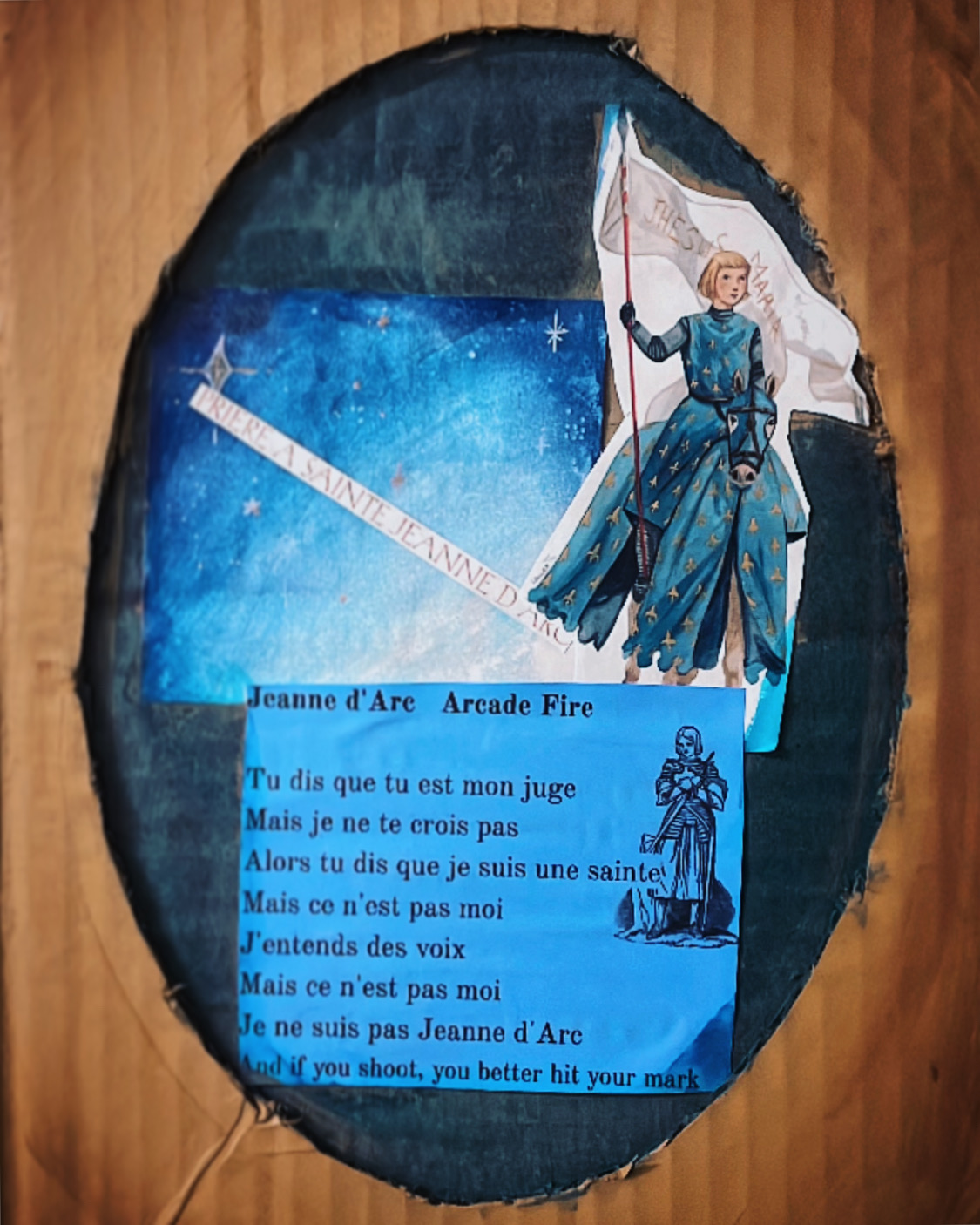
Martiniquaise Josephine Bonaparte, married to Emperor Napoleon, is perhaps the most famous owner of the name in the French Creole world, but as a Louisiana Cajun/Creole musician and writer, I can't help but feel the idea of this woman Josephine has trickled down from the echos of our popular music's past and into the Lafayette hip-hop scene. Something about the lyric "Josephine c'est pas ma femme" is giving the same energy as "I ain't worried 'bout Josephine."
Here I'll list as many songs as I can that mention Josephine in Cajun or Creole music.
La Valse de Josephine by Leo Soileau and Sadie Courville
Malheureuse, mais 'garde la bas la 'tite poussière, chère, de ti neg qui s'en vient, ti-galop chez Josephine.
Unhappy woman, look over there the little dust, dear, of your man who's coming at a cantor from Josephine's house.
My Josephine Hackberry Ramblers
Josephine oh my Josephine, t'es une jolie 'tite fille/Josephine, ma Josephine tu connais tu me fais m'ennuyer/ Tu m'as dit qu tu m'aimais/ Mais moi j'connais ça c'est pas vrai. Ma Josephine.
Josephine, oh my Josephine, you are a pretty little girl/ Josephine my Josephine you know you make me lonely/ You told me that you loved me/ But I know that's not true/ My Josephine
Josephine c'est pas ma femme by Clifton Chenier (Queen Ida/Fatz Domino)
Bon Dieu connait/Josephine c'est pas ma femme. O Nonc Helaire/ Josephine c'est pas ma femme.
The Good Lord knows, Josephine's not my wife. Oh Uncle Helaire/ Josephine's not my wife.
Hello Josephine Keith Frank
Hello Josephine/ well how do you do/ do you remember me my baby?? Like I remember you/ You used to drive your car/ through the drive-in window.
Sunday, September 8, 2024
The Protection of the Academy
The Grand Coteau was high holy ground before the Jesuits settled it for Catholic formation of their religious and then the religious of the Sacred Heart. There is an oral history that says it was there native men went to fight with honor. At the westernmost ridge of the old Mississippi River, and near the tribal boundary of the Attakapas-Ishak and Opelousas, this seems plausible. The elevation alone made this land some of the finest and safest around. Grand Coteau is found at the uppermost limits of the Prairie Carencro, on land on the Teche Ridge that was also called Prairie des Grands Coteaux. Despite some overlap in orientation, both topographically and culturally, the Grand Coteau is singular and known as holy land in south Louisiana folklore.
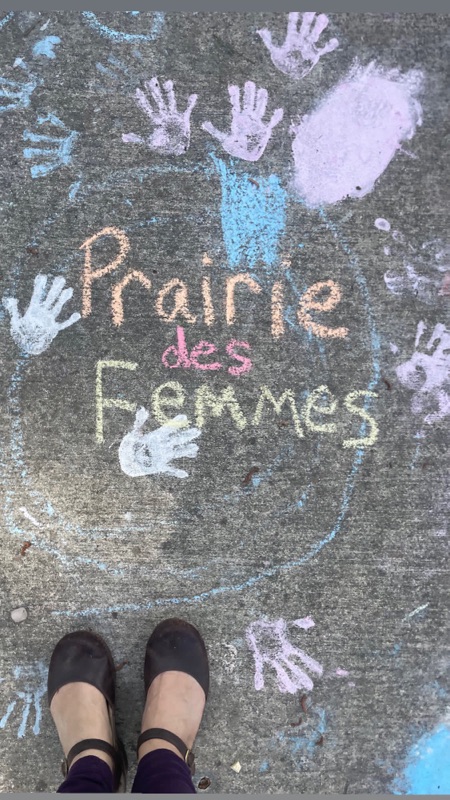
The prairies, ridges, swamps and coves of south Louisiana overlap and interplay. The edges of the Prairie des Femmes have a liminal quality that matches her landscape and they mystery of the women's protection she provides. Grand Coteau is the high ridge directly east and adjacent to Prairie des Femmes, and the same stretch of Bayou Bourbeaux that acts as PDF's western limit also runs through the Academy of the Sacred Heart at Grand Coteau's realm, less than a half mile from the school. No place is closer to the Praire des Femmes both physically and spiritually, as Grand Coteau, as they share this history of being a mystical place of women's protection. The Academy is the second oldest institution of learning west of the Mississippi River and also the site of a shrine to Saint John Berchman, who appeared there to novice Mary Wilson and healed her through his intercession. This is the reason the Academy is the only place where a recognized miracle took place in North America. Today as I write, the shrine sits directly above my classroom.
The Academy served as a safe haven for women and children through the Civil War. The school was protected by the Union and instruction of the girls never ceased. Because of this protection, within the Sacred Heart, and also due to the communication of industrious women, it was not burned, and the Academy and town of Grand Coteau stand still in operation today.
The convent of the Sacred Heart was founded in Grand Coteau in 1821 by the Religious of the Sacred Heart and had five students that year. In 1861 the Civil War's skirmishes around Bayou Bourbeaux (Battle of Buzard's Prairie at Chretien Point and east along the bayou) were audible from the school and the nuns reported seeing the battle from the third floor gallery. They began to fear for the school and the girls' safety.
In 1862 General Nathaniel Prentice Banks became the commander of the Department of the Gulf. He and his wife Mary Theodosia Palmer Banks had a daughter in a Sacred Heart school at Manhattanville, New York.
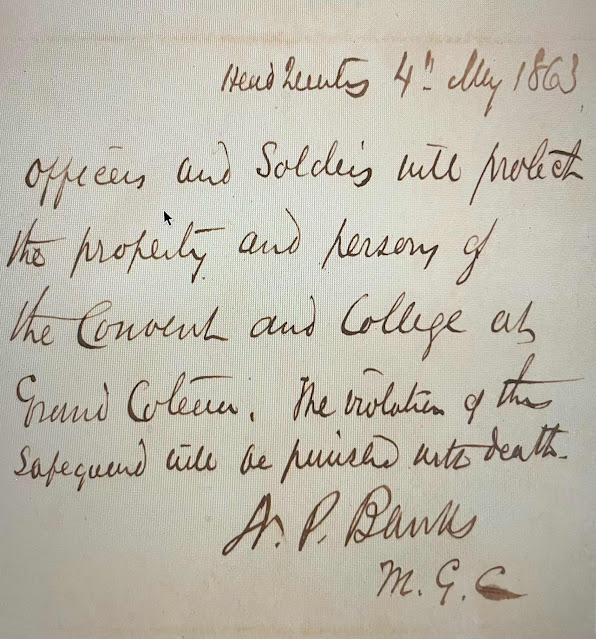
The following is correspondence between Mother Jouve and General Banks concerning the protection of the Academy:
Notes from Reverend Mother Jouve, July 1864
Thanks to the protection of the generals, or rather to the Heart of Jesus, our property has been respected, and guards have been sent by the officers to protect us from the marauders who infest the area. For more than two months, we heard the noise of the cannons; some of the skirmishes took place on the road which leads to the convent, and from our gallery we were able to follow the phases of a real battle between the Confederate guerillas and the Federal troops.
In these moments of crisis, prayer was constantly our recourse, the Way of the Cross, adoration all day and the Holy Hour at night, the most exact practice of the Rule. Finally, the certitude that our Mothers and Sisters were praying for us, all combined to sustain our courage, and to help us to live through this time of trial with calm and confidence."
20 April 1863
To the Superior of the Convent of the Sacred Heart-
If you desire to send letters to New York, you will please forward them to me by the bearer who is instructed to wait for them. I send a safeguard that will protect your school from the stragglers in the rear of my column and if you desire it will leave a guard. I regret that I cannot call to see you. My daughter is with Madame Hardey at New York.
Mrs. Banks who visited the school but a short time since writes that all are well there.
I am respectfully your obt servant,
N.P. Banks
*Mary Aloysia Hardy ppt compiled by Caroline Richard 2020
The Union did not only protect the Academy with stationed guards, but provided the sisters and the girls food and bolts of fabric for new clothes. As far as oral histories of Prairie des Femmes go, the most available in the mind of the people is the one owes the name to the Civil War. Though the name is older than the war, and probably refers to some native wars also, I often wonder if reports of forts and extreme refuge found here rest in the power of the memory of the protection of the women and children of the Convent of the Sacred Heart at Grand Coteau under penalty of death.

Thursday, September 5, 2024
Sunday, May 19, 2024

Sunday, April 14, 2024
Tuesday, November 14, 2023

Monday, June 26, 2023


Saturday, June 10, 2023
Sunday, April 23, 2023

Wednesday, October 19, 2022
Tuesday, April 28, 2020

Subscribe to:
Posts
(
Atom
)