
Showing posts with label Pointe Blue. Show all posts
Showing posts with label Pointe Blue. Show all posts
Friday, June 26, 2026


Sunday, April 12, 2026
Pointe Blue Toile
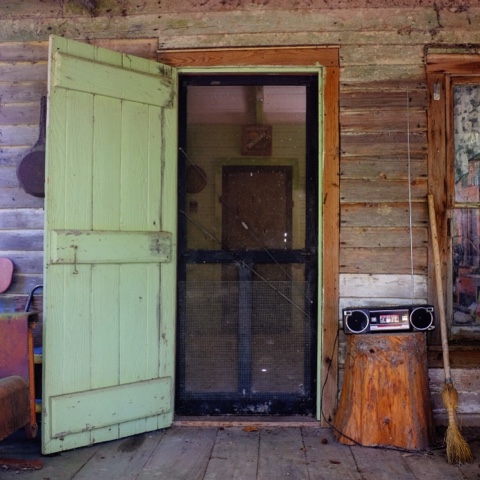
Cypress washhouse
Sprouts from the spearmint patch
Sharecropper barn with license plates attached
Manche des Prudhomme blue hatchback
Wild onions and the red sassafras
Chicken trees, soco vines
Brick cistern, fig wine
A child's gumbo, balles de foin
Catalpa tree at the coin
Appalousa paint horse
Under the chinaball
Nonc grows the chat-bouillie and lilas parasol
Point Blue rice pump
Barbwire fence
Beyond the cove
The evergreen isle
Of far off Pointe Aux Pins
Saturday, April 11, 2026
Tu peux croire
Ever since I crossed the River
I aint never been the same
Bathin' in the rice pump
Prayin' on a name
The mint around the wash house
Liane de Ba-Na-Kà
Tu peux croire comme tu veux!
C’est le Bon Dieu qui fait tout ça.
Friday, September 15, 2017


Monday, April 11, 2016


Monday, September 21, 2015

Sunday, September 20, 2015

Tuesday, August 25, 2015

Friday, August 14, 2015
Ayou L'Anse Bleu Commence?

Ayoù l'Anse Bleu commence?
C'est un bon question.
J'vas dire qui.
Entre la Ville Platte et l'Anse Bleu!
Y'a un pont tu vas passer,
c'est la Coulée des Manuel.
C'est là ayoù elle commence.
Et ayoù l'Anse Bleu finit?
Mais, ayoù c'est Chataignier arêtte de claimer!
Mais peut-être aussi
juste passé
la résidence à defunct Walter Lee
au ras le Bayou Marron.
_________
Where does Point Blue begin?
It's a good question.
I'll tell you what.
Between Ville Platte and Point Blue!
There is a bridge you'll pass,
That's Manuel Coulee
That's where it begins.
And where does Point Blue end?
Well, where Chataignier stops claiming!
But maybe also
Just passed
the home of the late Walter Lee
near Bayou Marron.
Saturday, August 8, 2015

Wednesday, June 25, 2014


Wednesday, May 7, 2014
Intro

I grew up Catholic in South Louisiana where shrines dedicated to the Blessed Mother are so common in homes and in yards that they go nearly unremarked. Yard grottos seemed as part of the landscape as the rosebushes and bird baths, hand pumps, and Victorian gazing balls that Cajuns and Creoles decorate with. Like most Catholic women, I inherited and cultivated a venation for the Blessed Mother, I saw the statues, but it was such a normal and quiet thing that it was unquestioned by me until I grew up, learned about myself, and looked around the prairie highways of my homeland with new eyes.
When I was twenty one I went to Church Point, Nova Scotia to learn French at the Université Sainte Anne where I was immersed in the language of my French and Acadian ancestors on the the very land where they lived four hundred years ago. I realized that our modern Acadian cousins shared more than last names and French blood with us, but that they were aware of our history in a different way than I had been growing up in South Louisiana. They were proud of their language and especially of their flag, the French tri-color, with one addition: a brilliant yellow five-pointed star in the field of blue in the top left corner that I was told represented the Maris Stella, Mary, Star of the Sea, Protectoress of the Acadians who had shepherded them on their sea voyage across the Atlantic from France. While on excursion to an old Acadian graveyard, I entered a small chapel that had an altar and large statue of Our Lady of the Assumption inside. She crushed the serpent underfoot. She reminded me of home and family in a new and profound way. Back in Louisiana, the more French I learned, the more sensitive I was to our uniqueness and also our interconnectedness with other French speaking, Catholic cultures around the world. I seemed to hear French everywhere, and the grottos to the Virgin Mary became a physical representation for me of the beauty, humility and faith of our culture. As I documented more local history and French, I thought someone should also document the grottos, but I never thought that person would be me.
I was married after the Storms of 2005 and moved to the country of Saint Landy Parish, to an unincorporated area called la Prairie des Femmes, or Prairie of the Women. I struggled to teach French at the local high school, run a country household, and be the wife a mother I really wanted to be. My husband was supportive and encouraged me to stop teaching and stay at home with our children, and we made the necessary sacrifices. Needing an outlet and unable to travel outside the Prairie des Femmes, I decided to go deep into the place where I lived, to accept it as my humble place in the world and to do research the origins of the name Prairie des Femmes and also document the daily life and French language that exists there. I started a blog site, www.prairiedesfemmes.blogspot.com, to organize my thoughts.
There were a few yard shrines down the Prairie des Femmes road. One of my neighbors even had two separate grottos in their front yard with a Pieta in the side yard. This really is the "Prairie des Femmes", I thought to myself. I took pictures with my Iphone of all of the statues in the Prairie des Femmes. Because of the everywhere nature of the statues, and also because I had no real camera, I always brought my Iphone with me and photographed the statues that I encountered naturally in my community. Then I branched out to the adjacent prairies and towns and everywhere I went, I saw her. The statues, like the veneration, were such a part of the landscape, that it took slowing down to really see the beauty and mystery of my own surroundings. Incorporating the Marian veneration I saw in the Prairie des Femmes and eventually across South Louisiana became a natural extension of my research through the Praire des Femmes blog.
Through interviews I was told that the Prairie des Femmes has been a place where women and children found safety from different events: wars and floods and the struggles of life. It was also said that it was where the first French-speaking settlers to this land found an Attakapas village of only native women. None of these claims are substantiated, but as least for me, the Prairie was a refuge and a tough-loving mother. It was clear that the Prairie des Femmes was a wild place in Saint Landry Parish, but it had also became a metaphor of South Louisiana French-Catholic culture where veneration of Mary is abundant, visible and unquestioned, an enclave where she still finds protection.
Tuesday, February 11, 2014
Une Pierre à Tonerre
Monsieur J.D. Soileau de L'anse Bleu always has something interesting to say. Today he was calling about a story he heard from a local lady about the meteorite that hit Louisiana in 1957. Click here for a piece on it from the Bayou Teche Dispatches.
Il onvait eu beaucoup peur dan 1957 à soir et là il a eu le meteorite qu'a frappé la Louisiane
Oh wow!
Et y a eu... son mari avait gardé dehors, il dit y a quek-chose, force té brillant et y a un clairité
un bout temp après on a attendu gros train... la maison a manière tremblé et ils on eu beaucoup peur et ils ont etait couché chez son père et sa mère.
Et beaucoup de monde avait beucoup peur et y'en a qu'a tombé à genoux.
Et un qui dit...cinq fois plus gros que le soleil et plue clair que la journée.
Comment tu crois?
Et ça frappait à la Côte Blanche là bas au long du côte le la Louisiane... parceque j'ai regardé sus mon computer et y'avait les pecheurs qu'était après pêcher au soir et ça était pleusieurs jours que leurs oreilles faisait manière mal, c'avait fait un gros train!
Comment tu crois!
Et là, y'avait un morceau qu'avait tombé sus un rig.
No kidding, wow!
Et dedans 1957... tu appelles ça une pierre à tonerre (thunder rock)!
une pierre à tonerre!
Ouais, c'est un meteorite...
***********************************************
"Thunder Rock" reminded me of a story I heard from Mr. P. LaHaye recently about the Prairie des Femmes. It seems that years ago he and another researcher were walking around the indian sites in the Prairie and came upon a house at a curve in the road. They asked the woman, who may have been Chat-Tigre's mother, for water. She came out into the front yard and pumped it for them. They thanked her and tried to explain what they were doing by showing her the arrowheads they had found. She immediately motioned to the sky and called them something similar to "thunder rock" and said that they had come from the sky.
***********************************************
A Warning/ Un Advertisement
J.D. went on to say that the old people saw the meteorite as un advertisement, or a warning that something was going to happen. My research says that the meteorite came on March 15, 1957, the Ides of March, and Hurricane Audrey came in late June of the same year.
A Warning/ Un Advertisement
J.D. went on to say that the old people saw the meteorite as un advertisement, or a warning that something was going to happen. My research says that the meteorite came on March 15, 1957, the Ides of March, and Hurricane Audrey came in late June of the same year.
Monday, December 9, 2013
Prairie Drama - Prairies and Coulees Episode 1
The prairies of
Louisiana run one right next to the other along bayous like the Teche
and the des Cannes, all lined up like neighbors and so of course, there
is tons of drama dans le coin. There is overlap. They all know each other and
everybody knows everything, every contour of their life. The bayous and coulees cut
across the prairies and the prairies run along the bayous and you can
imagine the tracas it causes.
So what I heard through the PrairieNet is that Prairie des Femmes used to date Prairie des Gros Chevreuil and it was perfect cause she was so bucksome and he was so strapping and loved to hunt and all, but they didn't work out once he converted his deer lease to pecan orchards and expected her to make pralines all the time.
So then Prairie des Femmes started going out with Prairie Laurent who lived right next door and had always had an eye for her, but he had been leading La Prairie Basse on for a while. Him and Femme would sometimes meet up at the trail ride and text while he was still with Basse and now Basse, she's so jalouse. To show him she went off and hadeyaed with L'Anse Belaire for a while when him and L'Anse Bleue and Grand Prairie used to roder. Come to find out she was textin Frozard the whole time, too, but he lives right across the Hwy 93 and she lost interest, too quiet and small. So Basse met up with Prairie des Gros Chevreuil, a real man in her opinion, and didn't care if he was calling himself Pecaniere or if all he wanted her to do was bake pecan pies. Prairie Basse likes pecan pies and pralines, too, and she can crank em out.
Then Laurent, of course, after a while with Prairie des Femmes, who wanted to get all mysterious and distant, started pinin' for his ex, Prairie Basse. Word is Laurent and her started rendez-vousing in the Opelousas Wal-Mart parking lot. Then Laurent's side chick, Plaisance, who's with Faubourg and they have one lil boy, Andrepont, found out and went off with LeBeau to make Laurent jealous but you gotta watch out because Laurent is boys with Exit 11 Posse and the Bellevues, so. Then LeBeau's woman, Nuba went bonkers and they got in a big brawl with the Prairies and the Coulees too in the Opelousas Walmart parking lot.
Poor ole Prarie des Femmes, she was mortified that Laurent had acted like that, so she's drowning her sorrows. Last I heard she was seen at the Silver Slipper with Bayou Portage and his boi Knotleyville.
So what I heard through the PrairieNet is that Prairie des Femmes used to date Prairie des Gros Chevreuil and it was perfect cause she was so bucksome and he was so strapping and loved to hunt and all, but they didn't work out once he converted his deer lease to pecan orchards and expected her to make pralines all the time.
So then Prairie des Femmes started going out with Prairie Laurent who lived right next door and had always had an eye for her, but he had been leading La Prairie Basse on for a while. Him and Femme would sometimes meet up at the trail ride and text while he was still with Basse and now Basse, she's so jalouse. To show him she went off and hadeyaed with L'Anse Belaire for a while when him and L'Anse Bleue and Grand Prairie used to roder. Come to find out she was textin Frozard the whole time, too, but he lives right across the Hwy 93 and she lost interest, too quiet and small. So Basse met up with Prairie des Gros Chevreuil, a real man in her opinion, and didn't care if he was calling himself Pecaniere or if all he wanted her to do was bake pecan pies. Prairie Basse likes pecan pies and pralines, too, and she can crank em out.
Then Laurent, of course, after a while with Prairie des Femmes, who wanted to get all mysterious and distant, started pinin' for his ex, Prairie Basse. Word is Laurent and her started rendez-vousing in the Opelousas Wal-Mart parking lot. Then Laurent's side chick, Plaisance, who's with Faubourg and they have one lil boy, Andrepont, found out and went off with LeBeau to make Laurent jealous but you gotta watch out because Laurent is boys with Exit 11 Posse and the Bellevues, so. Then LeBeau's woman, Nuba went bonkers and they got in a big brawl with the Prairies and the Coulees too in the Opelousas Walmart parking lot.
Poor ole Prarie des Femmes, she was mortified that Laurent had acted like that, so she's drowning her sorrows. Last I heard she was seen at the Silver Slipper with Bayou Portage and his boi Knotleyville.
 |
| The Dashing Prairie Laurent |
 |
| Faubourg |
 |
| Grand Prairie |
 |
| La Belle Prairie des Femmes |
 |
| LeBeau |
 |
| Pecan Orchard, AKA Prairie Gros Chevreuil, Prairie of the Big DEER, Boiiiii |
 | ||
| Prairie Basse |

Thursday, March 28, 2013
Vendredi Saint
It is said that one must not dig in the earth on Good Friday
because it will make the ground bleed the Blood of Jesus, but there is another belief around here that says that it is good to plant your parsley on Good Friday so that it will not bolt. Mister J.D. Soileau of Point Blue, Louisiana has information about how to plant anyway, and kill trees if you want to do that, too.
Les Remarques de Vendredi Saint
Vendredi Saint tu plantais ton persil. Tu travaillais ta terre le jeudi bien et là le vendredi tu mettais la graine sur la terre et tu 'trappais un sac de peat et tu mettais ça dessus. Là ton persil té planté et j'crois ça dit il entrait pas en graine aussi vite...Les Remarques de Vendredi Saint
Là si tu voulais tuer les arbres qui tu voulais pas, tu cernais tout le tour.
Tu cernais sur un jour special, J?
Mais sur vendredi saint!
Sur vendredi saint, alright!
Alors, tu cernais les arbres sur vendredi saint et ça ça les tué.
Ouais, mon grand-père faisait ça. C'était juste que j'voulais dire les vieux rémarques sur le vendredi saint.
Comment tu crois, hein?
Ouais.
Ça c'est beaucoup intéressant!
Ok, Thank you Jim.
Merci Beaucoup, J.
Alright.
Mister J.D. Soileau of L'anse Bleue Louisiana!
+++++++++++++++++++++++++++++++++++++++++++++++++++++++++++++++++++++++
On Good Friday you planted your parsley. you worked the soil on Thursday and then on Friday, you put the seed on the ground and you got a sack of peat and you would put that on it. Then your parsley would be planted, and it would not go to seed too quickly.
Then if you wanted to kill some trees, you had some trees that you didn't want, you'd ring them.
You would ring them on a special day?
On Good Friday!
So you would ring the trees on Good Friday and that would kill them.
Yes, my grandfather did that. It's just that I wanted to say some old comments on Good Friday.
How about that, eh?
Yeah.
That is very interesting!
....
Saturday, August 25, 2012
How, Even as an Americaine, I learned Louisiana French Part 1

I remember singing "Frère Jacques" with my aunt in the bathroom of my grandmother's house on Park Boulevard in Baton Rouge when I was four. There is a tape of my parents playing with me when I was almost two where mom calls dad a gros tub and I repeat it, and he howls with laughter. Mom was constantly doing things like making us pat-pat-zoo (pain perdu) and cleaning the gra-doo (gras-doux) off of my toddler face. Dad was always repeating these words and laughing. I guess I was aware of the French because of his perspective. He was a Baton Rouge Creole, a musician, with that "dark French" skin. His family, despite having ample French, Spanish and Acadian heritage, had been Americanized a couple generations back in Baton Rouge, though his grandmother spoke some French for sure. That is where the Frere Jacques came in. Dad was charmed with the cute "coonass" things my mother, the youngest daughter of a Ville Platte merchant said. One of the first stories he told me about their courtship (besides them meeting at the Evangeline Club when she was 15, he was playing in the band Clutch) was about the time she asked him, upon arriving somewhere, if he was going to "get down" out of the car. He thought she meant "getting down" in the 1970's sense of the word. She just meant get out of the car. She did not realize that, like so many other things she said, getting down from the car, saving the dishes, getting "to da terre" was not standard, and on the other side of the Atchafayala Basin, they talked differently. Now I know that the way we use "get down" comes from French. When stepping down from a car or carriage, the verb "descendre- to get down, descend" is used. We learned English from people whose first language was French, and so we speak French in English.
Dad always used the words he heard the Ville Plattians use in his songs. One song, "Frenchy Town" went:
"Got drunk at the bar,
ti pas honte,
ti pas honte,
threw a big tracas,
no mo drinks for me..."
Another one about him leaving for tour went:
"I had to phone ya from Livonia
It's me, T-Neg.
I'm on my way to California
Heart all broke like a paques-paques egg."
When dad entered the contest for the 1984 New Orleans World's Fair theme song, he went up against giants like Toussaint and Neville, and won first and second places with the two songs he wrote and recorded entirely himself in the studio at our house. He incorporated Louisiana French lyrics at the end of the winning song, Mardi Gras City, saying "'Eh là bas, allons..."
When my parents divorced I was in first grade. I moved to Ville Platte where my grandparents and extended family lived. There my first real immersion began. I picked up on how people talked differently from Baton Rouge. The week we moved I told my mother, Mom, I love Ville Platte, It's a lot like Baton Rouge, except in Baton Rouge they say "Main Street" and in Ville Platte they say "Main Street". That is, I was picking up on the way Cajun French and Cajun English emphasize the last syllable of a word or phrase.
In Ville Platte, French was commonplace, but because it was never spoken to children of my generation, at least not in my family, as a young child I heard it, and also tuned it out to a point. I remember hearing it the most in Pointe Blue, at my best friend's house. Her grandmother Soileau lived down the road from her, and was a real French creole woman. She and her son, my friend's father, would sit in their cowhide rockers in front of the fireplace in her country kitchen. They'd rock on the linoleom floor behind us and chicane back and forth in French while we ate squirrel rice and gravy, spitting the bbs out until they went ting ting ting on the plate. We couldn't drink our pop while we ate, no. Had to eat, then drink. We got a check cola on ice from under the sink. Before dinner, we washed our hands in the corner of the kitchen in an old time bassin with a pitcher to pour fresh water. The water in the bassin stayed cloudy with soap. When we were bored, we chased the sheep in the back yard of her house or went to explore the ancient sharecropper barn. Sometimes, my friend's dad would leave to run his traps, and come home having caught something mysterious, like a pure black coyote.
One day, I asked Mr. Soileau about what they were saying, what language was it? He said it was French and asked me if I wanted to learn. I did. He was eating a banana. He showed it to me. "Banane" he said. I repeated. That's easy, I thought. If that's French, I can do that. I kept that word "banane" in my head like a treasure, my first real French word. Old Mrs. Soileau gave us Moon Pies and pop rouge for a snack when I'd spend the weekend there. She'd always say, "Aw, Cher, you so fat!" to me. My friend's parents assured me that it was a compliment, and I struggled to understand, but after so many times of her telling me, I did start to understand. I loved her ways. I loved her cooking and her button collection and her kind eyes. Surely, though, to her, I was a 'tite Americaine. I had an Americain last name, I was the granddaughter of the owner of the only department store in the parish who spoke French for business only. And I was fat. Americaine.
In fifth grade, I moved schools and went to Vidrine Elementary. In the mornings I'd ride with Ms. Dolly Fontenot and her son, and she'd listen to KVPI, the town radio station. We'd listen to the news in French and to the radio program called the Tasse de Cafe, all very lively and almost all in Louisiana French. The whole drive through the misty cow fields of the Vidrine Road, I would listen, and pretend that I, too understood. I did understand when they were advertising a buisness and giving the telephone number because they'd say, "trois-six-trois" (363) which was the prefix that all the phone numbers in Ville Platte began with. So I must have known my numbers. Then, low and behold, the next year, on the Sacred Heart playground, a little Buller girl taught me how to say "fee bee tan" (fils de putain) or SOB, in French. Americaine or not, I was learning.
Subscribe to:
Posts
(
Atom
)