
Showing posts with label Grand Coteau. Show all posts
Showing posts with label Grand Coteau. Show all posts
Monday, November 9, 2026

Friday, October 30, 2026
Enfleurage à L'Academie
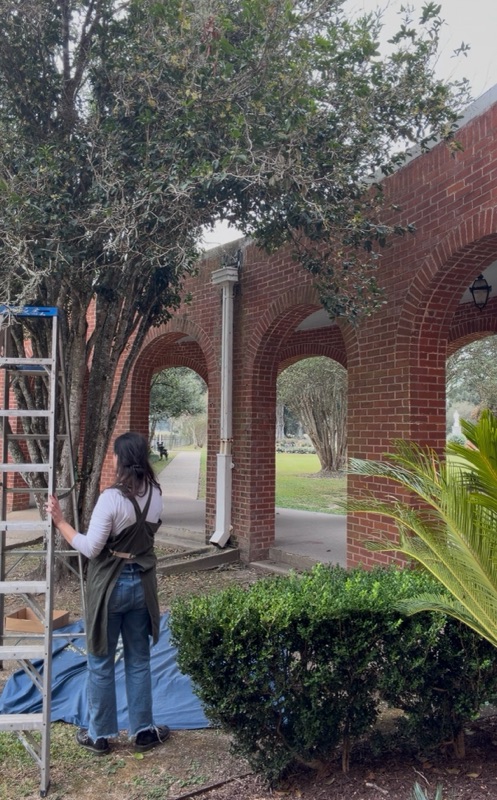
Dans l’arcade à l’Académie, le 30 octobre 2026, à la cueillette des olives parfumées destinées à l’enfleurage.
Saturday, October 3, 2026
Saturday, September 12, 2026
Medicinal Plants on the Coteau
In the flat coastal plain of south Louisiana high ground is sacred. Our indigenous ancestors were mound builders. Settlements appeared along chenières, or ridges of oaks, and local folklore says that even one old live oak tree is a good sign that the surrounding land won't flood. In times of severe hurricane, one survival skill was to lash one's self to the mid-branches of the live oak with grape and muscadine vines to ride it out. Those that did this usually survived.
In this near sea-level prairie, it is known that the hill of Grand Coteau is sacred, high holy ground. It was this way long before the land was claimed by colonial-era settlers like Sieur Smith, the Religious of the Sacred Heart and the Jesuits. Much is made about the Catholic presence of the land, because of the early institutions such as nearby Saint Charles College, Saint Ignatius School and the Schools of the Sacred Heart, where a miracle happened when Mary Wilson was healed by the intercession of Saint John Berchmans. But a local legend is that it was the Grand Coteau where indigenous men, notably the Opelousa and Ishak, would go to "fight with honor". The validity of this and what it means, whether battle, ceremony, hunting or even competitive ball game is still mysterious. This story seems to weave in with lore of the Prairie des Femmes, just across the bayou and east of the Academy for girls, being a place where the women stayed when the men left to fight or hunt.
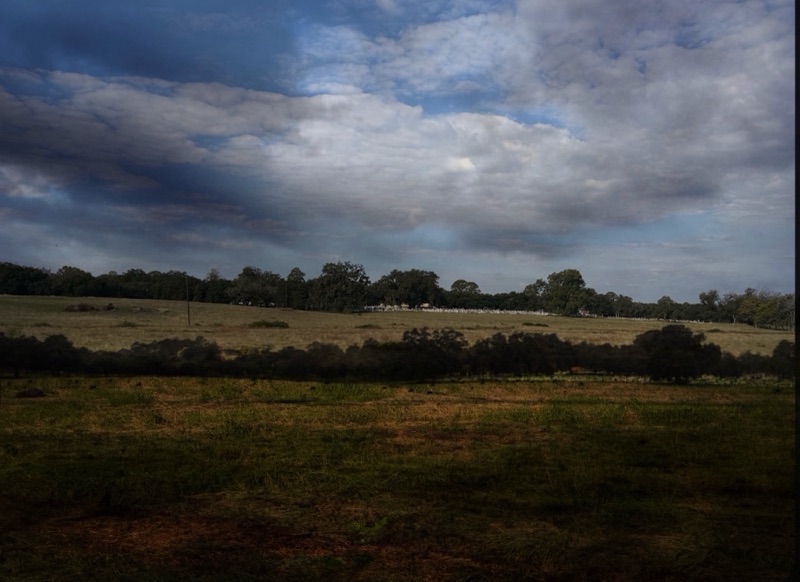
Grand Coteau is on the Coteau or Coteau Ridge. It is the ancient bluffs of the Mississippi River when it flowed west, also called the Teche escarpment. The land that holds the ancient convent and Academy of the Sacred Heart has been called "la prairie des coteaux". The Academy is a pastoral landscape reminiscent of old France and colonial Louisiana, containing multiple live oak and pine alleys, pecan alleys, formal gardens and orchards, open rolling prairie with horse and cow pastures. The four-story Academy is surrounded galleries and a garconière, formal gardens, rolling pastures and then beyond, the Secret Hart and the bois vièrge, a forest primeval that has never been disturbed throughout the centuries. In the formal gardens one notices the early varieties of roses, crepe myrtles, camelias, azaleas, sweet olive and gardenias. There are white, red and pink roses and azaleas, as well as pineapple guava bushes in the center whose flowers taste like Fruit Loops. L'absinthe grows in the pecanères which are plentiful and produce sweet full pecans in the fall. The sheer age of some of these bushes and trees ensures high yield of their medicines and fruits. I often think that the sisters and enslaved people who planted and developed these gardens, they who indeed survived times of famine, flood and war back here, seem to have taken seriously their choices of edibles and ornamentals.
Over the seasons of working at the Academy and as my eyes adjusted to the landscape, they also zoomed in on the native and medicinal plants that pop up at the fringes and in the lands that surround the gardens. This seemed to be a deeper indicator of native land stewardship, a sign of ancient wild habitation still amid the efforts to tame the land. Chou-gras (poke salat) was shooting up at the base of the pines of the alley, in Saint Francis Patio and along the Chapel wall. The woods to the east of the Academy were full of poke as well as nettle, resinous pine, violets and muscadine. In the tree lines are oak, pecan, copal, cherry, magnolia, chassepareille, cherry laurel, hickory, tulip tree, bitter orange and palmetto. I collect Spanish moss, perilla, chickweed, violet flower, root and leaf, white clover, green resurrection fern, and orange chanterelle mushrooms from the oak alley. I find fresh herbe cabri every fall along the ditches of the Jesuit pasture. Their leaves can be used for tea and the young seed eaten as a melon flavored snack.
The nettles in the woods I gather bare handed in the spring and dry the leaves for tea. I'll use the formic acid on the leaves for muscle and mood therapy and the seeds for nutrition. From the poke I gather berries for dye, the leaves for spinach and the extremely toxic and dangerous root for inflammation therapy. The bitter orange fruit we gather and use for Christmas decoration with cloves for pomanders. I gather white flowers of the sweet olive, orange, and gardenia that fill the gardens at different intervals to make enfleurage oils. The girls and I make accessories such as flower crowns, necklaces and crafts (like Marie Antoinette's bouffant) with the fallen roses, azaleas, camelias and wildflowers of the garden. I harvest baume from the native plant garden as a spice and perfume, chassepareille leaves for insect repellant and cherry from the woods for bounce. I harvest pine sap daily from the trees of the pine alley, sometimes they appear as resinous ambers that fall from above, and other times in the clearest tears of sap that are produced when the grounds crew hit the exposed roots with lawn mowers while manicuring the gardens. I walk the pine alley in the fog of the morning collecting miniature domes of sap from roots like dewfall.
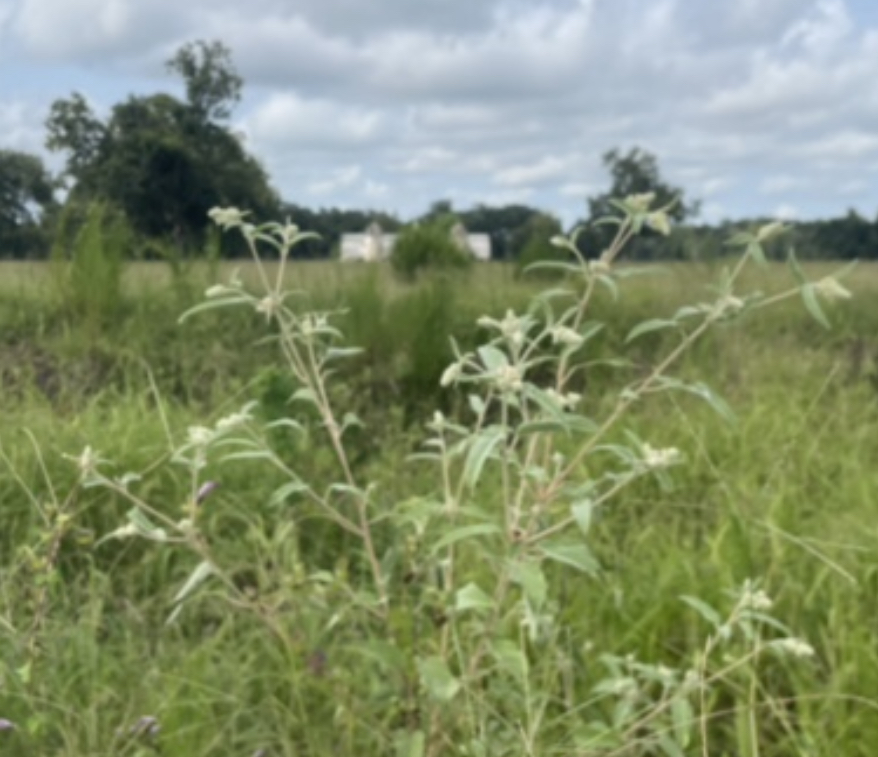 |
| l'herbe cabri |
Monday, September 7, 2026
La Fin de Semaine
vendredi le 4
duty on the Gallery, mass at 8 am to welcome two Religious of the Sacred Heart back to Grand Coteau, gouter of chocolate chip cookies under the link afterward.
samedi le 5
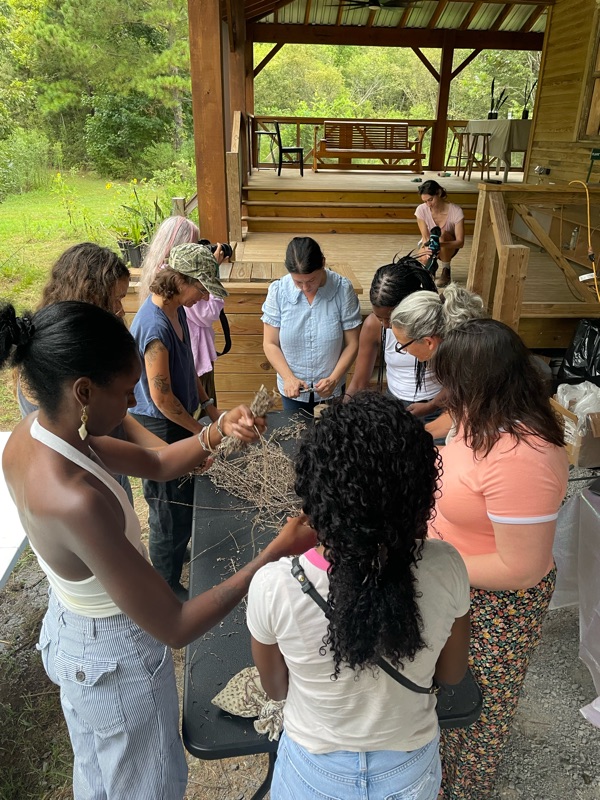
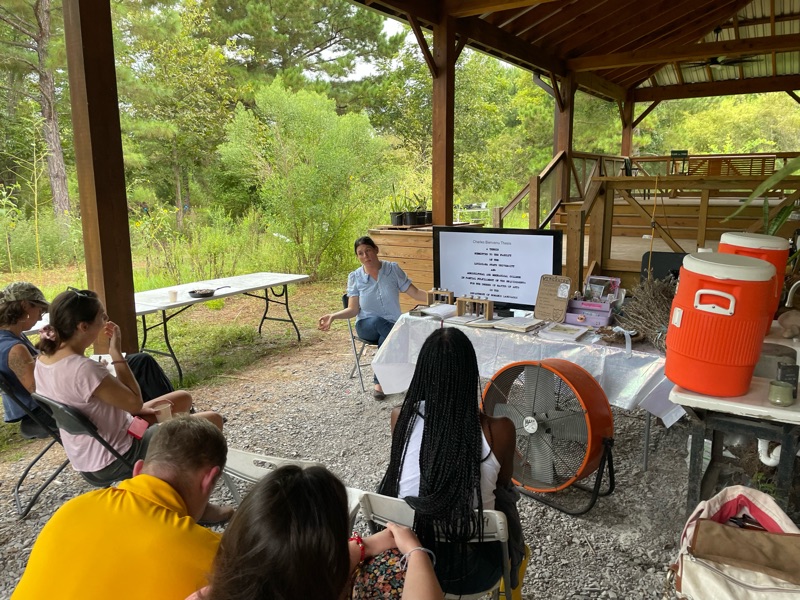
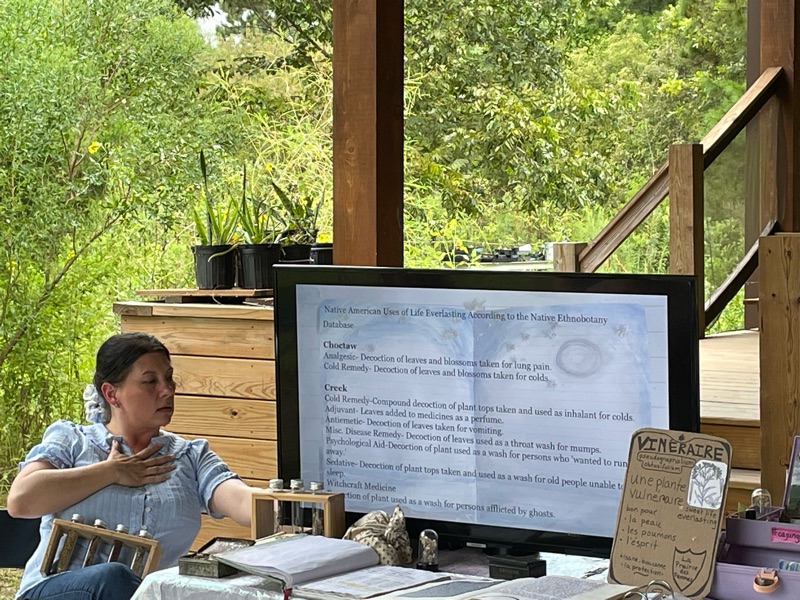
workshop on vineraire at Monique's prairie land, Birria pizza and Horchata in Opelousas with the boys
dimanche le 6
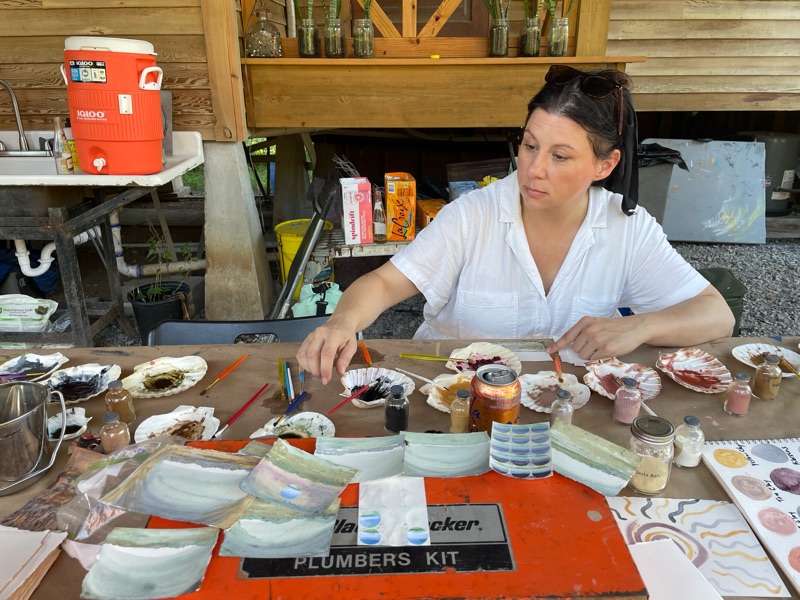
taught a Louisiana French class online, Monique's party, painting, Creole Renaissance Festival in Rayne to see J. Paul and the Zydeco Nubreeds and Keith Frank and the Soileau Zydeco Band
lundi le 7
two neighbor women called for herbs, I gave them freshly dug lizard's tail from Frozard Community Garden, elderberry pith for the eyes, manglier, sweet olive flower oil, vineraire
Monday, August 24, 2026


Tuesday, June 23, 2026
Cornerstone Holiday for Prairie des Femmes School 1909


 |
The Opelousas courier (Opelousas, La.), March 19, 1909 |

The stone the builders rejected has become the cornerstone. Psalm 118:22
Vilify Prairie des Femmes? Mais Jamais says the Clarion, 1897
"The Clarion's mission upon earth is not to vilify Washington-not more so than it is to vilify Opelousas, or Grand Coteau, or Ville Platte, or Prairie des Femmes, or an other place."

Monday, June 22, 2026
Map at the Hive with Mr. Olan 1854
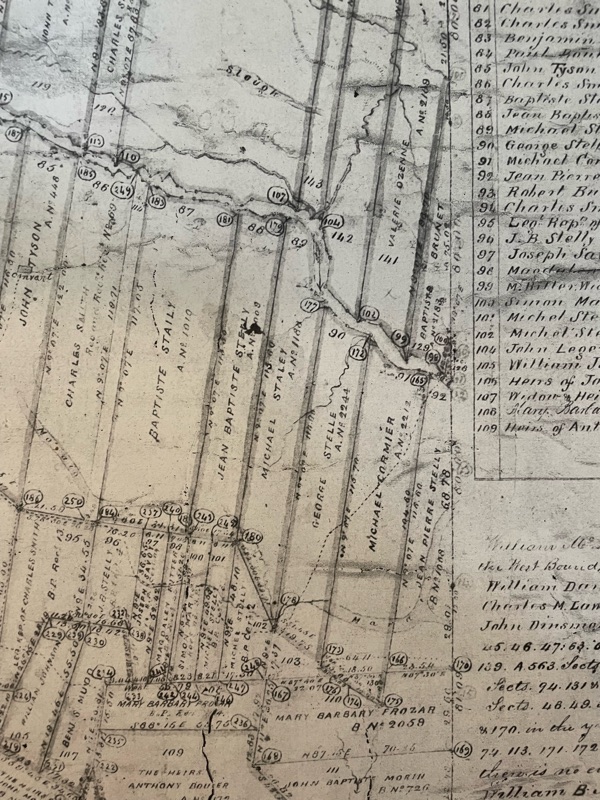
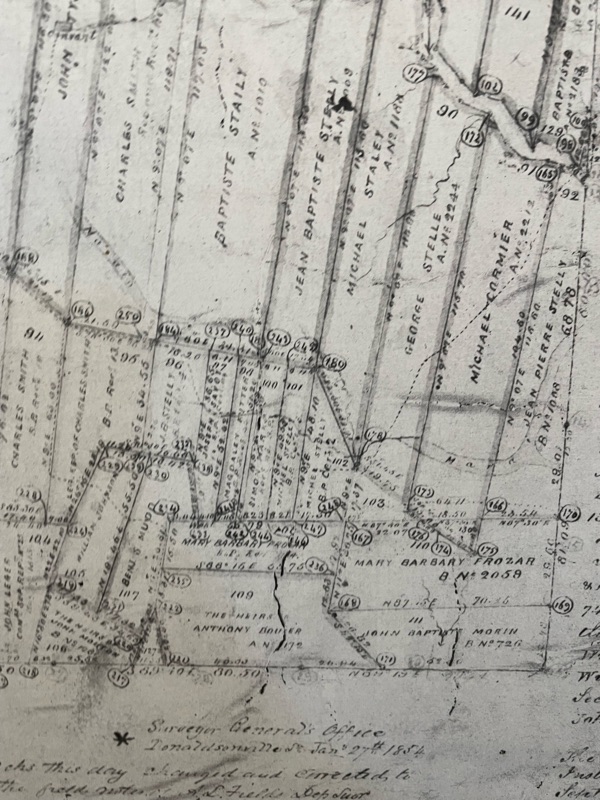
I spoke to Mr. Olan Thibodeaux at the old Hive as I was looking at this map leaning against the wall. He said it was his map, he had given it to the community coffee shop. I spent a lot of time looking at it and photographing it, and Mr. Olan mentioned that it was curious how many women were land owners in the Prairie des Femmes.
Sunday, May 24, 2026
Cultural Resources Survey of Four Disposal Areas Along the Vermilion River Lafayette Parish
Cultural Resources Survey of Four Disposal Areas
Along the Vermilion River Lafayette Parish:
US Army Corps of Engineers
"Despite its compact size, Beau Rivage (near the confluence of Bayou Tortue and Vermillion River) had large quantities of exotic rocks—thousands of pieces and possibly hundreds of kilograms. Exotics make up over a third of all lithic materials in the available collection (Gibson 1976a:Table 20). There are at least nine other sites within a 25km radius of Beau Rivage that have exotic materials—materials other than novaculite and quartz crystals, which are not really exclusive Poverty Point commodities (Gibson 1991b). The Olivier site (16SL12), near the junction of Coulee de Marks and Bayou Fusilier, is the most notable of these other sites (Gibson 1976a:38-39). But none of these sites comes close to matching Beau Rivage in absolute quantities, although Olivier might come close in terms of relative quantities. The point to be made here is that Beau Rivage is not an isolated component. For 25km above and below Beau Rivage along the Coteau Ridge and flanking Vermilion swamp are other presumably coeval sites bearing foreign lithic materials. We suspect Beau Rivage was the local supplier. But where did Beau Rivage get the rocks? In an earlier analysis, Gibson claimed that they came directly from the Poverty Point site, 280km to the north {Gibson 1979). Gibson thought they were first delivered to Poverty Point, where they were rendered into tool blanks before they were then shipped on to distant consumers, like Beau Rivage. Now, after more than a decade of recent excavation at Poverty Point have failed to find either the unaltered bulk materials or the primary chipping residue showing that preshaping actually took place at Poverty Point, we are not as certain. Initial shaping of tool blanks for trade now seems more likely to have been carried out at the rock outcrops or deposits themselves. Poverty Point still seems to be the most likely source of the blanks and nodules that got to Beau Rivage, but search for intervening distributors continues."
"...Several San Patrice points were found at Meche-Wilkes Mound, on Coulee de Marks near its junction with Bayou Fusilier"
"Additional Archaic components occur upstream and downstream from Lafayette. Downstream some eight kilometers below the Vermilion River gap is a cluster of sites (16VM7, 16VM17 and 16VM23) near the mouths of Anslem Coulee and Coulee He des Cannes. One of these (16VM23) produced several projectile points (including Evans, Ensor, Benton, and others), point fragments, drills and drill fragments, chipped adzes and gouges and fragments, boatstone fragments, and tubular and barrel-shaped stone beads (Gibson 1976a:Table 23, Figure 10). However, only a handful of flakes was recovered, totally insufficient to complement the number of finished tools on the site. The assemblage is unusual enough to lead us to suspect that it might be functionally specialized, perhaps even ceremonial. Upstream where the river parallels the Coteau Ridge are other Archaic components, and on the low Prairie des Femmes terrace, where flanked by Coulee de Marks between Grand Coteau and Arnaudville, is the oldest Archaic component known in the Vermilion locality. The Coulee de Marks site (16SL48) produced Early Archaic point types, Keithville and Cache River, as well as point fragments and preforms, small flake end scrapers, and chipping residue (Gibson 1990a:Table 24). There was substantial Archaic activity on or near the Vermilion River, and it seems to have spanned much of the long Archaic interval. But precisely when and what forms it took are unknown. We have only the most general perceptions of the interval, but they are sufficient to show that the locality continued to be a favorite spot for native groups. Having a long-standing sizeable population in a place with easy access to the interconnected waterways in the Lower Mississippi Valley was probably a prerequisite for entering into an era of commercial exchange, which characterized the ensuing period."

Saturday, April 11, 2026
Gold Confederate Buttons in Grand Coteau
Civil War General wrote this in his book published in 1879.
"On an occasion, passing the little hamlet of Grand Coteau, I stopped to get some food for man and horse. A pretty maiden of fifteen springs, whose parents were absent, welcomed me. Her lustrous eyes and long lashes might have excited the envy of " the dark-eyed girl of Cadiz." Finding her alone, I was about to retire and try my fortune in another house ; but she insisted that she could prepare "monsieur un diner dans un tour de main," and she did. Seated by the window, looking modestly on the road, while I was enjoying her repast, she sprang to her feet, clapped her hands joyously, and exclaimed : " Voila le gros Jean Baptiste qui passe sur son mulet avec deux bocals. Ah ! nous aurons grand bal ce soir." It appeared that one jug of claret meant a dance, but two very high jinks indeed. As my hostess declined any remuneration for her trouble, I begged her to accept a pair of plain gold sleeve buttons, my only ornaments. Wonder, delight, and gratitude chased each other across the pleasant face, and the confiding little creature put up her rose-bud mouth. In an instant the homely room be- came as the bower of Titania, and I accepted the chaste salute with all the reverence of a subject for his Queen, then rode away with uncovered head so long as she remained in sight. Hospitable little maiden of Grand Coteau, may you never have graver fault to confess than the innocent caress you be- stowed on the stranger ! It was to this earthly paradise, and upon this simple race, that the war came, like the tree of the knowledge of evil to our early parents..."
Merci Madeline of Mimosa for passing this information along

Tuesday, April 15, 2025
Tree Medicine
There was a white pine that volunteered in the western yard. It obstructed my view of the open prairie to the southwest, so my husband chopped the top for my photography. That cleared the view for a few years but that tree continued to grow. Except now, at the injury, it weeps sap. I’m not sure if it’s a memory of the damage that was done to clear the path, or if sickness or parasite still lives in the tree. No matter, it has become a medicine tree. On walks around the property I stop there and check the ground for chunks. I follow their fall patterns and gather them. At first I kept this sap and chunks of resin in my journals, not knowing what to do with it except smell it and let it perfume my journal.
One wet Louisiana winter day I went out to build a little fire in the wax myrtle bower but everything was damp. I pulled out the blank pages of my journal with the resin on them and they worked fine, similarly to the bois gras the men collected and used for fire starter. It kept my little fire going and kept me warm that day and others. It became a habit of mine to be able to spot injuries on resin trees and check them no matter where I was. I kept the pieces of resin in a tin can painted with blue and gold stars on the porch. But one day an indigenous friend gave me a balm made of bear grease and five kinds of fir resins from the north, saying that it would heal any wound and not even leave a scar. Sometimes I put the clearest sap on small cuts around my cuticle. Then I knew then what to do with my resin collection.
I melted the chunks down with sweet almond oil and when they were incorporated I filtered it and mixed it with melted bay wax from the bower to make a balm that my boys called “tree medicine”. They refused Neosporin but would accept the tree medicine on their wounds, only after I showed them the tree itself.
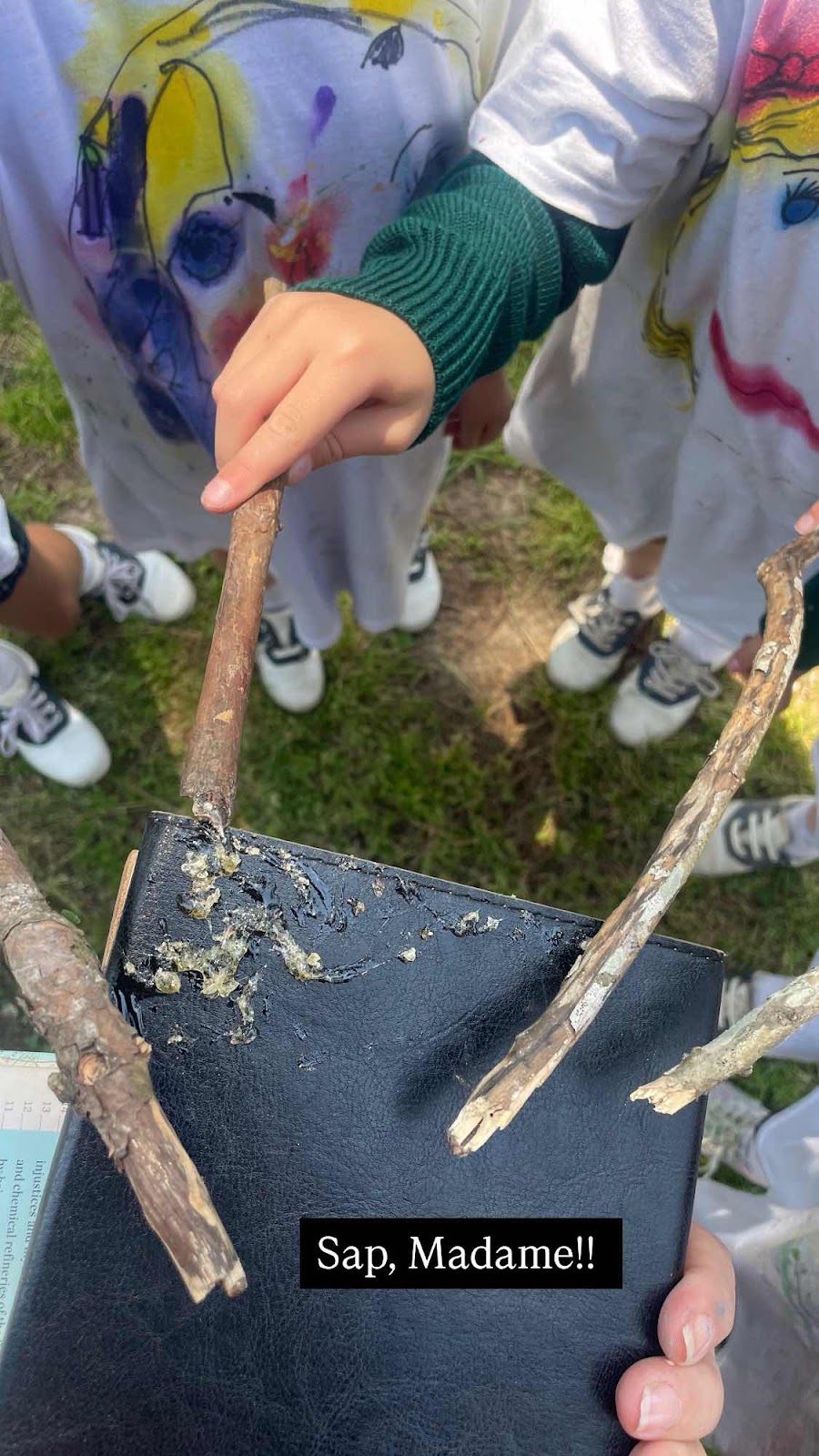
Daily I work atop the Grand Coteau at a school over 200 years old, full of old oak and pine alleys. Some of the pines seem to be nearly as old as the school and bare many scars and knots that give sap. I immediately began to survey each tree at recess and the girls would ask, "Madame, what are you doing?" Last year, one of the largest pines was struck by lightning and it created a rip in the bark that began to weep sap. Daily the girls and I go out and check this tree, because it gives the clearest sap that looks like tears. I have taught the girls that only the wounded trees will give the medicine, and in their healing, we can also share in it a little. I explained that the sap is like the tree’s blood and the resin is the scab. They apply it, like me, to their cuts, and know that hand sanitizer will clean it and cut the stickiness. I make a spray with the resin also that I use daily as a hand cleaner. Sometimes I come to my classroom and there are curious pine sticks on my desk that upon further inspection are tipped with sap. They'll make a resin platter out of a piece of bark, or dig into a knot with sticks often creating more injury and then more sap. One time I found a half pound chunk of resin, who knows how old, on my desk and thought it was a chunk of tasso. This morning as I was out there in my petticoats and cape gathering fresh pine sap tears with a ruler, and curious as it is, none of the girls even asked me what I was doing.
Sunday, September 15, 2024
Origin of Grand Coteau
Grand Coteau, La.
The origin of Grand Coteau dates back to 1821, when Sieur
Charles Smith, a large land owner in this section, donated land to
the church for a convent. The convent was founded by Mother Eugenie.
Aude and called “Grand Coteau.” In 1837 St. Charles College was
built. The settlement that grew up around the two schools was
originally called “St. Charles Town,” but later became known | as
Grand Coteau, the name it still holds today.
Saturday, September 23, 2017
High Beams
Ninety three at night
And there's no street lights
If there's no one comin'
You can put your high beams on
Beau Chêne High
In the half moonlight
Never know what's comin
'Til you put your high beams on
I didn't love you
I don't know why
I drove all night
With my high beams on
Grand Coteau
Just like a knife
I cut the night
With my high beams on
Monday, July 20, 2015


Wednesday, June 24, 2015


Saturday, November 8, 2014

Monday, September 8, 2014

Subscribe to:
Posts
(
Atom
)