.png)

Showing posts with label Academy of the Sacred Heart. Show all posts
Showing posts with label Academy of the Sacred Heart. Show all posts
Thursday, August 20, 2026

Sunday, July 12, 2026
Tuesday, June 23, 2026
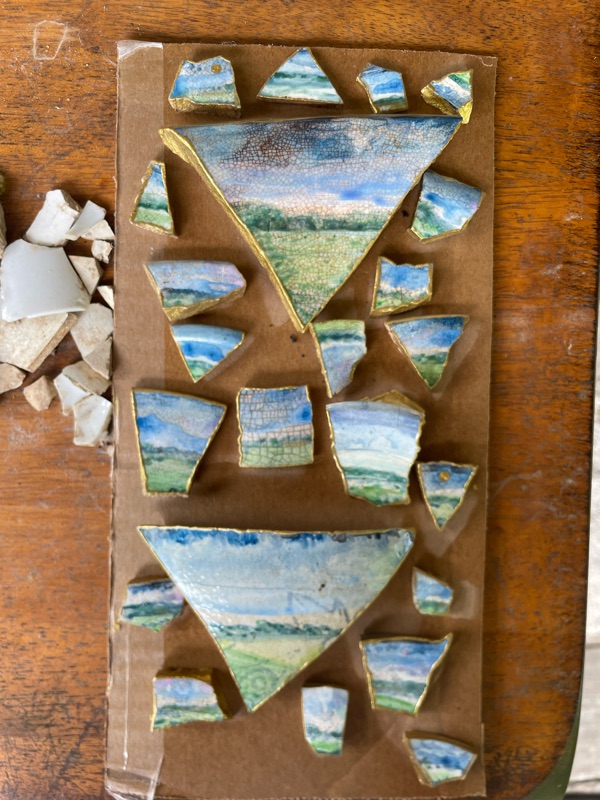
Cornerstone Holiday for Prairie des Femmes School 1909


 |
The Opelousas courier (Opelousas, La.), March 19, 1909 |

The stone the builders rejected has become the cornerstone. Psalm 118:22
Friday, May 8, 2026
Lightening Pine
In the storms this afternoon lightening struck very close to the Sacred Heart. I was standing in the first grade classroom admiring their fairyland village of cascading vines and paper mâché houses when the bright lightening flashed through the windows along the gallery and thunder boomed, shaking the coteau under our feet. We screamed and huddled together; it was so close! I started singing Oh les trains quand ils jubutaient by Cesar Vincent to the girls.
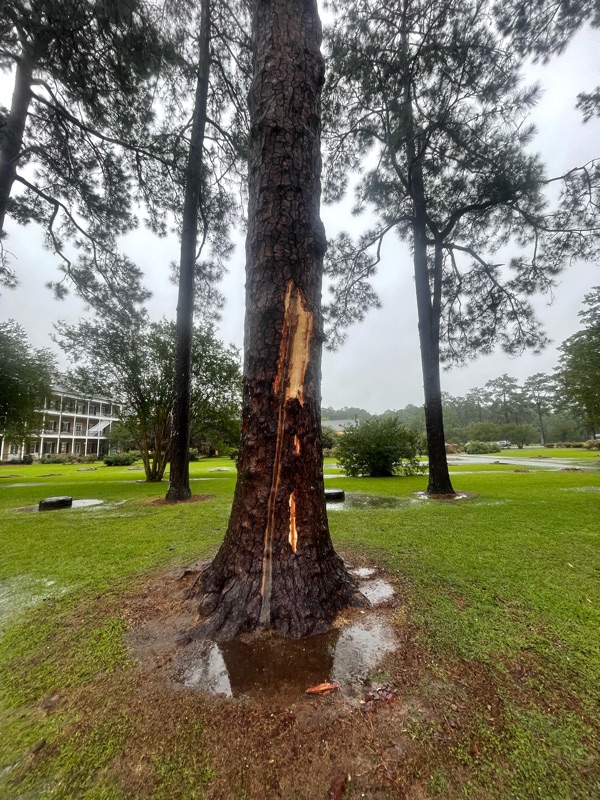
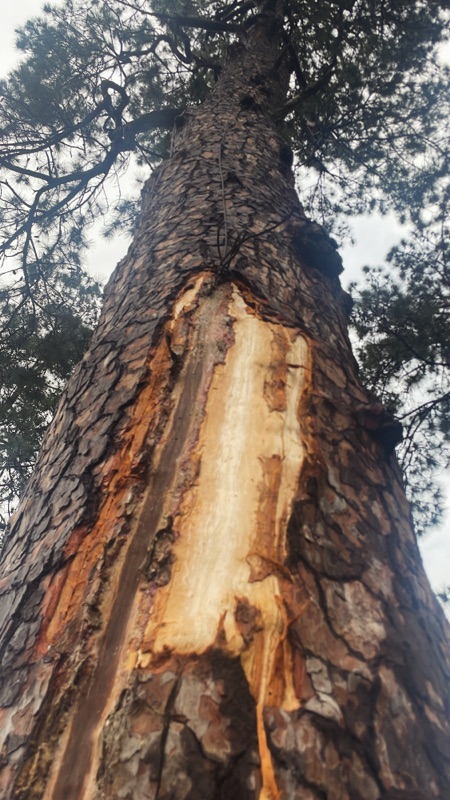
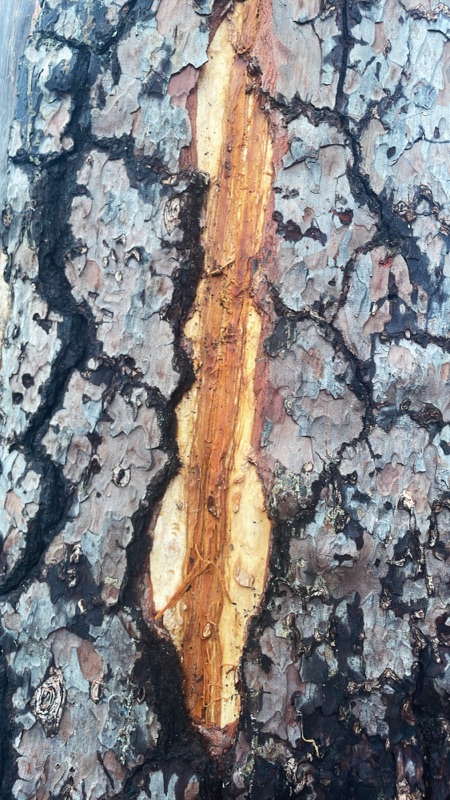
I wondered if it was at my lightening pine again, the tallest and biggest in the pine alley, less than a hundred feet from our 204 year old school building. I check it almost daily since it was struck last year. The injury left is a long open vein in the bark that exposes the weeping sapwood. It produces the clearest tears of sap, like amber pearls at the seam. I've spent the last year collecting the clear suspended drops from this injury in miniature jars. I remember being so interested when it was struck because I knew it would open a wound that would give. I felt that the sap was now charged with a clear electricity. Since then we have observed the tree healing itself again. The bark can be read. There is an identical scar around the other side that is sealed up with decades of bulbous resin that sometimes form balls that fall at the base. I collect them as curiosities for our knick-knack shelf in class. I found one today. I have taught my girls about tree medicine.
In the light rain after the storm I wandered out onto the wet grounds to check the great pine and found it had again acted as sentinel, channeling the electricity through the sap and down into the holy coteau, a lightening rod protecting the entire campus.
Saturday, April 25, 2026
Vale Rosa Palustris
Vale Rosa Palustris
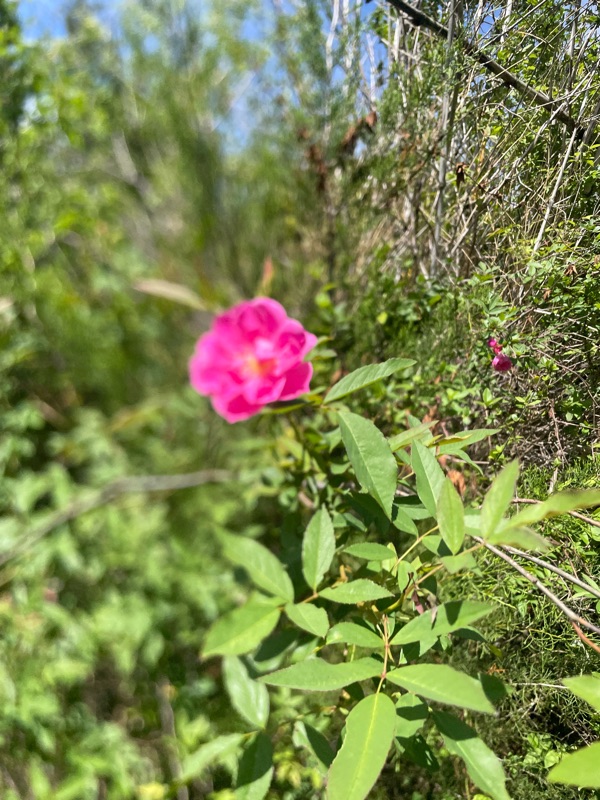
Swamp Rose season comes with the arrival of the painted bunting's persistent song, blue cardinal eggs in the blackberry bush, red Mamou flower shoots, mulberry trees in full fruit. Both the male and female cardinals tend the nest. The mama bird is so intelligent. She has made her nest in a little Celeste fig tree overtaken by blackberry vines. Within the protection of the blackberry bush’s thorny cage, all surrounded with red and green fruit, her nest is suspended. It is next to a blue kiddie pool of fresh water and a few feet from a mulberry tree in full ripeness. There was a big storm from the west last night and the sound of the rain on the metal roof woke me up at midnight and just before sunrise. I wondered how the mama cardinal protected her three baby birds, and imagined she did so with her wings. The rain turned the nasturtium yellow. I repotted it. I am tending a small garden edged with unused firewood and filled with compost from the Saint Landry Parish landfill. There is a blue runner who visits the garden. Daily I check the cardinal nest and the swamp rose blossoms. Often I have to balance myself on an old bathtub covered in honeysuckle vines in the side yard to reach some of the roses before they fall. This year they traveled up the bamboo, so some blossoms are 15 feet up. Their scent is like baby powder, water, citrus, rose and pink pepper. The chirp of the cardinals and the song of the painted bunting always accompany my gathering. This morning there was a big swamp rabbit in the white clover I observed as I pulled out a loaf of bread I had risen all night from the oven. I'll have to leave prairie in a few days to go to New Orleans and reveal myself by speaking about Prairie des Femmes at the Jazz Fest folk like village. I'll miss the observation of the cardinals, the painted bunting's song, the gathering of the swamp roses and ceremonial dew on the morning of May first, as well as the ritual procession and May crowning of Mary at the Academy on the coteau. The girls will wear white and silently process to crown Mater with flowers. We present her with a bouquet of blue Louisiana irises at the grotto while we sing the Magnificat in rounds.
Update: When I got home from running errands, I heard the incessant alarm chirping of the cardinals. I ran to the back yard to see the bluerunner standing up fighting the mother cardinal. I scared it off and ran for the shovel, but it was too late, he had gotten one chick and knocked the others out of the nest. I pushed him a few times, in efforts to scare him, with the shovel and it worked. I returned the babies back to the nest with one swoop of my spade, but it was futile. The snake was incessant and came back over and over until we had to let nature take its course. Afterwards I checked the ground to find three cardinal feathers. I listened to the daddy cardinal at the top of a sweet gum tree, a red spot, singing that lonesome song until dusk. That was the first time I understood what Miss Maryanne meant when she talked about the Cardinal Blues, that lonesome sound.
Quand ils disent,
"C'est p'us pareil!"
Mais ça me donne les blues
D'attendre les cardinaux
après chanter
Monday, April 13, 2026
Talking Pâque Eggs with K4 and 2eme
Pock Pock Talk with K4 and 2eme
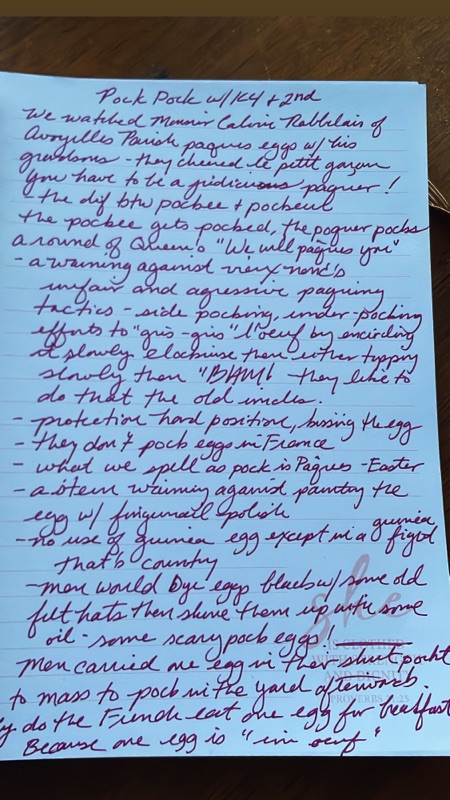
We watched Monsieur Calvin Rabbelais of Avoyelles Parish paques eggs with his grandson- they all cheered for the petit garçon
You have to be a judicious paqueur! I tell them.
The difference between the pockee and pockeur:
You have to be a judicious paqueur! I tell them.
The difference between the pockee and pockeur:
The "pockee" gets pocked, the pockeur pocks.
A round of Queen's "We will Pock you"
A warning against the vieux nonc's unfair and aggressive pocking tactics:
side and under pocking, efforts to gris-gris by encircling the top slowly,
A round of Queen's "We will Pock you"
A warning against the vieux nonc's unfair and aggressive pocking tactics:
side and under pocking, efforts to gris-gris by encircling the top slowly,
ruses of soft taps, sneak attacks. They like to do that, the old uncles.
Hand position provides protection from side paqueurs and sneak attacks.
Petit bout vs grand bout: K4 knows the difference.
Kissing the egg for luck.
They don't pock eggs in France, so say. The kids are shocked.
Hand position provides protection from side paqueurs and sneak attacks.
Petit bout vs grand bout: K4 knows the difference.
Kissing the egg for luck.
They don't pock eggs in France, so say. The kids are shocked.
A stern warning to the second grade girls not to paint the eggs with nail polish, it's their secret.
No use of guinea eggs except in a separate bracket guinea fight, now that's country.
The men would dye their eggs with old felt hats and the eggs would come out black black. Then they would polish them with oil- some scary pock eggs!
In Ville Platte the men carried their egg in their front shirt pocket
to pock in the churchyard after Easter Sunday mass.
Why do the French eat one egg for breakfast?
Because one egg is "un oeuf".
Saturday, April 11, 2026
À l’Académie
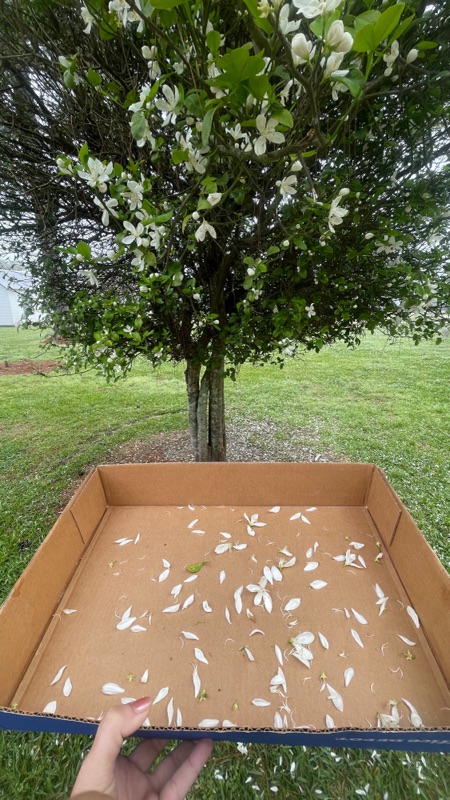
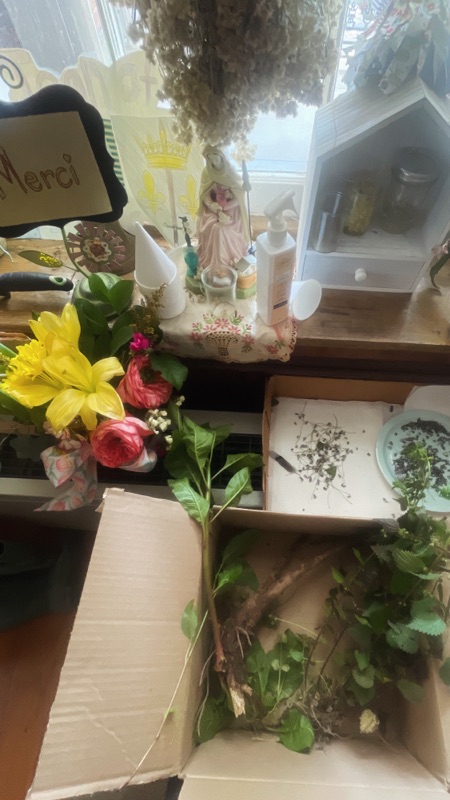
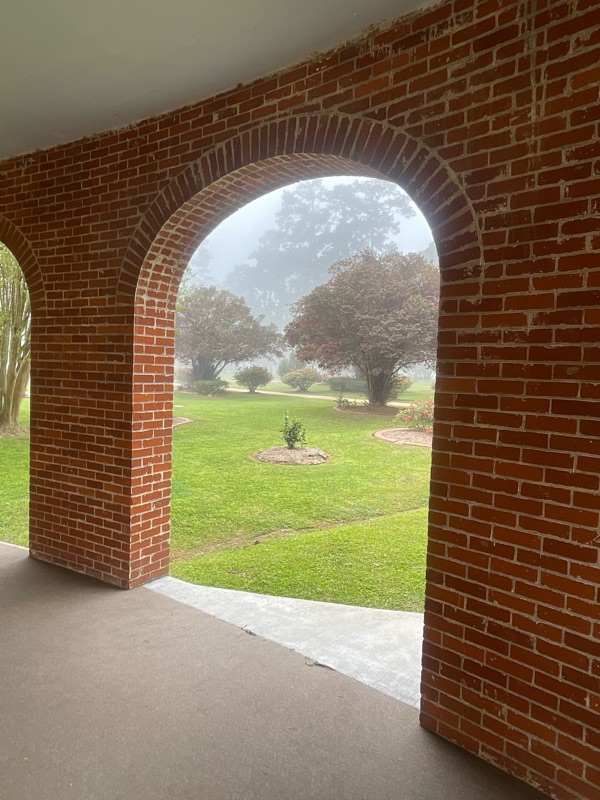
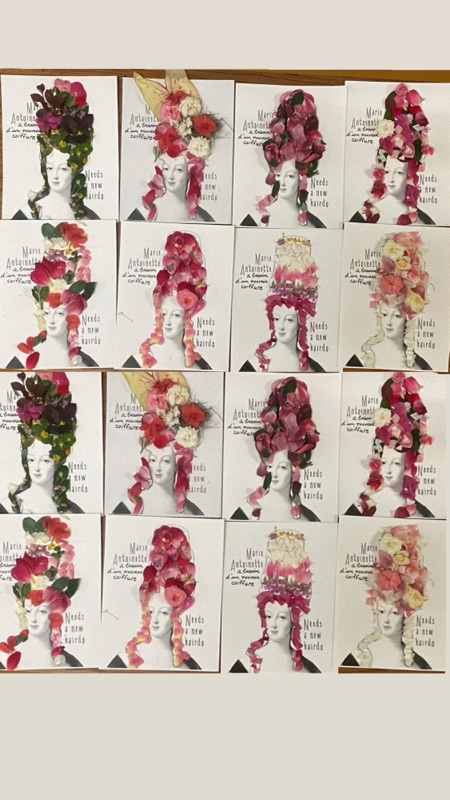
Gathering nettles, poke root and
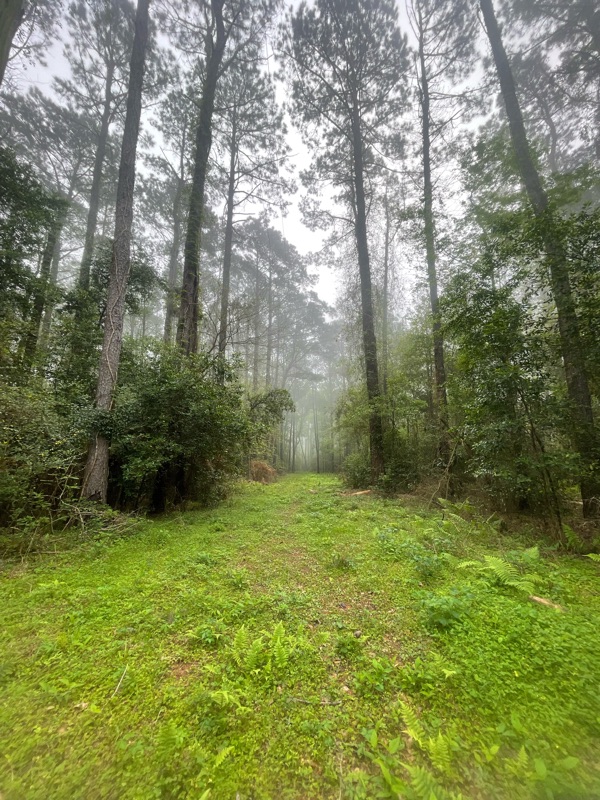
Clear pearls of pine sap
In the bois de Sacré Cœur
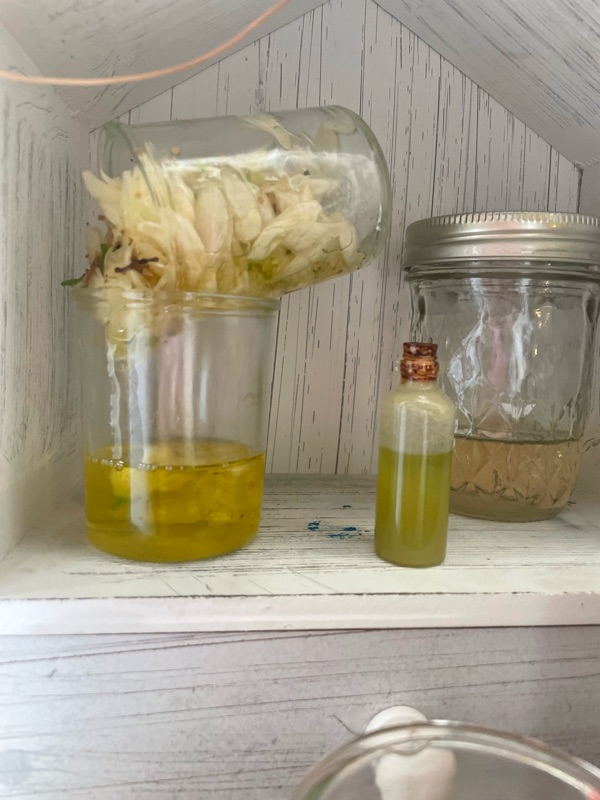
Making wild neroli enfleurage oil
Collecting violets under the oak alley
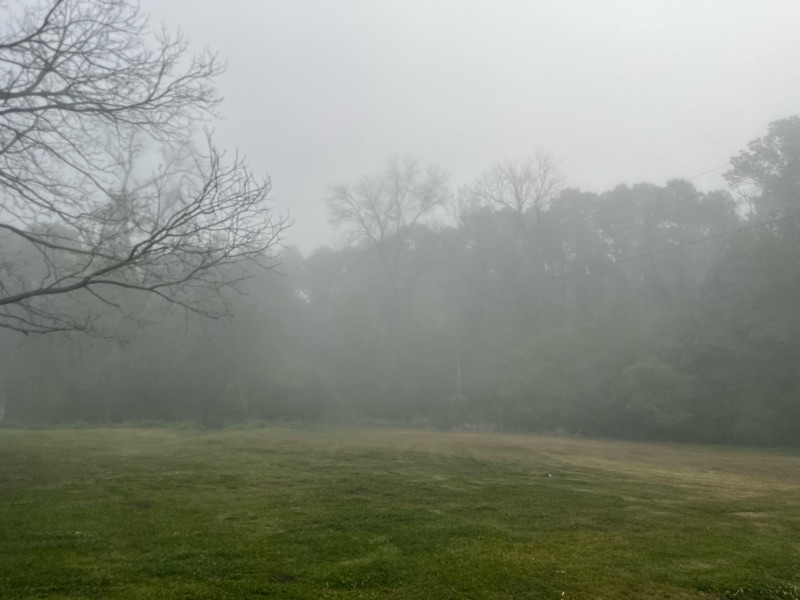
Je rentre dans l'arcade, l'aire est lourde
Making wild neroli enfleurage oil
Collecting violets under the oak alley
Je rentre dans l'arcade, l'aire est lourde
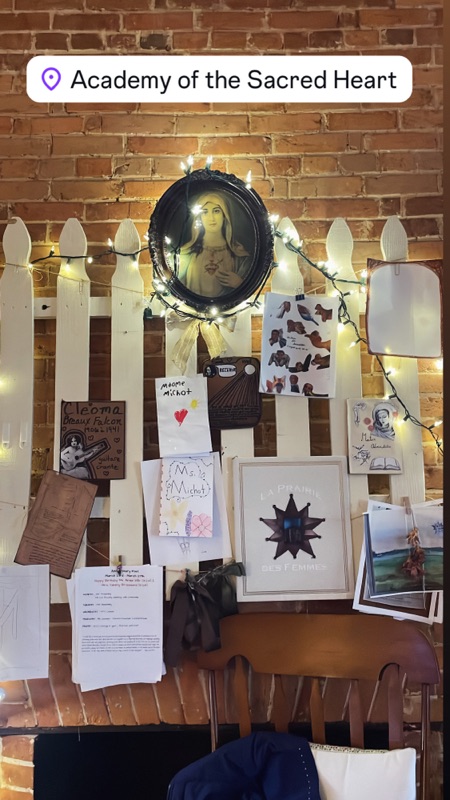
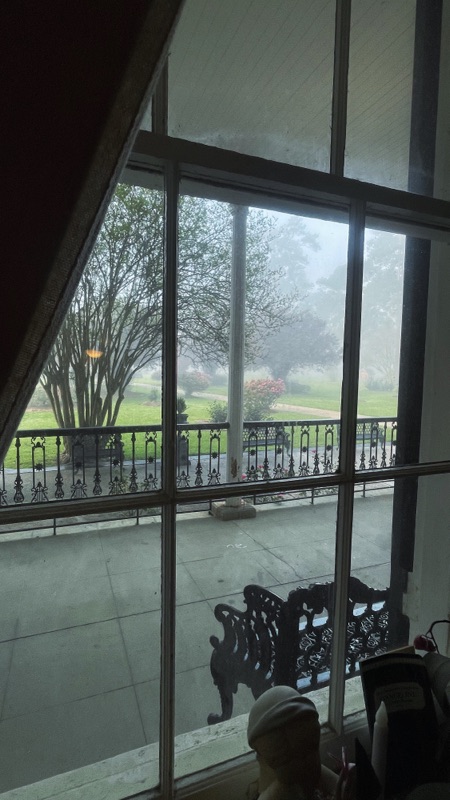
With osmanthus and fog - a springtime aerosol
Tuesday, March 31, 2026
Wednesday, January 14, 2026
Thursday, May 15, 2025
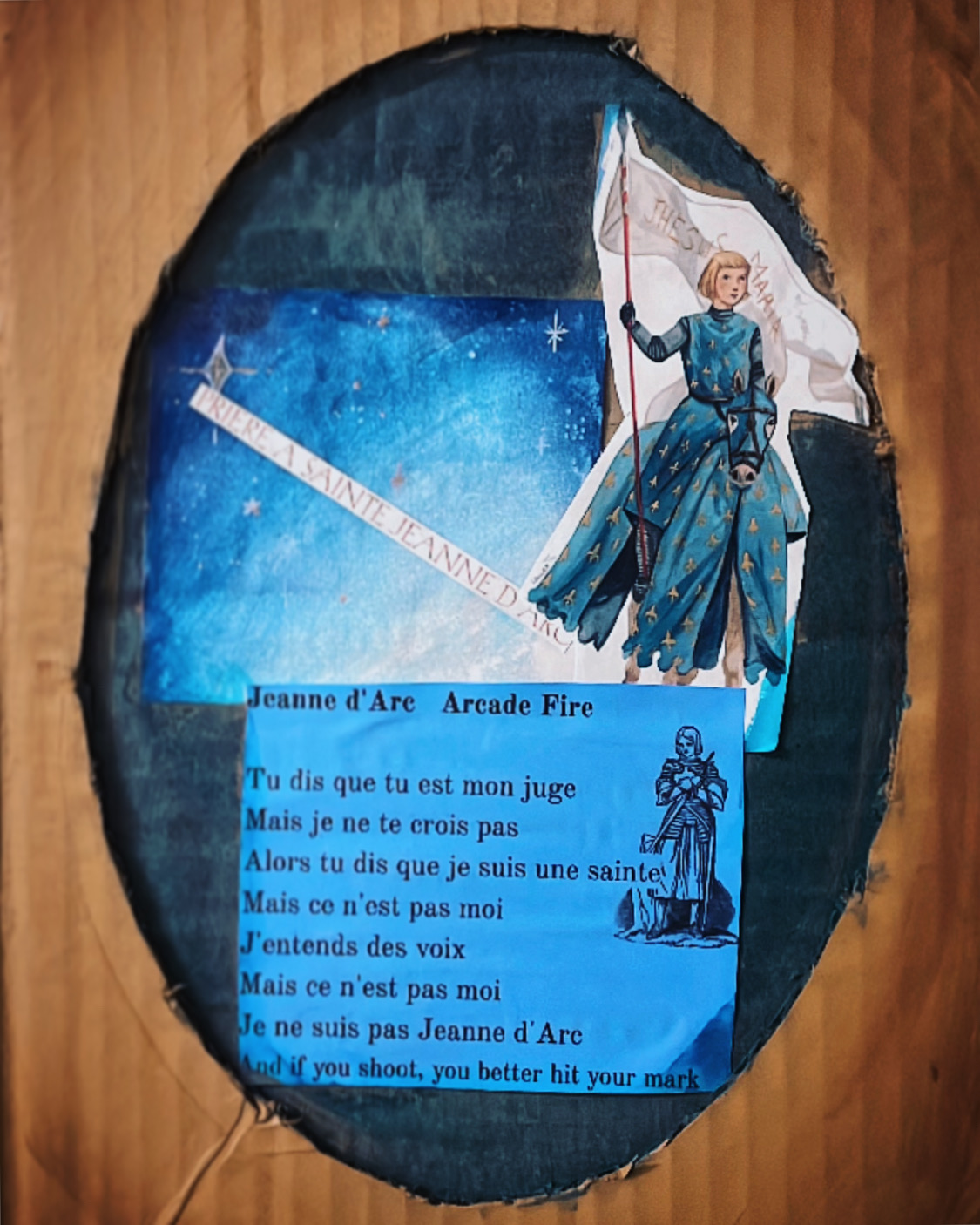
Gifts from the girls
Half a bird egg shell in the garden
A pine knot, a berl
3 droplets of clear sap
Swamp rose petals and mamou flower in my apron pocket
2nd grade girls on the chapel steps in their white first communion dresses and veils
Gouter at 2:45- chocolate chip cookies
Tuesday, April 15, 2025
Tree Medicine
There was a white pine that volunteered in the western yard. It obstructed my view of the open prairie to the southwest, so my husband chopped the top for my photography. That cleared the view for a few years but that tree continued to grow. Except now, at the injury, it weeps sap. I’m not sure if it’s a memory of the damage that was done to clear the path, or if sickness or parasite still lives in the tree. No matter, it has become a medicine tree. On walks around the property I stop there and check the ground for chunks. I follow their fall patterns and gather them. At first I kept this sap and chunks of resin in my journals, not knowing what to do with it except smell it and let it perfume my journal.
One wet Louisiana winter day I went out to build a little fire in the wax myrtle bower but everything was damp. I pulled out the blank pages of my journal with the resin on them and they worked fine, similarly to the bois gras the men collected and used for fire starter. It kept my little fire going and kept me warm that day and others. It became a habit of mine to be able to spot injuries on resin trees and check them no matter where I was. I kept the pieces of resin in a tin can painted with blue and gold stars on the porch. But one day an indigenous friend gave me a balm made of bear grease and five kinds of fir resins from the north, saying that it would heal any wound and not even leave a scar. Sometimes I put the clearest sap on small cuts around my cuticle. Then I knew then what to do with my resin collection.
I melted the chunks down with sweet almond oil and when they were incorporated I filtered it and mixed it with melted bay wax from the bower to make a balm that my boys called “tree medicine”. They refused Neosporin but would accept the tree medicine on their wounds, only after I showed them the tree itself.
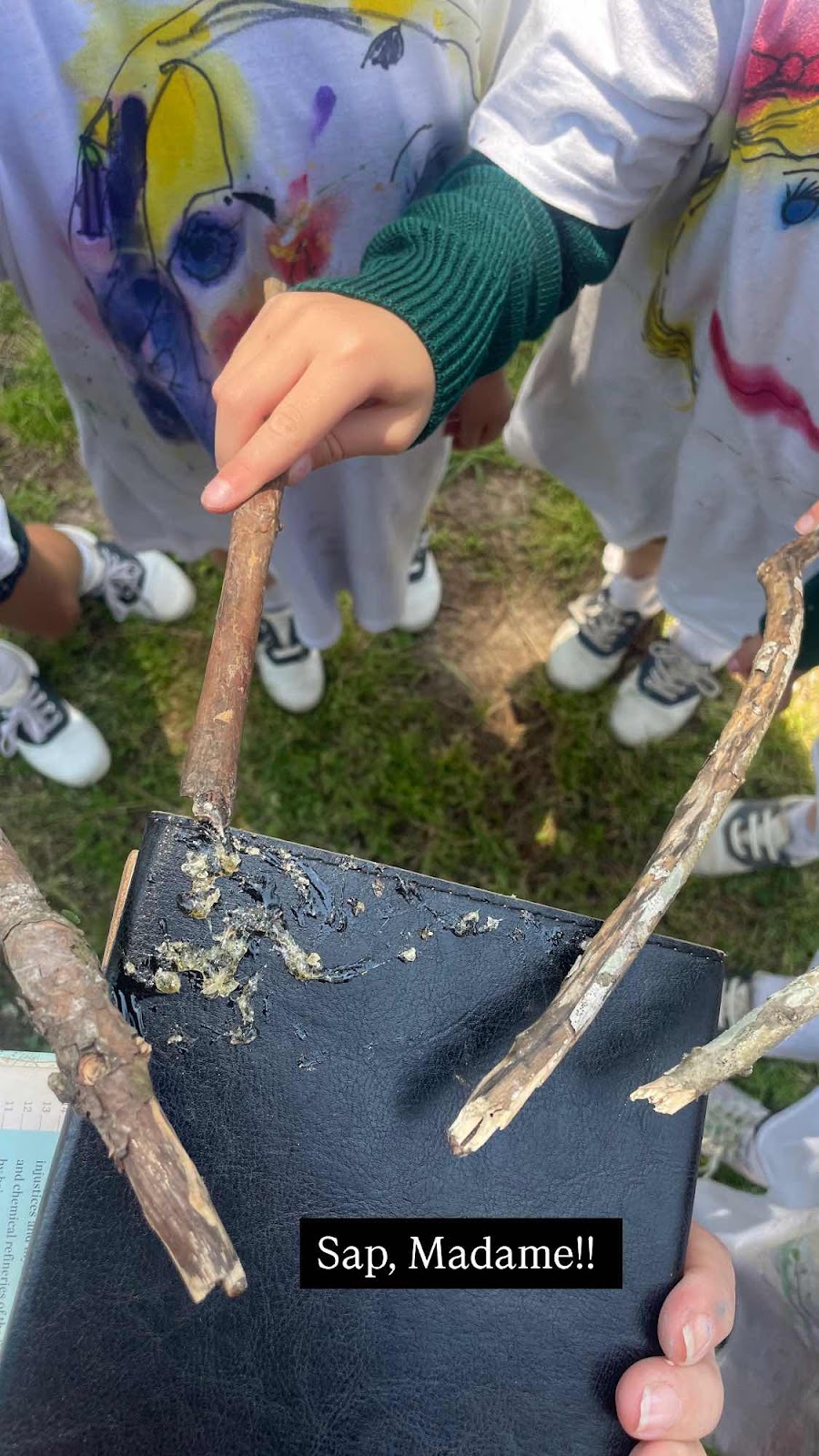
Daily I work atop the Grand Coteau at a school over 200 years old, full of old oak and pine alleys. Some of the pines seem to be nearly as old as the school and bare many scars and knots that give sap. I immediately began to survey each tree at recess and the girls would ask, "Madame, what are you doing?" Last year, one of the largest pines was struck by lightning and it created a rip in the bark that began to weep sap. Daily the girls and I go out and check this tree, because it gives the clearest sap that looks like tears. I have taught the girls that only the wounded trees will give the medicine, and in their healing, we can also share in it a little. I explained that the sap is like the tree’s blood and the resin is the scab. They apply it, like me, to their cuts, and know that hand sanitizer will clean it and cut the stickiness. I make a spray with the resin also that I use daily as a hand cleaner. Sometimes I come to my classroom and there are curious pine sticks on my desk that upon further inspection are tipped with sap. They'll make a resin platter out of a piece of bark, or dig into a knot with sticks often creating more injury and then more sap. One time I found a half pound chunk of resin, who knows how old, on my desk and thought it was a chunk of tasso. This morning as I was out there in my petticoats and cape gathering fresh pine sap tears with a ruler, and curious as it is, none of the girls even asked me what I was doing.
Sunday, September 8, 2024
The Protection of the Academy
The Grand Coteau was high holy ground before the Jesuits settled it for Catholic formation of their religious and then the religious of the Sacred Heart. There is an oral history that says it was there native men went to fight with honor. At the westernmost ridge of the old Mississippi River, and near the tribal boundary of the Attakapas-Ishak and Opelousas, this seems plausible. The elevation alone made this land some of the finest and safest around. Grand Coteau is found at the uppermost limits of the Prairie Carencro, on land on the Teche Ridge that was also called Prairie des Grands Coteaux. Despite some overlap in orientation, both topographically and culturally, the Grand Coteau is singular and known as holy land in south Louisiana folklore.
The prairies, ridges, swamps and coves of south Louisiana overlap and interplay. The edges of the Prairie des Femmes have a liminal quality that matches her landscape and they mystery of the women's protection she provides. Grand Coteau is the high ridge directly east and adjacent to Prairie des Femmes, and the same stretch of Bayou Bourbeaux that acts as PDF's western limit also runs through the Academy of the Sacred Heart at Grand Coteau's realm, less than a half mile from the school. No place is closer to the Praire des Femmes both physically and spiritually, as Grand Coteau, as they share this history of being a mystical place of women's protection. The Academy is the second oldest institution of learning west of the Mississippi River and also the site of a shrine to Saint John Berchman, who appeared there to novice Mary Wilson and healed her through his intercession. This is the reason the Academy is the only place where a recognized miracle took place in North America. Today as I write, the shrine sits directly above my classroom.
The Academy served as a safe haven for women and children through the Civil War. The school was protected by the Union and instruction of the girls never ceased. Because of this protection, within the Sacred Heart, and also due to the communication of industrious women, it was not burned, and the Academy and town of Grand Coteau stand still in operation today.
The convent of the Sacred Heart was founded in Grand Coteau in 1821 by the Religious of the Sacred Heart and had five students that year. In 1861 the Civil War's skirmishes around Bayou Bourbeaux (Battle of Buzard's Prairie at Chretien Point and east along the bayou) were audible from the school and the nuns reported seeing the battle from the third floor gallery. They began to fear for the school and the girls' safety.
In 1862 General Nathaniel Prentice Banks became the commander of the Department of the Gulf. He and his wife Mary Theodosia Palmer Banks had a daughter in a Sacred Heart school at Manhattanville, New York.
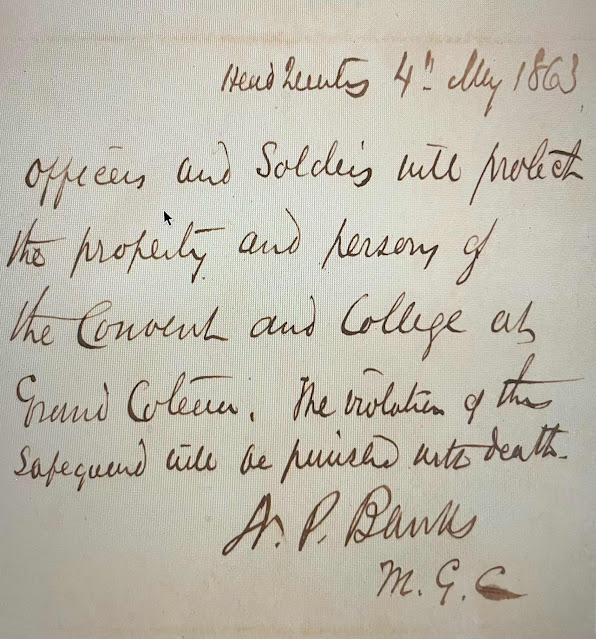
The following is correspondence between Mother Jouve and General Banks concerning the protection of the Academy:
Notes from Reverend Mother Jouve, July 1864
Thanks to the protection of the generals, or rather to the Heart of Jesus, our property has been respected, and guards have been sent by the officers to protect us from the marauders who infest the area. For more than two months, we heard the noise of the cannons; some of the skirmishes took place on the road which leads to the convent, and from our gallery we were able to follow the phases of a real battle between the Confederate guerillas and the Federal troops.
In these moments of crisis, prayer was constantly our recourse, the Way of the Cross, adoration all day and the Holy Hour at night, the most exact practice of the Rule. Finally, the certitude that our Mothers and Sisters were praying for us, all combined to sustain our courage, and to help us to live through this time of trial with calm and confidence."
20 April 1863
To the Superior of the Convent of the Sacred Heart-
If you desire to send letters to New York, you will please forward them to me by the bearer who is instructed to wait for them. I send a safeguard that will protect your school from the stragglers in the rear of my column and if you desire it will leave a guard. I regret that I cannot call to see you. My daughter is with Madame Hardey at New York.
Mrs. Banks who visited the school but a short time since writes that all are well there.
I am respectfully your obt servant,
N.P. Banks
*Mary Aloysia Hardy ppt compiled by Caroline Richard 2020
The Union did not only protect the Academy with stationed guards, but provided the sisters and the girls food and bolts of fabric for new clothes. As far as oral histories of Prairie des Femmes go, the most available in the mind of the people is the one owes the name to the Civil War. Though the name is older than the war, and probably refers to some native wars also, I often wonder if reports of forts and extreme refuge found here rest in the power of the memory of the protection of the women and children of the Convent of the Sacred Heart at Grand Coteau under penalty of death.

Sunday, February 25, 2024

Sunday, February 11, 2024
Sunday, April 23, 2023
Ashlee Eastin Wilson
Ashlee Eastin Wilson is an artist, musician, writer, Cajun radio announcer and teacher from Ville Platte, Louisiana. She is an autodidact in Louisiana (Cajun/Creole) French and is known for her documentation of the folklore of native Evangeline Parish and the locale Prairie des Femmes in Saint Landry Parish through her bilingual commonplace books.

Ashlee was raised in Ville Platte, Louisiana and graduated from the University of Louisiana at Lafayette in Secondary English Education. An anglophone by birth, she became fluent in French by attending University Saint Anne in Nova Scotia. She is a diarist and draws inspiration from hundreds of handmade journals and books that she creates. She taught English literature and French for over a decade in the Louisiana public school system, namely Beau Chêne High School and the Academy of the Sacred Heart at Grand Coteau. With grants procured by her French student’s work, she was able to furnish her classroom with sets of the Dictionary of Louisiana French as well as other cultural titles.
Ashlee dedicated years to careful documentation of the radio program La Tasse de Café on 92.5 KVPI, transcribing stories, local folklore, word play and herbal remedies, as well as modern commercials and snippets of modern Louisiana French life. This work culminated with being hired by KVPI as the youngest female host to announce the news in French, the Tasse de Cafe Radio Program, and even hosting the world-famous Saturday morning French broadcast from Fred’s Lounge in Mamou. The written and recorded documentation from these years serves as the source for her current work in self-taught folklore. Additionally this work prepared her to act as the French announcer for “Bonjour, Louisiane” a morning French music and news program at KRVS in Lafayette, Louisiana. She replaced the long-time host Pete Bergeron who initiated the program and held the position for 40 years.
She serveed on the board of directors for the Council for the Development of French in Louisiana (CODOFIL) from (2009-2012) and as a Louisiana ambassador to the Center des Francophonie des Ameriques in Montreal in 2010.
In 2012 she began the Prairie des Femmes blog that became an early online resource for authentic information about Louisiana language and culture. The blog began as daily documentation of the place known in French as Prairie des Femmes (Women’s Prairie) and research on the origin of this place name. It grew to include photography, memes, writing, French transcriptions, recordings, folklore, music, lessons, and more. It was one of the first websites to offer visual media in Louisiana French and incorporate local folklore and music lyrics into modern media for a younger audience wishing to learn. Ashlee uses her knowledge of modern American culture and blends it organically with the archaic knowledge found in Louisiana French. She has served the community by providing bilingual announcements at the Lafayette Regional Airport, translating the Opelousas Travelers Guide to French, appearing on radio and podcasts such as Louisiane en Vers and Charrer Veiller, as well by hosting the monthly French table in Opelousas as well as the Arnaudville French Table at Nunu's.
As a writer she has created hundreds of hand decorated journals in Louisiana French, as well as dozens of niche zines. She has published as a guest columnist in local papers such as the Advertiser, Advocate, The Current, Les Bonnes Nouvelles, New Orleans Magazine and Acadiana Profile. Her work has been featured in 64 Parishes, Bitter Southerner, Country Roads Magazine and the New York Times. She published her first work ‘Ô Malheureuse’ on UL Press in 2019, a first of its kind collection of modern Louisiana women’s writings in French. The collection began on the PDF blog and was published by UL Press and released in time for the 2019 Festival Acadiens and Creole dedicated to the contributions of women in Louisiana music.
As a photographer, Ashlee has self published three books, The Plains of Mary, a photo book of Marian yard shrines, Prairie des Femmes: Portraits of a Place, a collection of surreal photographs from the countryside of Acadiana, and finally A Prairie des Femmes Field Guide, a collection of art and writing from the PDF blog. Her work has been featured in Louisiana Cultural Vistas, 64 Parishes, and she has shown her photographs with photographers Denny Culbert and Jo Vidrine. She had thirty of her photos shown as part of Frank Relle’s New Orleans in Photographs exhibit in Moscow in 2014. Her work has also been recognized by photographer Zack Smith’s project « My Louisiana Muse » as well as Nick Slie’s « Cry You One. » In June 2024 her land work, as well as her work with the rare medicinal plant vinéraire was featured in Monique Verdin and Rachel Breunlin's Botanica exhibit at the Cabildo in New Orleans.
Her family and home were featured in the Home and Garden Section of the New York Times in 2012. As recently as 2021 her work was featured by National Geographic and in a documentary that won the CreateLouisiana culture grant, Intention, by Olivia Perillo and Syd Horn. It is a film project that seeks to explore the untold feminine narratives of Cajun and Creole artists and healers.
She is a musician, well known in south Louisiana as a professional triangle player. She also sings and writes in Louisiana French, incorporating modern music with that from the Cajun and Creole archives. Her first original song ‘Maison Blanche’ released on The 78 Project in 2014, and in 2020 Nouveau Electric Records released her ‘Trois Rangs’ on 45rpm vinyl, remixed by Korey Richey (LCD Soundsystem). She has played triangle on the recent PBS documentary American Epic.
In 2024 Ashlee's work for the Prairie des Femmes was included in the exhibition Botanica at the Louisiana State Museum at the Cabildo in New Orleans. In 2025 she showed her paintings, journals and plant research with the medicinal known as vinéraire in Prairie Stories, a collaborative show at the Acadiana Center of the Arts in Lafayette, Louisiana. Prairie Stories featured a collection of artists and their work on the folkloric and environmental realms of the Louisiana Prairie. She has spoken at the Louisiana Folklore Society meeting on the Prairie des Femmes Blog and digital folklore, as well as at the Bayou Culture Collaborative meeting where she spoke on her ethnobotany research. Most recently in May 2026 she presented in the Folklife Village's Past to Pixel tent which featured digital folklore at the New Orleans' Jazz fest.
As of 2023 Ashlee is the lower school French teacher at the Academy of the Sacred Heart in Grand Coteau, Louisiana.
Ashlee raises her sons in the Prairie des Femmes.

Articles
Thursday, October 23, 2014
The Enchanted Prairie des Femmes
 |
| And have you seen the dragon who guards the bridge at Frozard? |
I knew the Prairie des Femmes was enchanted because she was so unassuming, and so one day we set out across Monsieur Vacheur's back pastures and then on to the other side, where there is a little grove of trees in a small l'anse of the prairie. There we found all kinds of evidence of fairy activity: acorn caps fashioned into hats and piles of hickory nuts like pyramids, the abandoned wings of the demoiselle fly, their forlorn iridescence catching my eye. There were spider webs along the ground (the tiny elves like to take their morning drink from the dew that gathers in droplets) and mossy green couches where they reclined in the roots of a cypress tree. There were new leaves freshly impaled on twigs scattered about (fairy flags) champignons of red and grey, and even green rings where they had danced the new moon before. But to be sure, I saw no fairies or elves or nains or even lutins, only their evidence. I knew that they were there, though, because after my journey to the l'anse, at dusk I could see the thin plumes of smoke rising like grey threads above the treeline; at night, the candle-flicker of their fires in the wood. Sometimes, I could hear the Indian drums and knew they danced to them in fairy rung:

Then one day in a rush I chanced upon a curious fellow, a centaur on the Prairie des Femmes road! He was all in brown and bareback'd with no identifying qualities that would place him in this century or the last. I had to stop to speak to him, to make sure he was not an apparition (as they are as likely on the Prairie des Femmes road as a centaur) and though I spoke, he gave a sheepish smile but never replied except for a neighing sigh I heard as I turned. As he rounded the third curve, I snapped this photograph, and surely if I had not, you would believe my story or that the Prairie des Femmes was truly enchanted and maybe neither would I.

But then on the morning of the winter solstice, I received the biggest conformation of all! I happened to pass the Queen of the Prairie des Femmes in her grand Chariot en Paille, led by her entourage of black curs. She was wearing her magenta mantle, trimmed in brown furs! She did not stop, but gave me a gentle nod, for she was working to move the hay, for queens of this prairie must tend the herds, even on the darkest day!

Friday, February 22, 2013
Reppin Hard for Exit 11
Prairie des Femmes, Exit 11 (dis wat made me)
 | |
| Facebook message I sent to my old student, who was raised up by Exit 11 |
 |
| King Bobb's Tat, Reppin hard for Exit 11 |
 |
| Ain't that the damn truth |
 |
| As you enter Grand Coteau... |
 |
| and across the Street, King Bobb, reppin his car... |
 |
| Looks like some people love ole Exit 11 as much as I do... |
Thursday, August 9, 2012
Aerials of the Prairie
 |
| Looking south |
 |
| Looking NorthWest |
 |
| The Academy of the Sacred Heart at Grand Coteau |
Subscribe to:
Posts
(
Atom
)