Showing posts with label mystical. Show all posts

Sunday, August 2, 2026

Mi'kmaw Shamanism and the Sacred Approach

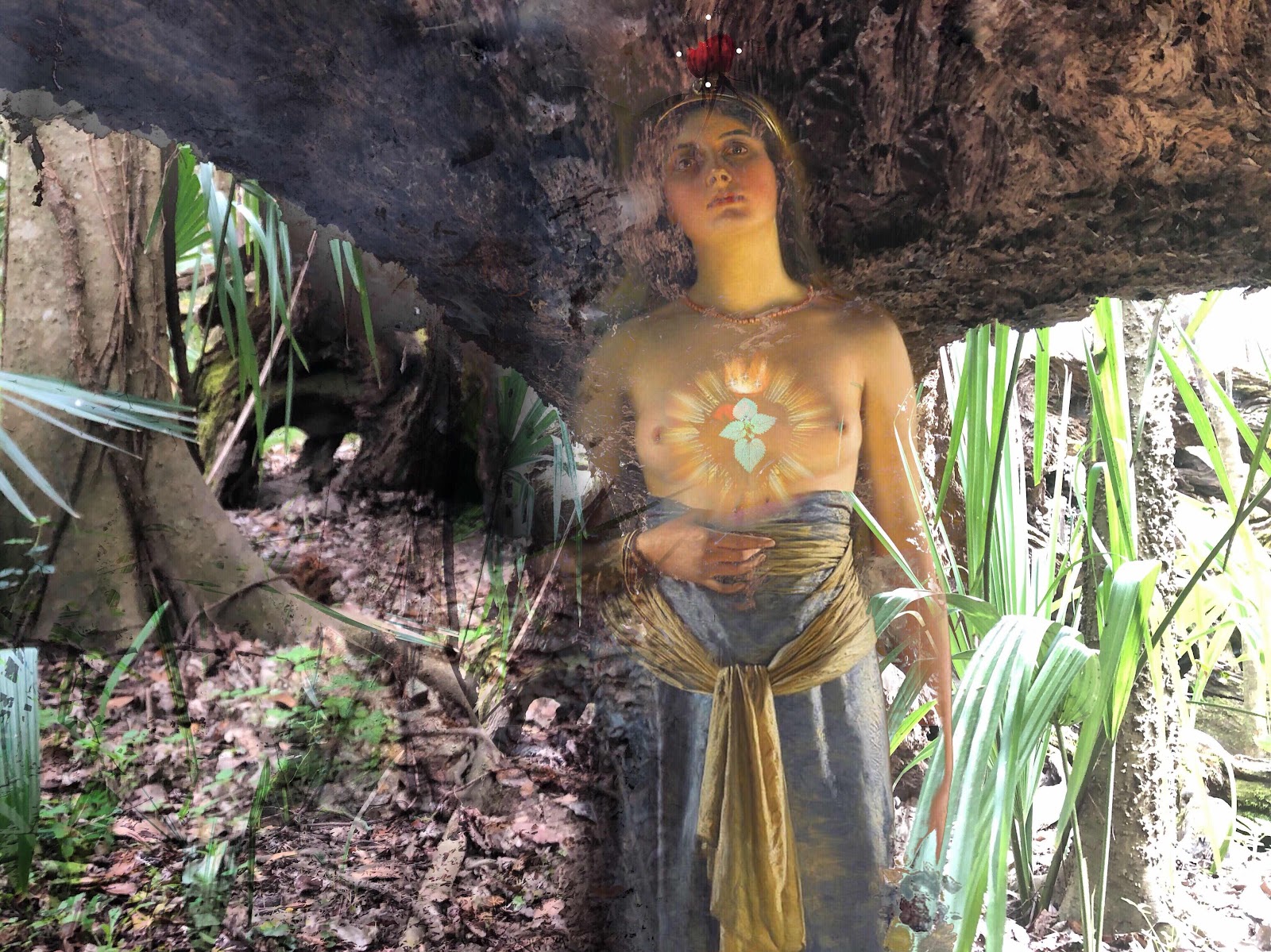
Mededeskooi is a mythical magical herb from Mi'kmaw folklore translated as the "rattling plant". 

The historical ethnography of the Micmac of the sixteenth and seventeenth centuries: Part 6 Bernard Gilbert Hoffman Claims and Historical Research Centre 


But perhaps the most interesting of Micmac magical herbs is that known as mededeskooi, or, as the Micmacs translate it, "rattling plant," because its three leaves strike each other constantly with a sound like that of the rattlesnake. I have not been able to identify the plant, nor can I positively assert that it really exists. I have met but one Micmac who claimed to have seen it, and generally the Micmacs are reluctant to talk about it, because of its highly mystical associations. But it is certainly strongly suggestive of the pasaw, or rattlesnake root, of the Creeks, already referred to, which occupies the same preeminence, and gives its name to the whole magic decoction used at initiations.1 The Micmacs describe the plant as resembling the wild turnip. It stands about knee high, with leaves about eight inches long, like those of the poplar. Its root is the size of one's fist, and the stalk is surrounded by numerous brownish yellow balls as large as buckshot. Others describe the plant as being much smaller. Stephen Bartlett, who thinks he saw the plant, buried some of the yellow balls, but next morning they and the plant had disappeared. As Stephen admits, however, that he did not go through any of the ceremonies necessary in approaching the plant, he is considered a doubtful authority, even by himself.

 To find the plant, one must first hear the bird called cooasoonech ("dwelling in old logs") singing in an interval in the forest, otherwise the plant is invisible. This bird is brown and very small, but is chosen chief of all the birds because he is quickest and can hide in the smallest holes. He is sometimes called booöin, "the magician," from his aptitude for quick disappearance, and his ability to fly through fire without being injured. When he sings, one should follow him at once, although, like the mystic songster known in Yucatan, he often leads one on and on through the forest depths, leaving him at last lost and forlorn. But the fortunate 6ne will at length hear the rattling leaves of the magic plant as he approaches it, and then the plant itself will soon be seen. He must now gather thirty sticks and lay them in a pile near the plant. Next he must induce a girl, the more beautiful the better, to accompany him to the plant. Under circumstances of the greatest temptation, both must have no wish save to obtain the medicine or the plant will disappear. They must approach it crawling on hands and knees. Now the plant is inhabited by the spirit of a rattlesnake, which comes forth as they near the plant, and circles around it.1 The man must pick up the serpent, which will then disappear without harming him. These tests of perseverance, self-control, and courage are all I have heard, but there may be others. The plant must be divided in four portions, of which three may be taken, but one must be left standing. The three parts are scraped and steeped and a portion worn about the person. Some say that, divided in seven parts, this medicine will cure seven diseases, but the great majority believe that it will cure any disease and gratify any wish. It is held to be especially potent as a love-compeller. No woman can resist it. If the possessor wills it, she will follow him until he breaks the spell by touching her. This attribute is held also by the "seven-hued lilies of Te-net-sa-li," already referred to, and by the flowers of the goddess Xochiquetzal in Mexico, the touch of which produced everlasting love. It may be worthy of notice that the mnededeskoo' is a trefoil plant. Many instances of its power over women are related as occurring recently, and for this and other reasons I am told the Micmacs strongly deprecate the knowledge and use of it. If the circumstances of these stories suggest some knowledge of hypnotism amongst them, I simply state the fact. Personally I have not yet seen any evidence of such power there. The rattlesnake which accompanies the plant brings it at once into touch with the mysteries in all parts of the globe. The same species is associated by the Micmacs with a dance which they used to perform only at night. This dance was mystical in a marked degree, and was connected with the Pleiades. 

Stansbury Hagar

1 Is it a mere verbal coincidence which connects this plant with the Piasa (pro- nounced piasaw), the winged serpent of Illinois described by McA
1 Hernandez, physician of Philip 
II., quoted by Brasseur, states that the Mexicans used an herb called ololiuhqui or serpent plant when they wished to consult with their gods. By means of it they were enabled to behold a thousand visions and the forms of hovering demon


Saturday, May 23, 2026

The Dome of the Prairie

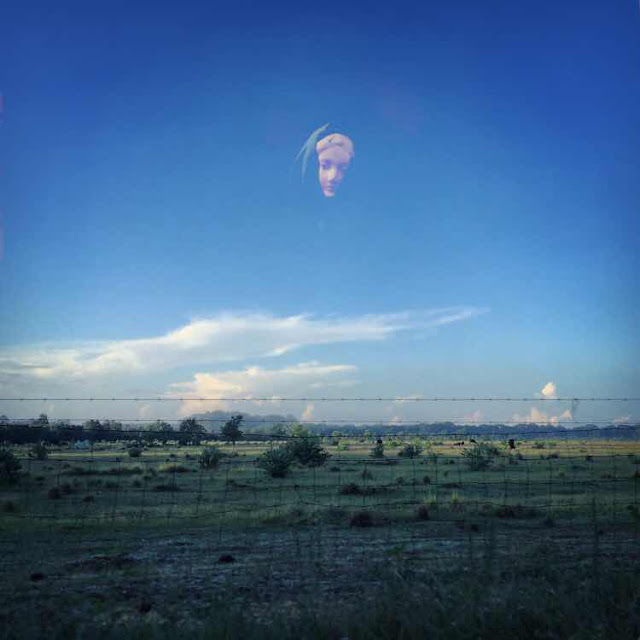
The prairie has a memory and it echos like a dome. I first felt it when I was alone out here at night, in a pull camper, waiting. I'd sit at the table, the light from the sliding glass door created a halo of illumination that terminated at the long grass, where I perceived its rustling as large animals passing in the darkness. 

The pre-Katrina nights out here I was afraid of the wilderness of this place. It was the camp. I was never sure how near or far I was from civilization. I stayed quietly in the camper, barely wanting to alert the prairie of my presence. But the Tuesday New Orleans flooded, like so many others, I fled north and took refuge in the prairie like no other place before. The long gravel road was my moat, the orb of light in the field around the camper became my world, the safest place in south Louisiana. 

We planted the prairie edge with a ring of thousands of native trees: sweet gum, live oak, cypress, persimmon, pecan, mulberry etc., keeping the center pasture open in different rotations. The trees created a little wood where we maintained a path, and formed a semi-circle around the perimeter of the property. The higher the edge trees grew, the more my prairie view was obstructed, but also the more the birdsong echoed within the dome of the prairie. I sat at the base of the cypress tree and imagined the life I would lead here. Somewhere, floating in the air above the prairie ground were the rooms of a castle-home not yet built, where I would live blissfully, conceive and become a mother, raise my children, where I would birth this very blog and all of the notions in it, where I would deny myself the world for the protection of the prairie.

I became one with this place, instinctually returning all fertility to her ground. It's here where my children's nombrils are buried, under a live oak in the western yard. I ate the flowers and fruits and roots produced here. I gathered and made medicines daily. I made perfume oils and sprays of the prairie flowers and balms with the pine sap. I caught rainwater and collected dew on resonant days. In the late afternoons in fall, I could hear a faint rumble, like thunder, of the Beau Chene drum line echoing in the dome. The prairie remembered drums.

I settled into the natural law of this land. We grew and lost both plants and animals without getting too sentimental.  We allowed nature to rule, even a little wildly. Out of this natural kingdom many realms were born in me. We planted gardens but I never had a green thumb. It was the native plants that resonated because they were not reliant on me, except for my understanding of them and their environment and my dedication to their growth and protection. As time when on plants like honeysuckle, chassepareille, elderflower and blackberry crowded themselves through every crack of the fence, waving wildly to be noticed, to be made of use, and I listened. 

There was an unassuming charm here at prairie, an enchanted, forgotten country east of Opelousas.  It was in the juxtaposition of her beauty and humility, of how she is treated now, and the dignity in the story of who she was before. She remembered the millennia of seasons, and despite the modern agriculture, the cutting and poisoning and the forgetting of the old ways and the old languages, the plants remembered the cycles and seeds still remained in the ground who, despite the loss of so much rhizome, also remembered how to grow, especially after a prairie burn. 

There was information in the silence and the space that I lived in, the movements of the plants and animals, the sunrises and sunsets, the position the moon rose at different phases adn in relation to the cypress tree.  Sometimes when the prairie sky domed around the edge trees I could feel the different birdsongs that echoed within this protectorate. Slowly I learned that language, too.  

My red ballet flats with prairie dirt in the camper, 2004

Decorations of dog fennel and a bottle of red liquid we found in the house, room party 2004

Me and Paul in the orb, 2005


The camper and the room, summer 2005

the pull camper 


Saturday, April 11, 2026

À l’Académie

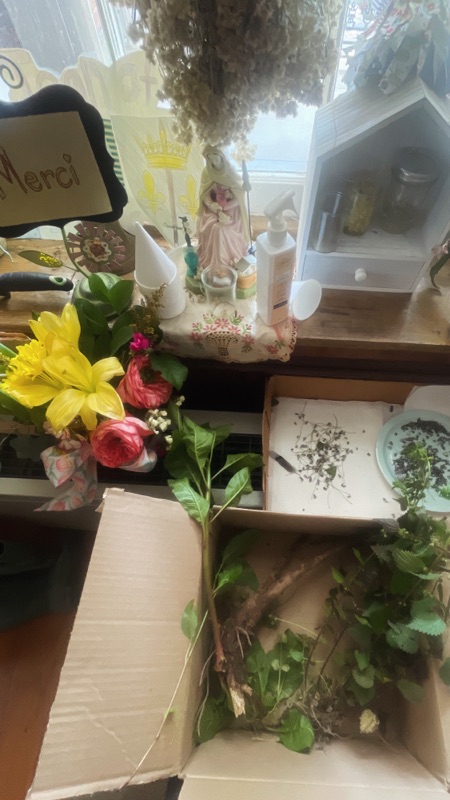
Gathering nettles, poke root and  
Clear pearls of pine sap 
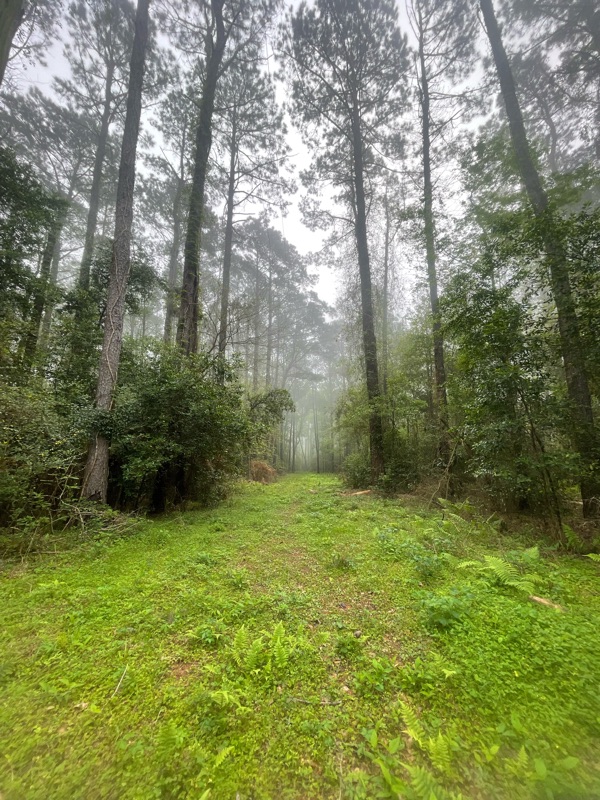
In the bois de Sacré Cœur 
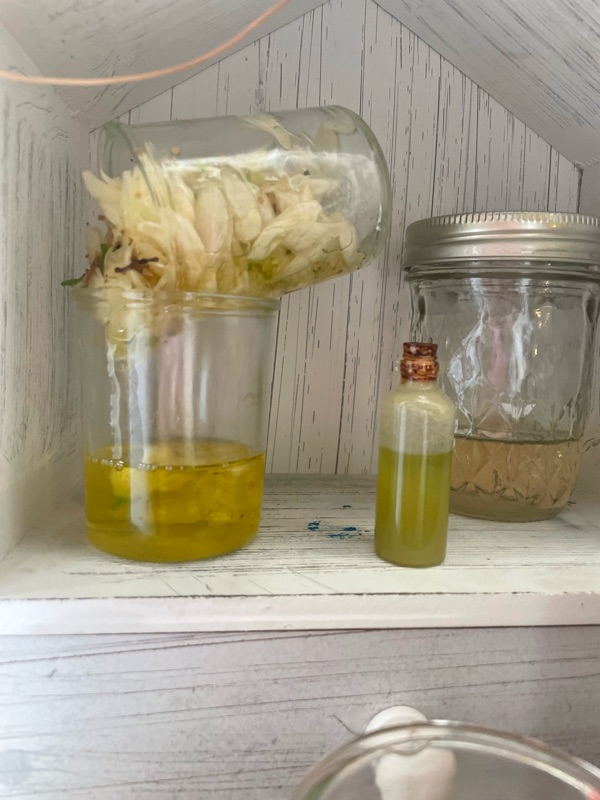
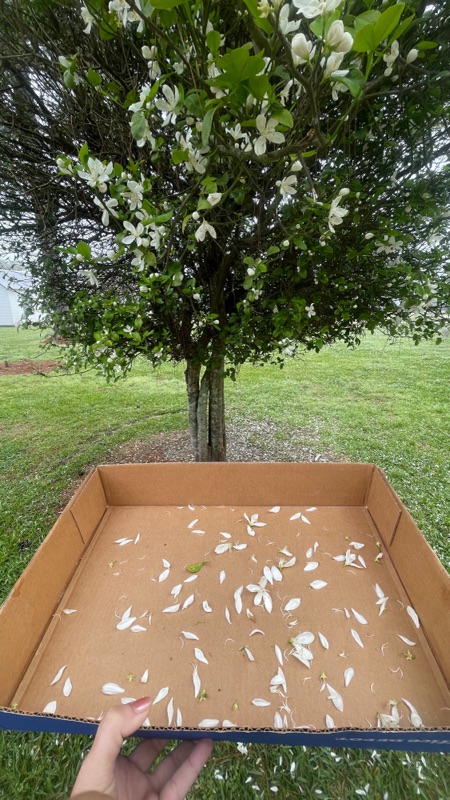
Making wild neroli enfleurage oil 
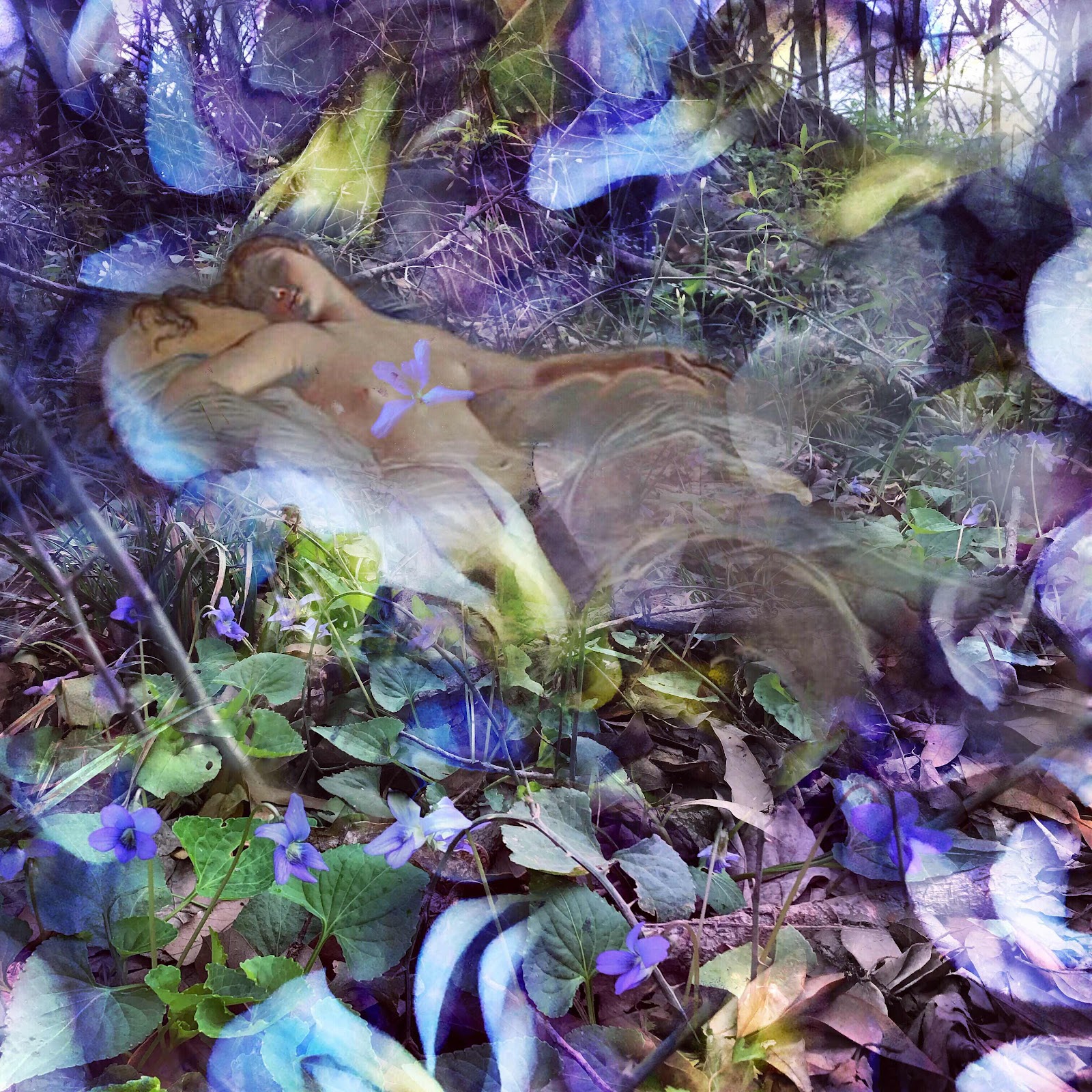
Collecting violets under the oak alley 
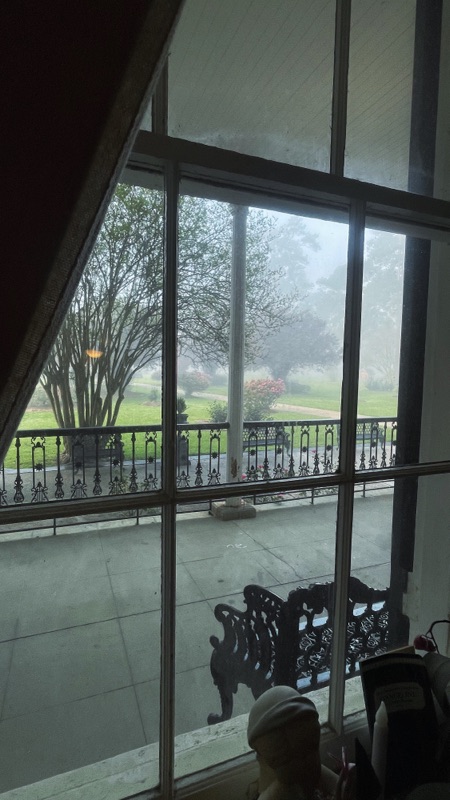
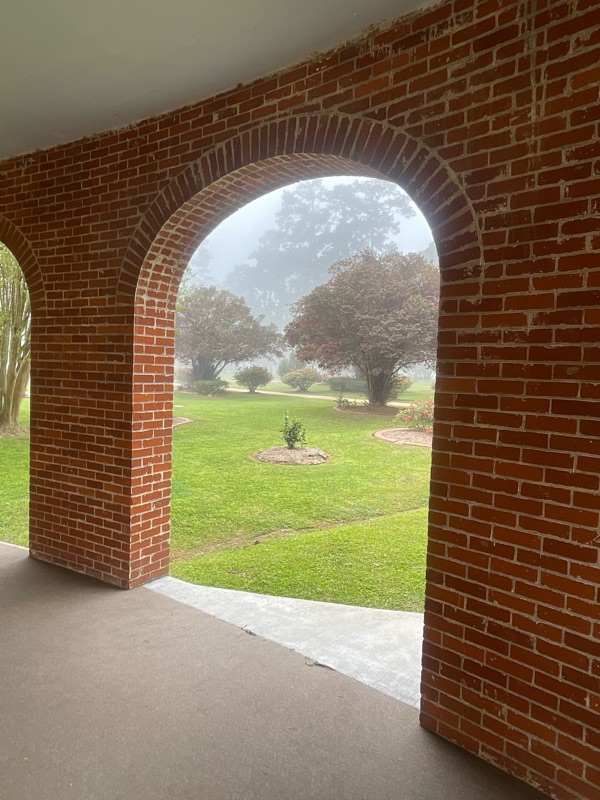
Je rentre dans l'arcade, l'aire est lourde 
With osmanthus ​and fog - a springtime aerosol 

Wednesday, August 5, 2015

Bayou Têche Treasure

We went down to the Bayou Teche at Leonville in the cool of the evening to run the boat a little. Heard the bells singing from Saint Leo. Spotted some old bottle dumps in the bank. Found some lovely whole blue miniature pottery, a few bottles, and even a footed, gold trimmed, rose teacup with only the handle missing. Can't stop imagining some fancy Leonville lady throwing that out only to have me dig it out of the bank decades later. Thinking of bleaching it well and making it my new favorite cup. 

Update: Caught a heatstroke digging this up.


Monday, January 5, 2015