
Showing posts with label Herbal Remedies. Show all posts
Showing posts with label Herbal Remedies. Show all posts
Saturday, May 16, 2026

Sunday, May 10, 2026
Medicines I made in early May
First thing I did this morning was to collect the rain drops off of the gardenias, making a gardenia water that smells like perfume.
Cherry bounce with wild fruit gathered in St. Landry Parish Louisiana
Perfume sprays: bee balm, baume et vinéraire, life everlasting
Dried baume in my journal
Cinnamon and clove alcohol
Lavender oil alcohol
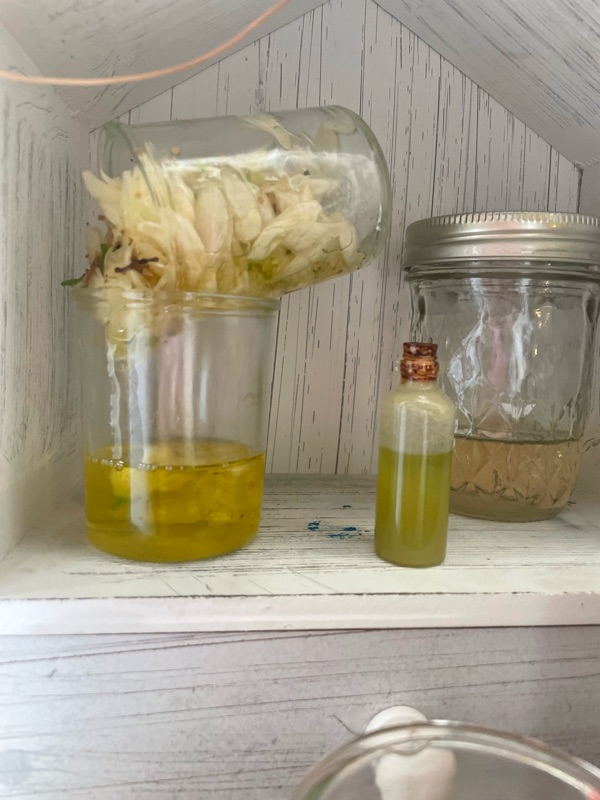
Gardenia enfleurage oil from the gardens
Lightening pine sap
Clearest swamp rose hydrosol before I left for New Orleans
Friday, May 8, 2026
Lightening Pine
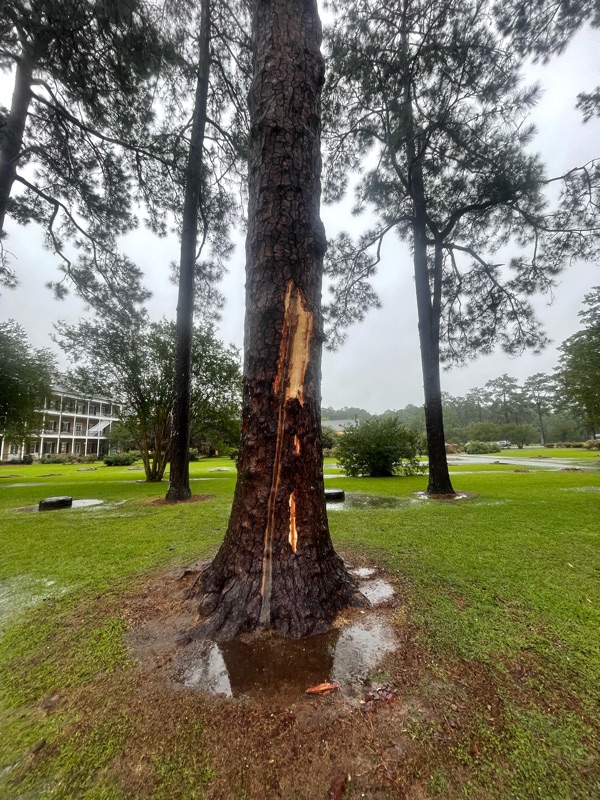
In the storms this afternoon lightening struck very close to the Sacred Heart. I was standing in the first grade classroom admiring their fairyland village of cascading vines and paper mâché houses when the bright lightening flashed through the windows along the gallery and thunder boomed, shaking the coteau under our feet. We screamed and huddled together; it was so close! I started singing Oh les trains quand ils jubutaient by Cesar Vincent to the girls.
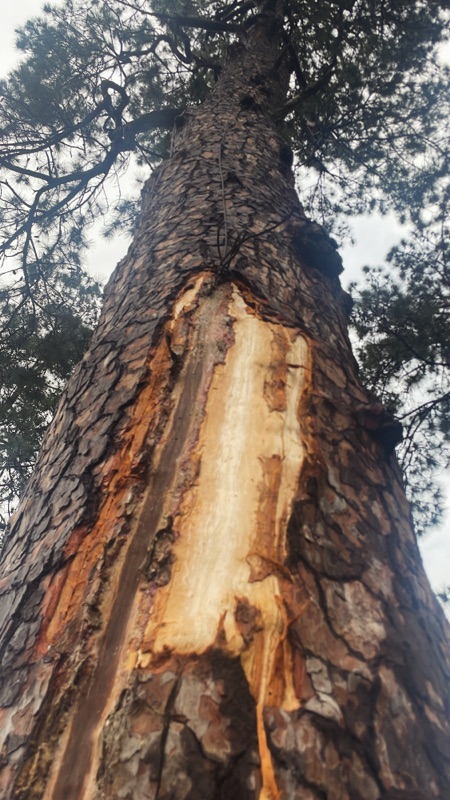
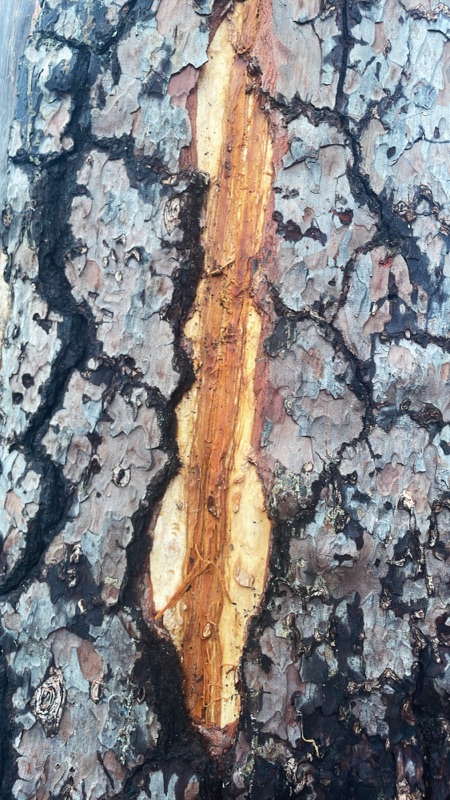
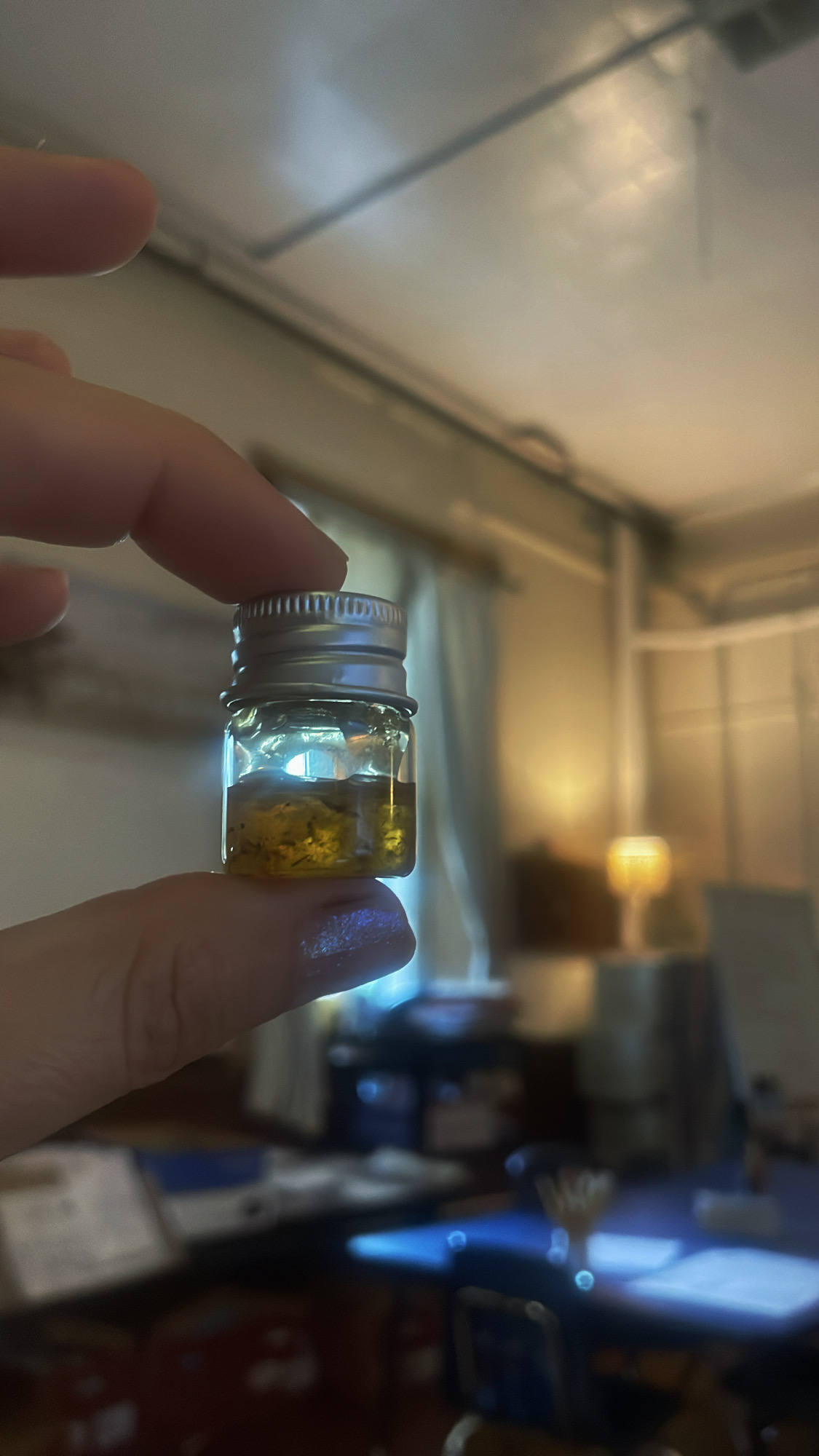
I wondered if it was at my lightening pine again, the tallest and biggest in the pine alley, less than a hundred feet from our 204 year old school building. I check it almost daily since it was struck last year. The injury left is a long open vein in the bark that exposes the weeping sapwood. It produces the clearest tears of sap, like amber pearls at the seam. I've spent the last year collecting the clear suspended drops from this injury in miniature jars. I remember being so interested when it was struck because I knew it would open a wound that would give. I felt that the sap was now charged with a clear electricity. Since then we have observed the tree healing itself again. The bark can be read. There is an identical scar around the other side that is sealed up with decades of bulbous resin that sometimes form balls that fall at the base. I collect them as curiosities for our knick-knack shelf in class. I found one today. I have taught my girls about tree medicine.
In the light rain after the storm I wandered out onto the wet grounds to check the great pine and found it had again acted as sentinel, channeling the electricity through the sap and down into the holy coteau, a lightening rod protecting the entire campus.
Friday, April 17, 2026
Medicines I made in the Spring
Medicine I made since the early spring
Vinéraire oil and balm
Wild orange flower enfleurage oil
Sweet olive flower enfleurage oil
Poke root oil
Pine sap balm and oil
Cleaver infusion
Lizard's tail infusion
Chickweed oil
Plantain oil
Nettle tea
Nettle powder
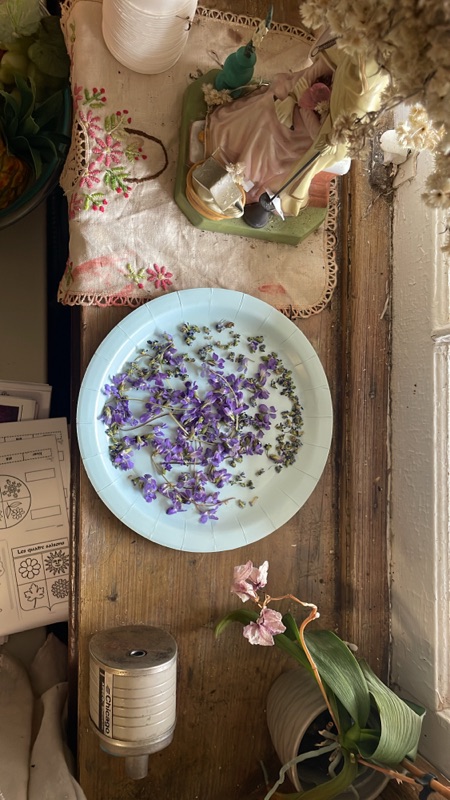
Violet hydrosol
Violet tea
Clove, nettle and poke hair tonic
Clove spray for face
Cinnamon Florida water
Wax Myrtle infused alcohol
Saturday, April 11, 2026
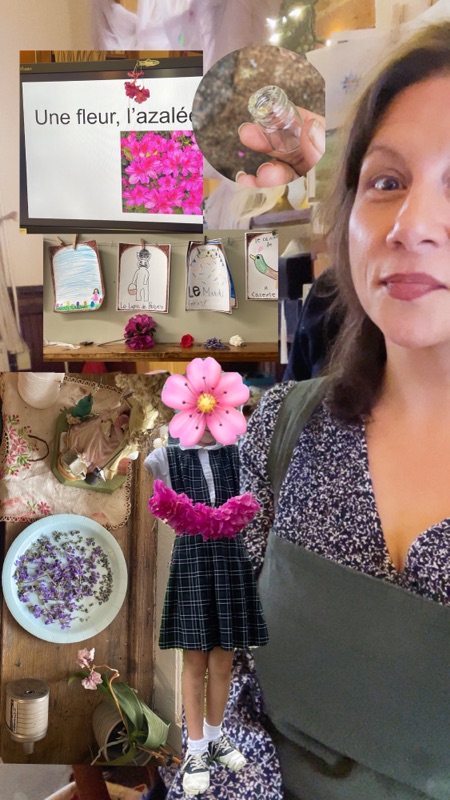
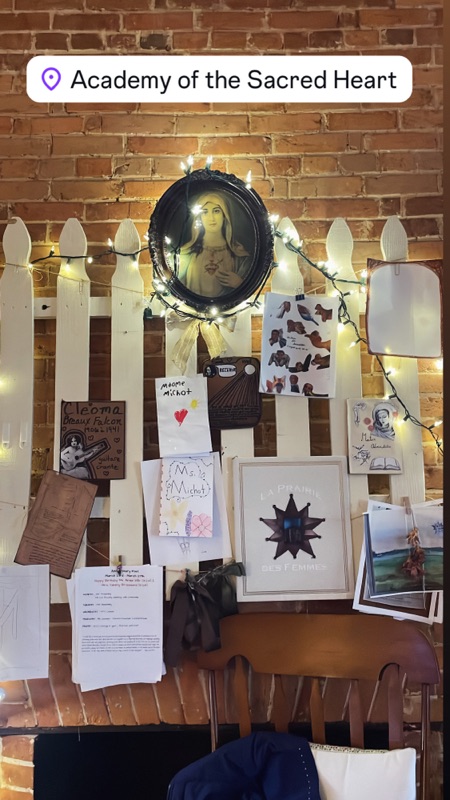
À l’Académie
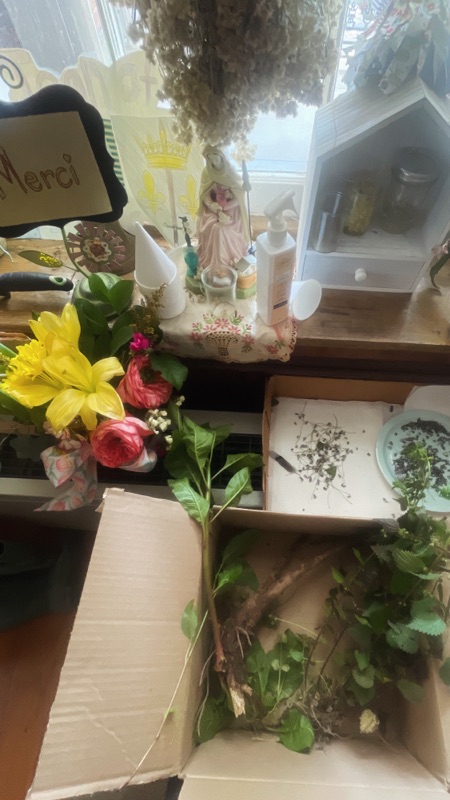
Gathering nettles, poke root and
Clear pearls of pine sap
In the bois de Sacré Cœur
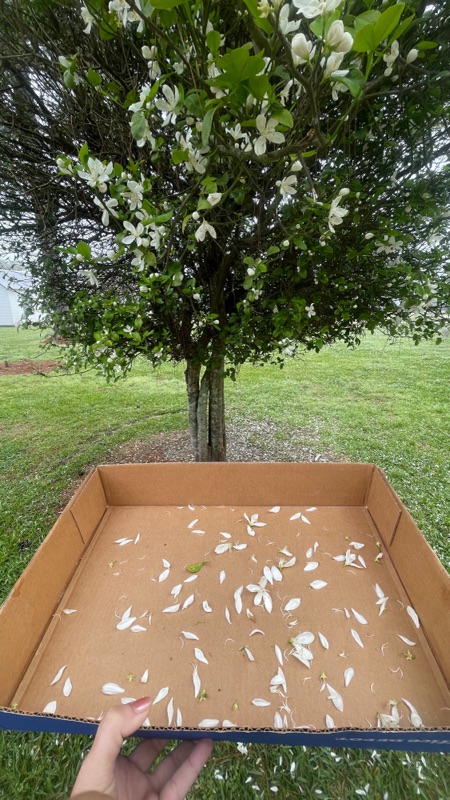
Making wild neroli enfleurage oil
Collecting violets under the oak alley
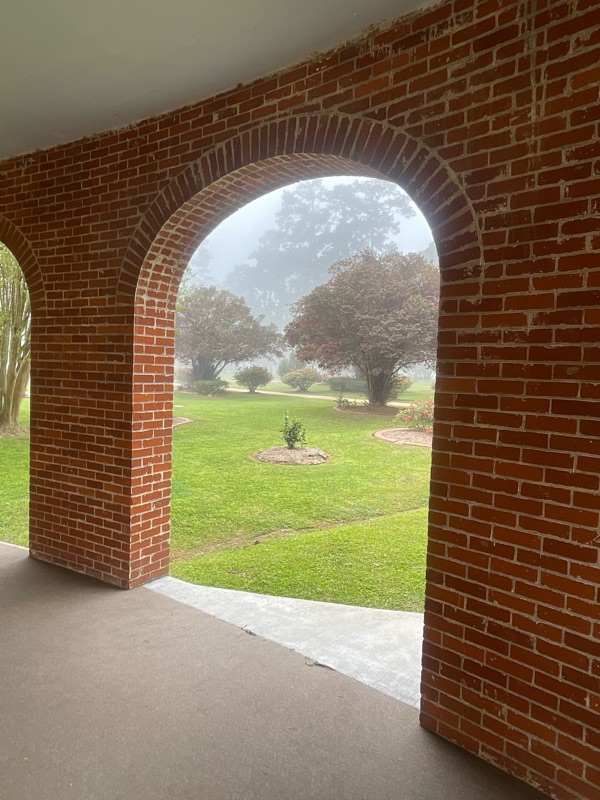
Je rentre dans l'arcade, l'aire est lourde
Making wild neroli enfleurage oil
Collecting violets under the oak alley
Je rentre dans l'arcade, l'aire est lourde
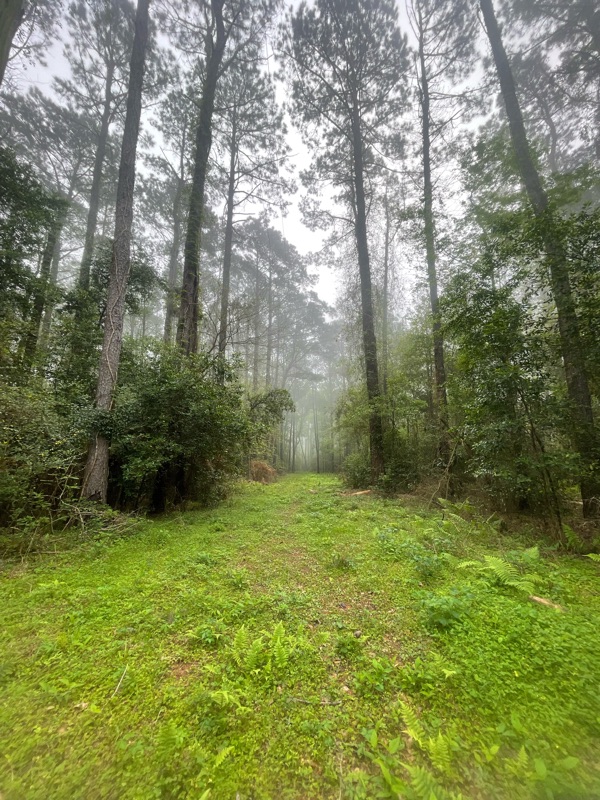
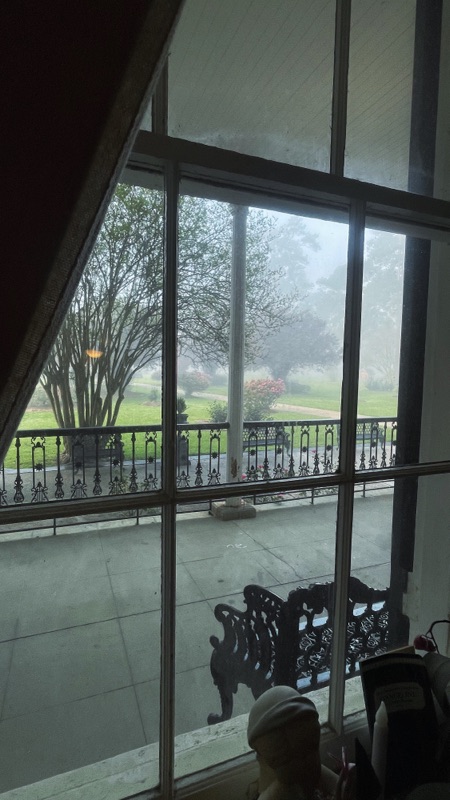
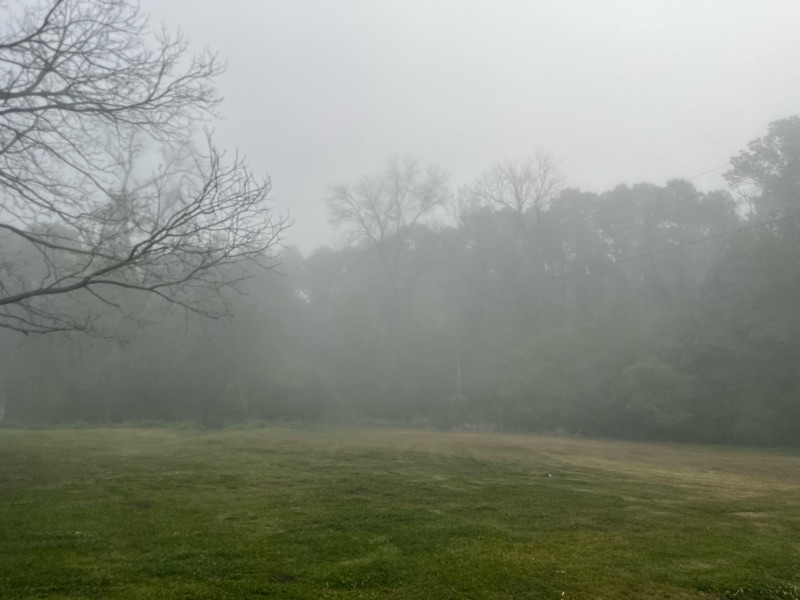
With osmanthus and fog - a springtime aerosol
Tuesday, April 15, 2025
Tree Medicine
There was a white pine that volunteered in the western yard. It obstructed my view of the open prairie to the southwest, so my husband chopped the top for my photography. That cleared the view for a few years but that tree continued to grow. Except now, at the injury, it weeps sap. I’m not sure if it’s a memory of the damage that was done to clear the path, or if sickness or parasite still lives in the tree. No matter, it has become a medicine tree. On walks around the property I stop there and check the ground for chunks. I follow their fall patterns and gather them. At first I kept this sap and chunks of resin in my journals, not knowing what to do with it except smell it and let it perfume my journal.
One wet Louisiana winter day I went out to build a little fire in the wax myrtle bower but everything was damp. I pulled out the blank pages of my journal with the resin on them and they worked fine, similarly to the bois gras the men collected and used for fire starter. It kept my little fire going and kept me warm that day and others. It became a habit of mine to be able to spot injuries on resin trees and check them no matter where I was. I kept the pieces of resin in a tin can painted with blue and gold stars on the porch. But one day an indigenous friend gave me a balm made of bear grease and five kinds of fir resins from the north, saying that it would heal any wound and not even leave a scar. Sometimes I put the clearest sap on small cuts around my cuticle. Then I knew then what to do with my resin collection.
I melted the chunks down with sweet almond oil and when they were incorporated I filtered it and mixed it with melted bay wax from the bower to make a balm that my boys called “tree medicine”. They refused Neosporin but would accept the tree medicine on their wounds, only after I showed them the tree itself.
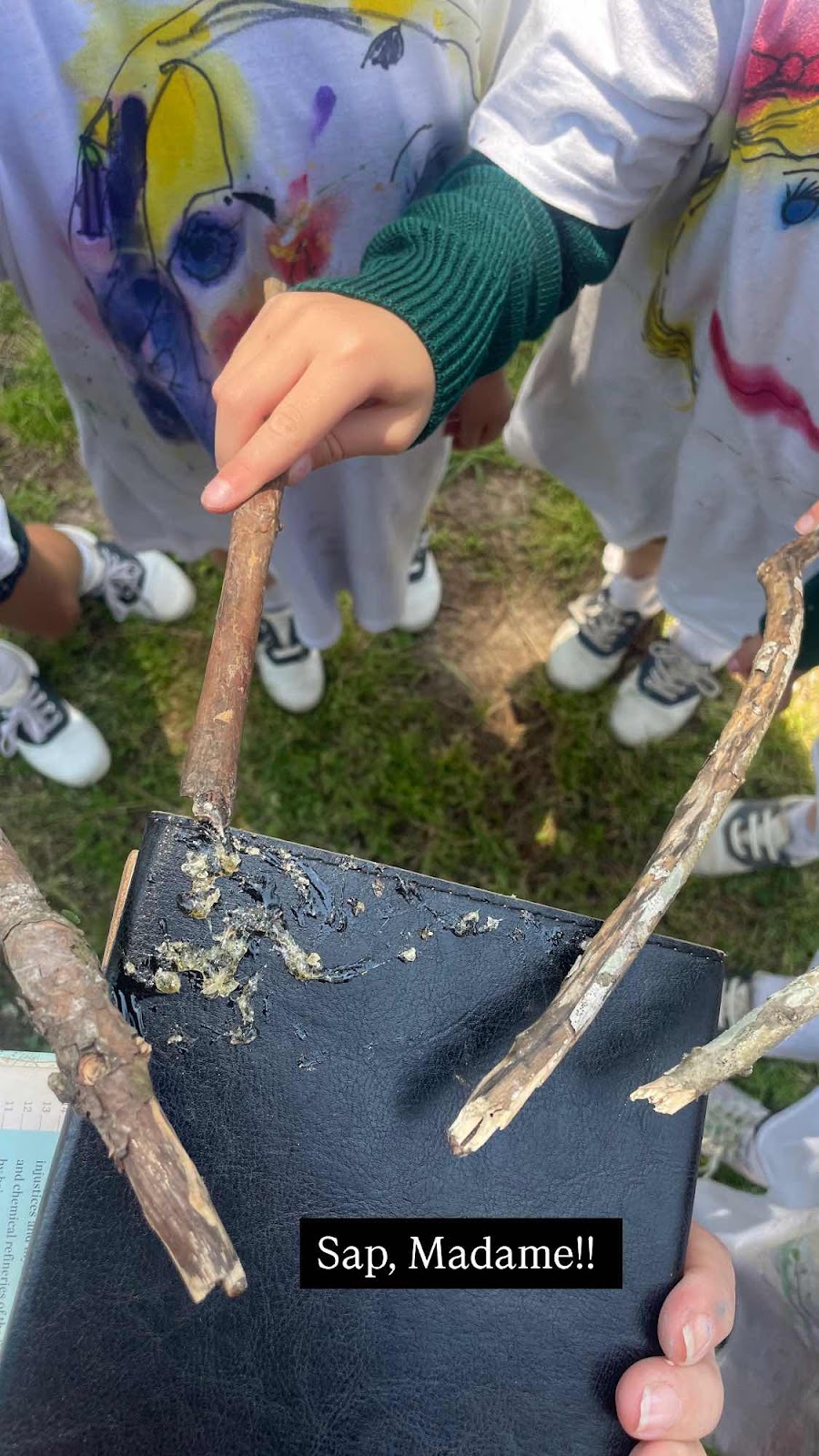
Daily I work atop the Grand Coteau at a school over 200 years old, full of old oak and pine alleys. Some of the pines seem to be nearly as old as the school and bare many scars and knots that give sap. I immediately began to survey each tree at recess and the girls would ask, "Madame, what are you doing?" Last year, one of the largest pines was struck by lightning and it created a rip in the bark that began to weep sap. Daily the girls and I go out and check this tree, because it gives the clearest sap that looks like tears. I have taught the girls that only the wounded trees will give the medicine, and in their healing, we can also share in it a little. I explained that the sap is like the tree’s blood and the resin is the scab. They apply it, like me, to their cuts, and know that hand sanitizer will clean it and cut the stickiness. I make a spray with the resin also that I use daily as a hand cleaner. Sometimes I come to my classroom and there are curious pine sticks on my desk that upon further inspection are tipped with sap. They'll make a resin platter out of a piece of bark, or dig into a knot with sticks often creating more injury and then more sap. One time I found a half pound chunk of resin, who knows how old, on my desk and thought it was a chunk of tasso. This morning as I was out there in my petticoats and cape gathering fresh pine sap tears with a ruler, and curious as it is, none of the girls even asked me what I was doing.
Tuesday, June 18, 2024
Bashuchak
I've been going down a few rabbit (tobacco) holes in search of more indigenous information about the vineraire. The first reports I received of it being nearly gone down the bayou came from native women who remembered their daddies bringing it in from the rabbit hunt. Folklore says that rabbits live in the briar patch. This rabbit tobacco is a natural healer for the thin skinned lapin if it is ever snagged.
The Native Ethnobotany Database has been helpful in listing the varied ways tribes across the continent used it. I was most interested in some of the ways of the Choctaw, since they were a major tribe in my area of Louisiana. In google searches using different common names for the plant, as well as searching for Choctaw sources with it, I found the book Source Material for the Social and Ceremonial life of the Choctaw Indians by John R. Swanson, that contained by first cite of the Choctaw name for life everlasting: bashuchak, or bvshuchak. I searched online Choctaw dictionaries and a glossary and noted that this word also looked like the word I knew for sumac, bachoucta. In an email with indigenous writer Jeffery Darrensbourg, he relayed to me information that confirmed that bachoucta was the same word as bashuchak (also bvshuchak) and could refer to four medicines: greenbriar (I know this as kantak), elderberry, purple sumac and rabbit tobacco. I can also say that all four of these plant friends grow around my home, and came into my life around the same time.
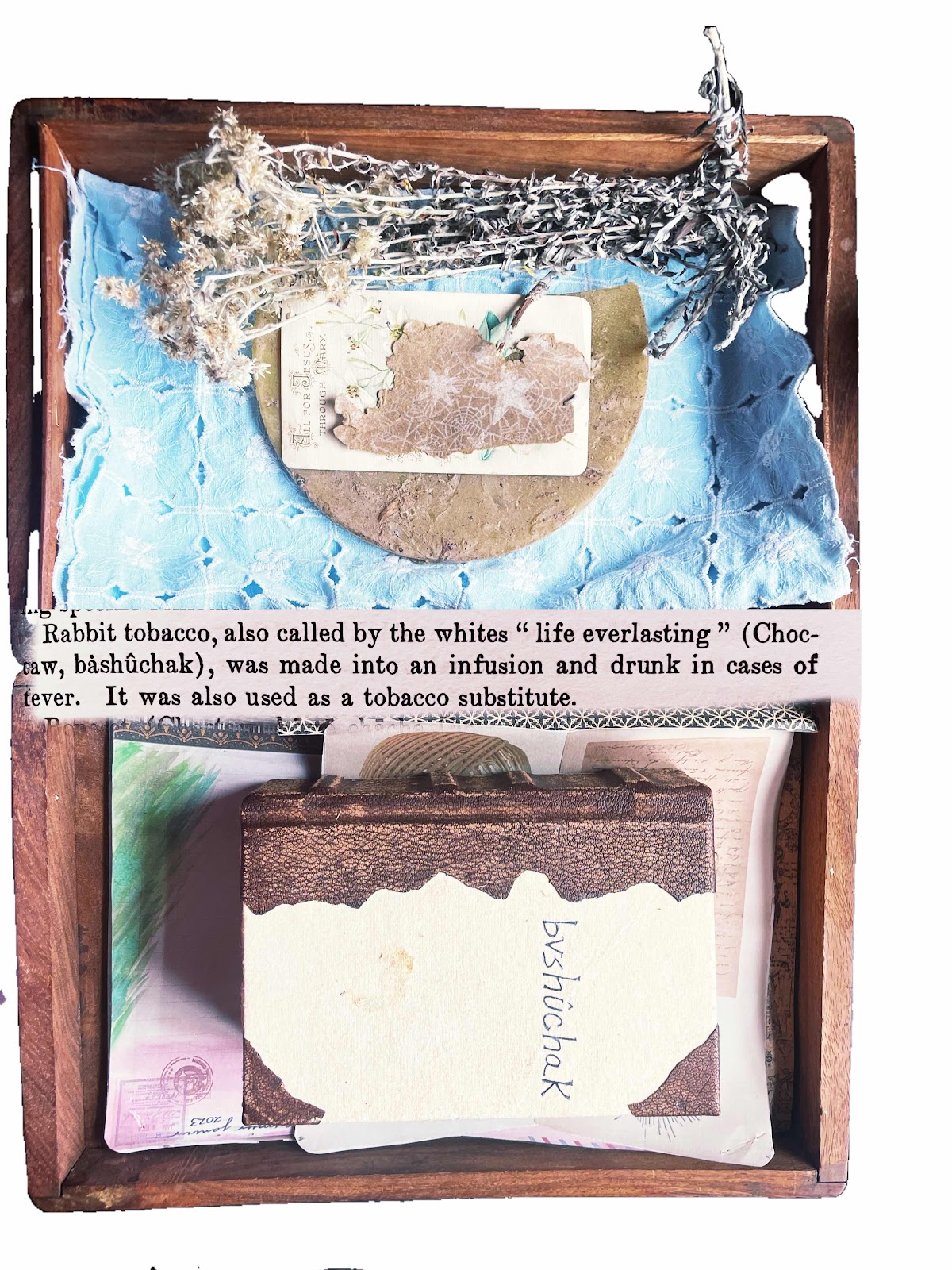
See my work featuring the above items at Botanica the Cabildo through 2026.
Sunday, November 6, 2022
Wednesday, November 2, 2022
Wednesday, October 19, 2022

Sunday, October 2, 2022
Friday, November 10, 2017

Thursday, July 14, 2016


Sunday, May 15, 2016


Wednesday, September 9, 2015


Thursday, August 13, 2015

Monday, July 13, 2015
Lavender Swamp Rose Sea Salts

Crushed lavender flowers, swamp rose petals, pink salt, sea salt and lavender oil.
Sunday, May 10, 2015


Wednesday, December 10, 2014


Friday, September 5, 2014
Collecting Sassafrass for File'
Pick the leaves before the first cold snap, ideally the last full moon in August. The nutrients are
still in the leaves then. Hang the branches to dry in a pillowcase on the line, or in a the cabanne, and at
Thanksgiving, with the family all get together, clean out the
twigs, crumble the leaves by hand, picking out the leaf stems. Then use a spice mill, blender or mortar and pestle to grind and then you can sieve it to make it a very smooth powder.
If a tree is not near, replant it before spring in the new location, before the budding begins, while it is still dormant. Usually you can find a few younger plants near the older, as the roots run, and offshoots develop.
If a tree is not near, replant it before spring in the new location, before the budding begins, while it is still dormant. Usually you can find a few younger plants near the older, as the roots run, and offshoots develop.
Subscribe to:
Posts
(
Atom
)