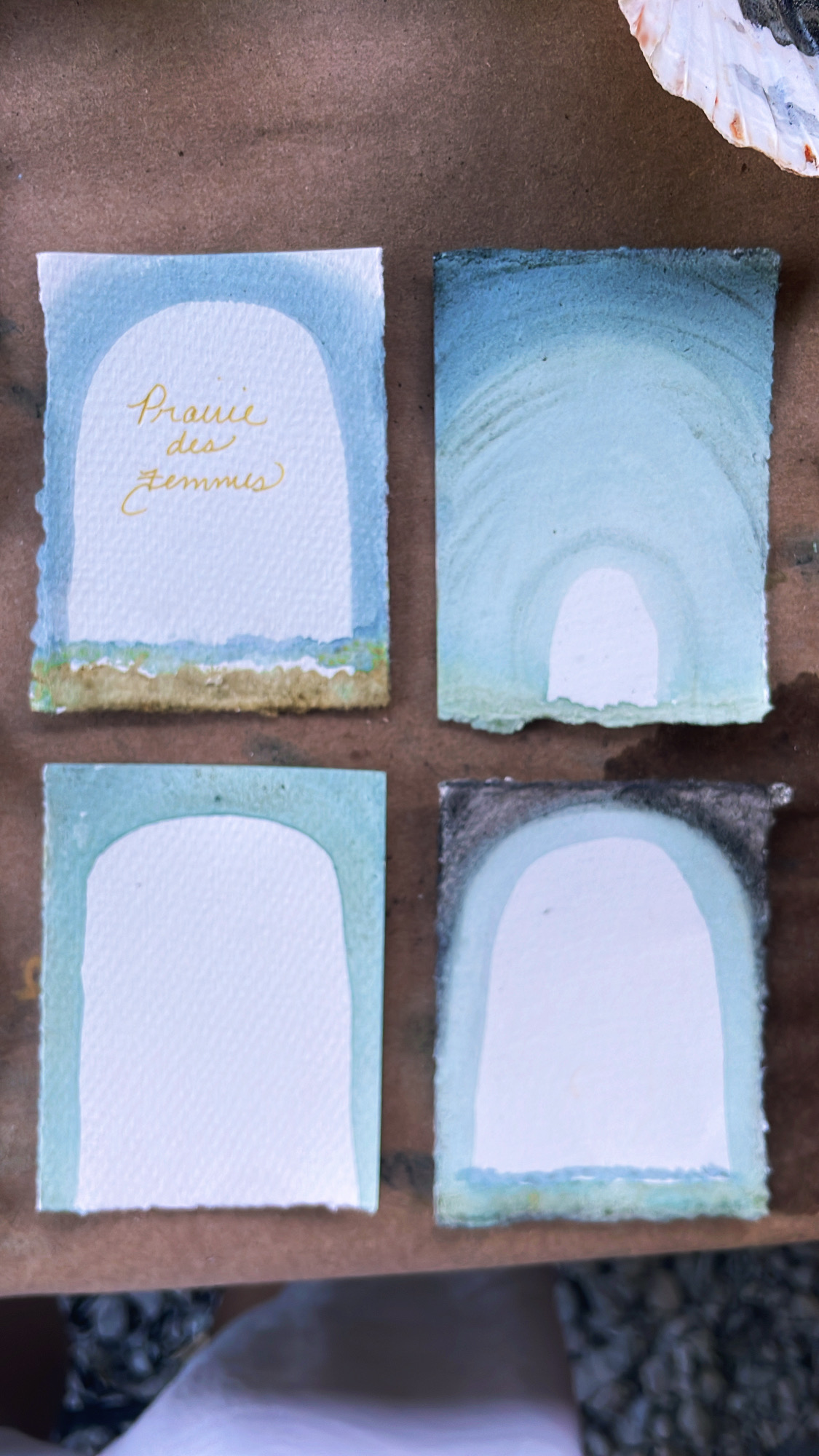
Herbals I am processing a home in September:
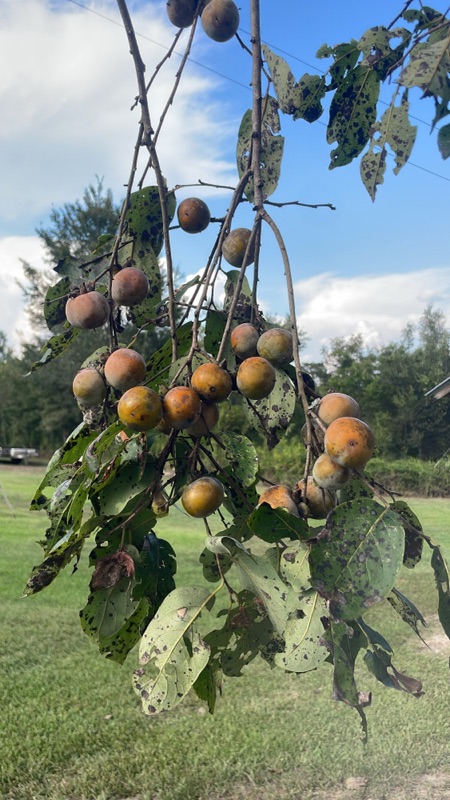
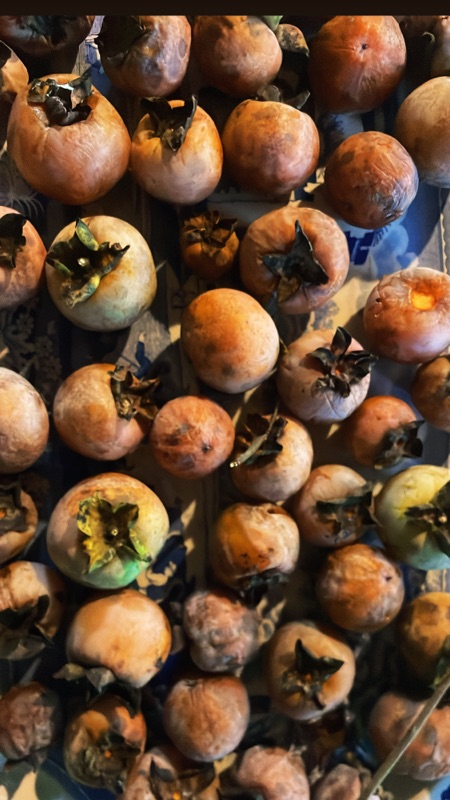
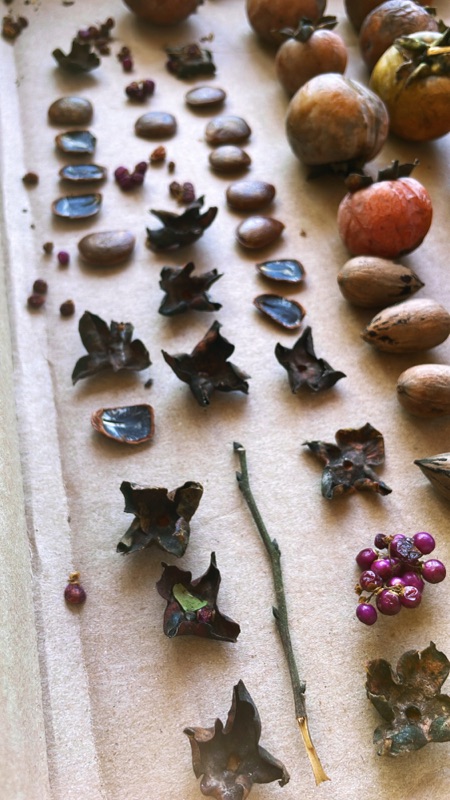
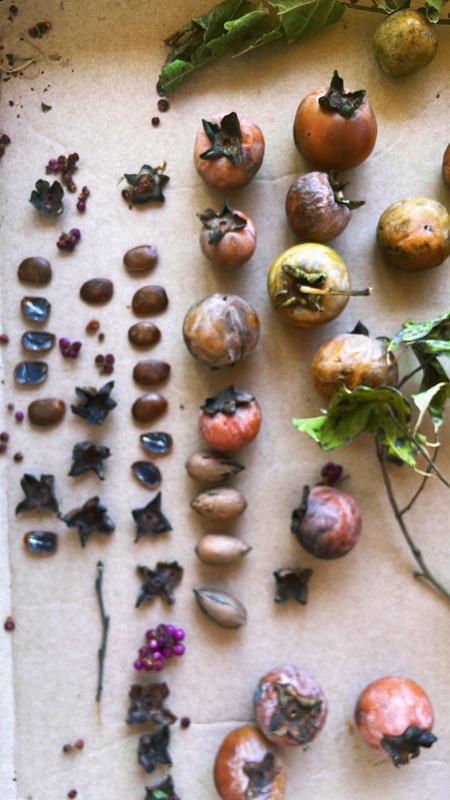
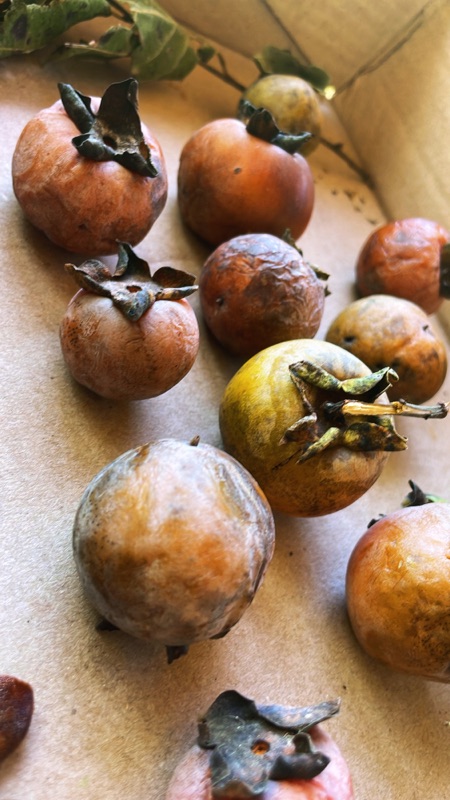
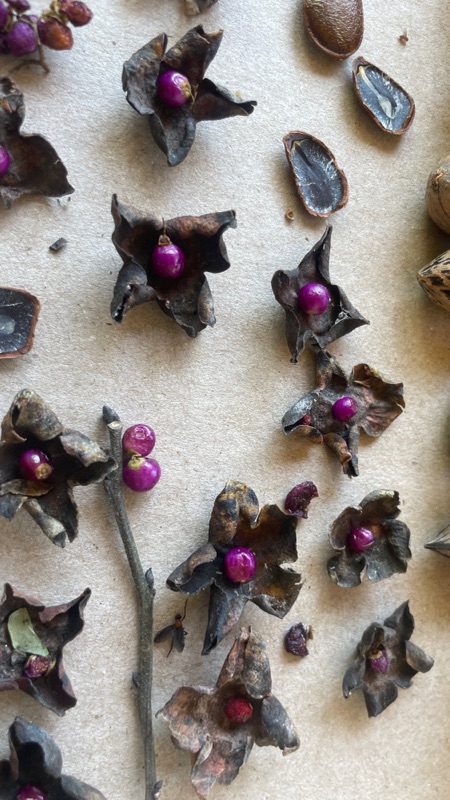
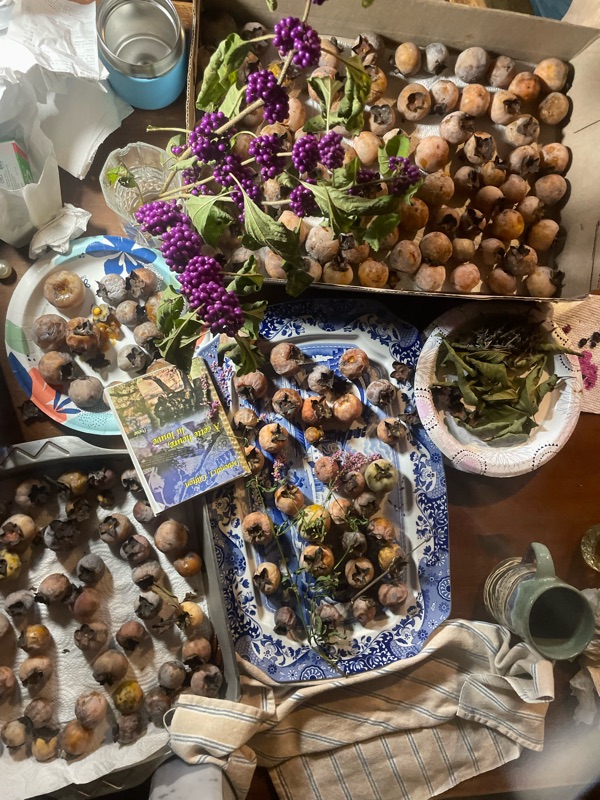
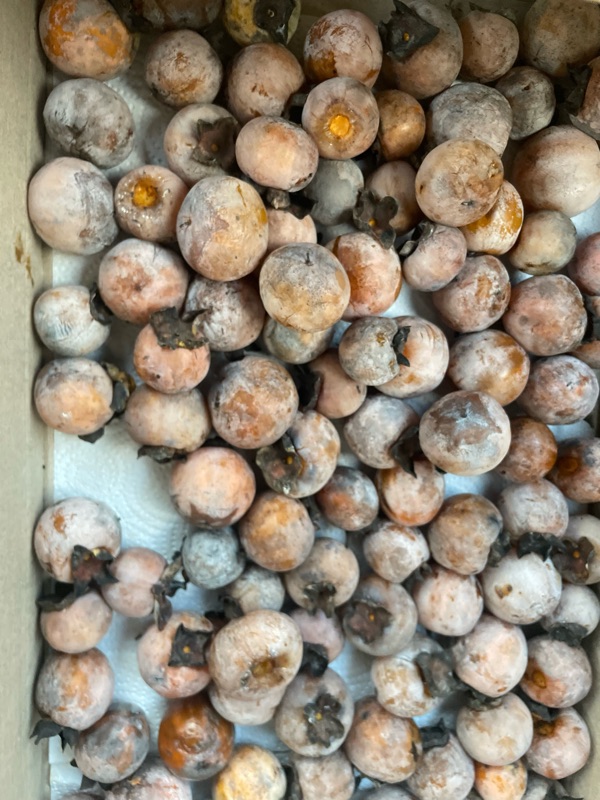
Drying herbe cabri, elderberries, eldeflowers, chassepareille berries, chou gras berries, plaquemines and plaquemine seeds, loofa and loofa seeds, chassepareille leaves in alcohol for bug repellant, perilla in alcohol turned it bright green, an enamel bowl of jobs tears, vineraire
秋思 d'un Automne Cadien
At the old convent on the hill I gather chassepareille from the woods and soak it in cold water. I drink this infusion with spherical ice while the girls and I snack on plaquemines. I tell them that the least attractive fruits taste the best and let the pretty, perfect ones pucker our mouths. We cut the seeds on the seam and open them like books to foretell the winter weather. I explain to the girls that learning Louisiana French is as much about the fruits of the land as it is about the language.


St. Landry Parish, Louisiana-history and archaeology of a nineteenth century milk house
Sara Anne Hahn Louisiana State University and Agricultural and Mechanical College, 2005
In the flat coastal plain of south Louisiana high ground is sacred. Our indigenous ancestors were mound builders. Settlements appeared along chenières, or ridges of oaks, and local folklore says that even one old live oak tree is a good sign that the surrounding land won't flood. In times of severe hurricane, one survival skill was to lash one's self to the mid-branches of the live oak with grape and muscadine vines to ride it out. Those that did this usually survived.
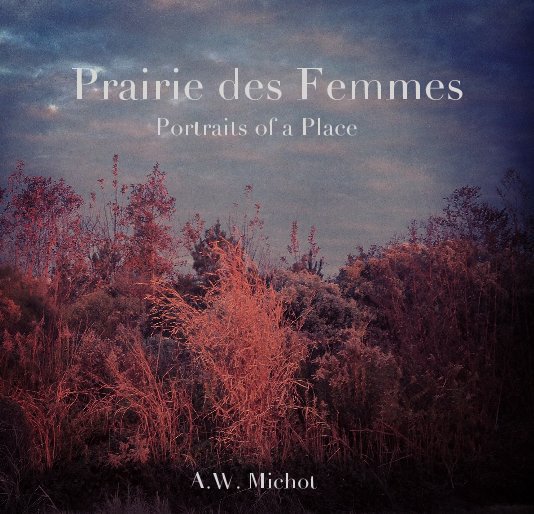
In this near sea-level prairie, it is known that the hill of Grand Coteau is sacred, high holy ground. It was this way long before the land was claimed by colonial-era settlers like Sieur Smith, the Religious of the Sacred Heart and the Jesuits. Much is made about the Catholic presence of the land, because of the early institutions such as nearby Saint Charles College, Saint Ignatius School and the Schools of the Sacred Heart, where a miracle happened when Mary Wilson was healed by the intercession of Saint John Berchmans. But a local legend is that it was the Grand Coteau where indigenous men, notably the Opelousa and Ishak, would go to "fight with honor". The validity of this and what it means, whether battle, ceremony, hunting or even competitive ball game is still mysterious. This story seems to weave in with lore of the Prairie des Femmes, just across the bayou and east of the Academy for girls, being a place where the women stayed when the men left to fight or hunt.
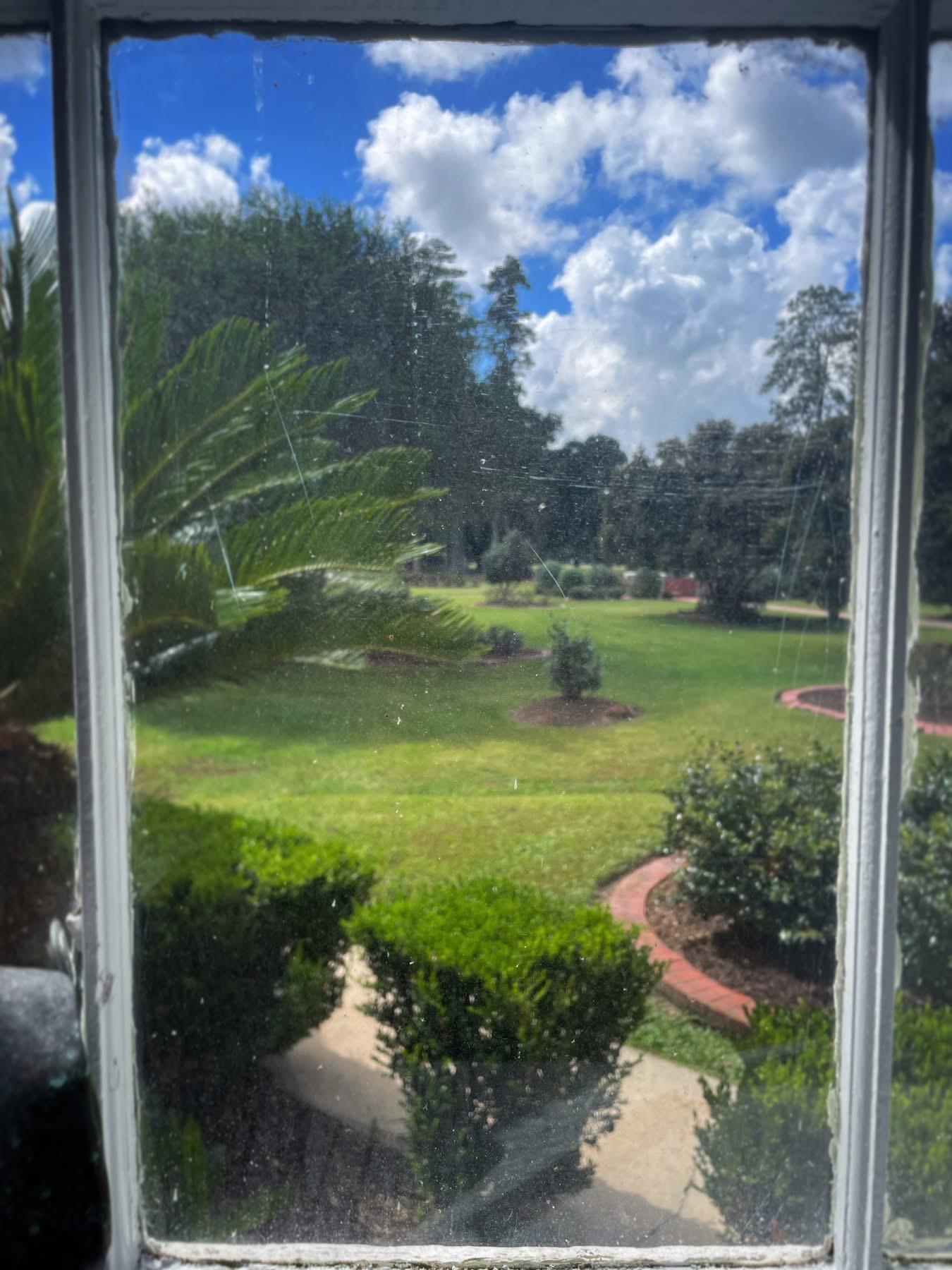
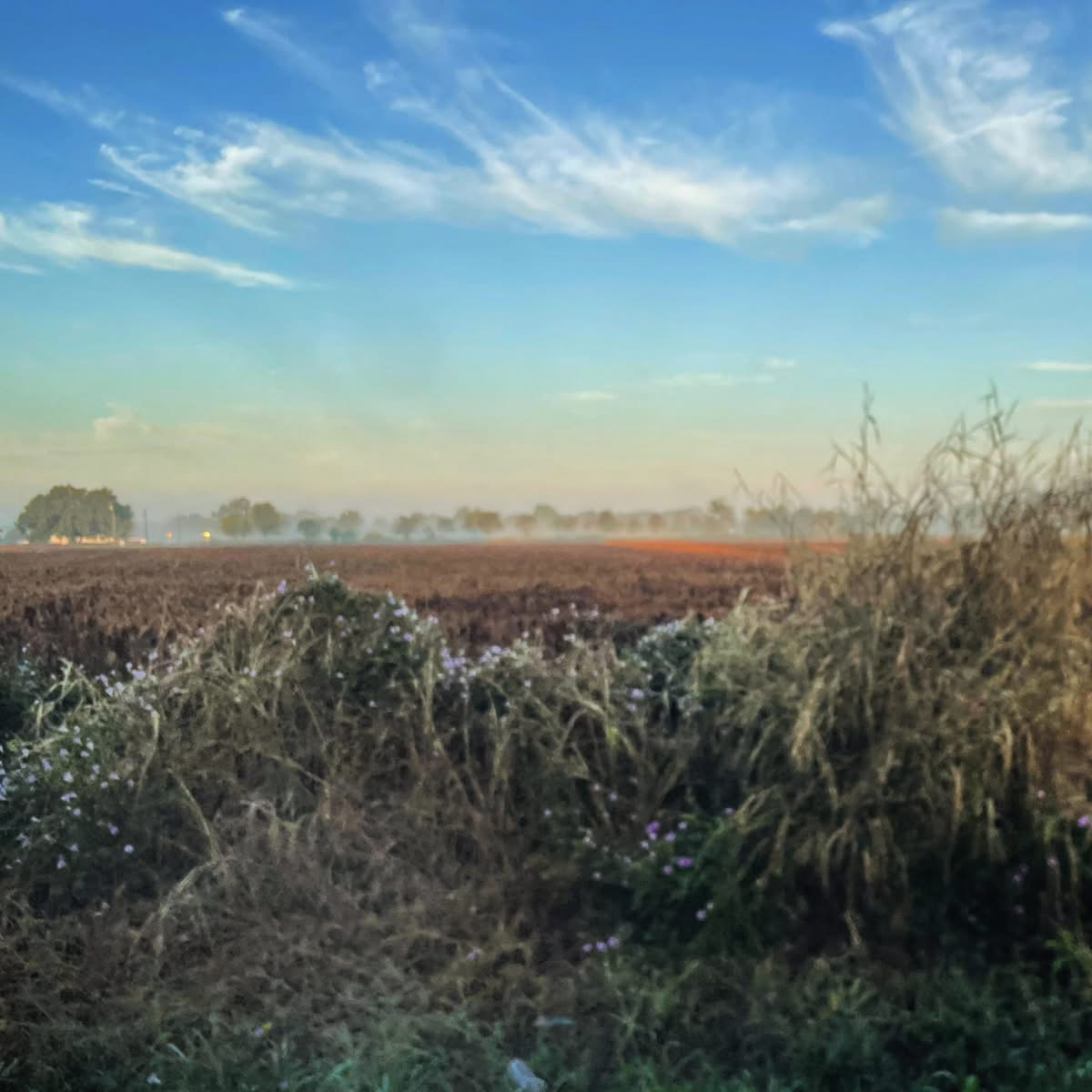
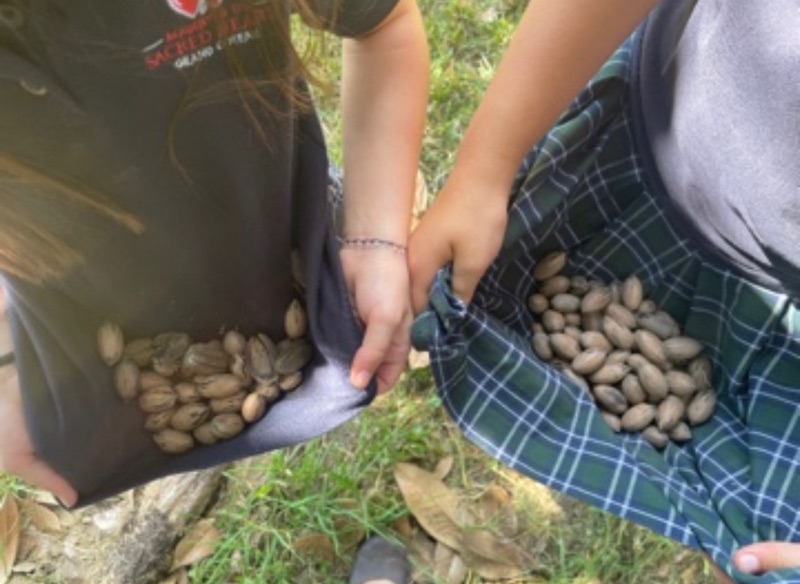
Grand Coteau is on the Coteau or Coteau Ridge. It is the ancient bluffs of the Mississippi River when it flowed west, also called the Teche escarpment. The land that holds the ancient convent and Academy of the Sacred Heart has been called "la prairie des coteaux". The Academy is a pastoral landscape reminiscent of old France and colonial Louisiana, containing multiple live oak and pine alleys, pecan alleys, formal gardens and orchards, open rolling prairie with horse and cow pastures. The four-story Academy is surrounded galleries and a garconière, formal gardens, rolling pastures and then beyond, the Secret Hart and the bois vièrge, a forest primeval that has never been disturbed throughout the centuries. In the formal gardens one notices the early varieties of roses, crepe myrtles, camelias, azaleas, sweet olive and gardenias. There are white, red and pink roses and azaleas, as well as pineapple guava bushes in the center whose flowers taste like Fruit Loops. L'absinthe grows in the pecanères which are plentiful and produce sweet full pecans in the fall. The sheer age of some of these bushes and trees ensures high yield of their medicines and fruits. I often think that the sisters and enslaved people who planted and developed these gardens, they who indeed survived times of famine, flood and war back here, seem to have taken seriously their choices of edibles and ornamentals.
Over the seasons of working at the Academy and as my eyes adjusted to the landscape, they also zoomed in on the native and medicinal plants that pop up at the fringes and in the lands that surround the gardens. This seemed to be a deeper indicator of native land stewardship, a sign of ancient wild habitation still amid the efforts to tame the land. Chou-gras (poke salat) was shooting up at the base of the pines of the alley, in Saint Francis Patio and along the Chapel wall. The woods to the east of the Academy were full of poke as well as nettle, resinous pine, violets and muscadine. In the tree lines are oak, pecan, copal, cherry, magnolia, chassepareille, cherry laurel, hickory, tulip tree, bitter orange and palmetto. I collect Spanish moss, perilla, chickweed, violet flower, root and leaf, white clover, green resurrection fern, and orange chanterelle mushrooms from the oak alley. I find fresh herbe cabri every fall along the ditches of the Jesuit pasture. Their leaves can be used for tea and the young seed eaten as a melon flavored snack.
The nettles in the woods I gather bare handed in the spring and dry the leaves for tea. I'll use the formic acid on the leaves for muscle and mood therapy and the seeds for nutrition. From the poke I gather berries for dye, the leaves for spinach and the extremely toxic and dangerous root for inflammation therapy. The bitter orange fruit we gather and use for Christmas decoration with cloves for pomanders. I gather white flowers of the sweet olive, orange, and gardenia that fill the gardens at different intervals to make enfleurage oils. The girls and I make accessories such as flower crowns, necklaces and crafts (like Marie Antoinette's bouffant) with the fallen roses, azaleas, camelias and wildflowers of the garden. I harvest baume from the native plant garden as a spice and perfume, chassepareille leaves for insect repellant and cherry from the woods for bounce. I harvest pine sap daily from the trees of the pine alley, sometimes they appear as resinous ambers that fall from above, and other times in the clearest tears of sap that are produced when the grounds crew hit the exposed roots with lawn mowers while manicuring the gardens. I walk the pine alley in the fog of the morning collecting miniature domes of sap from roots like dewfall.
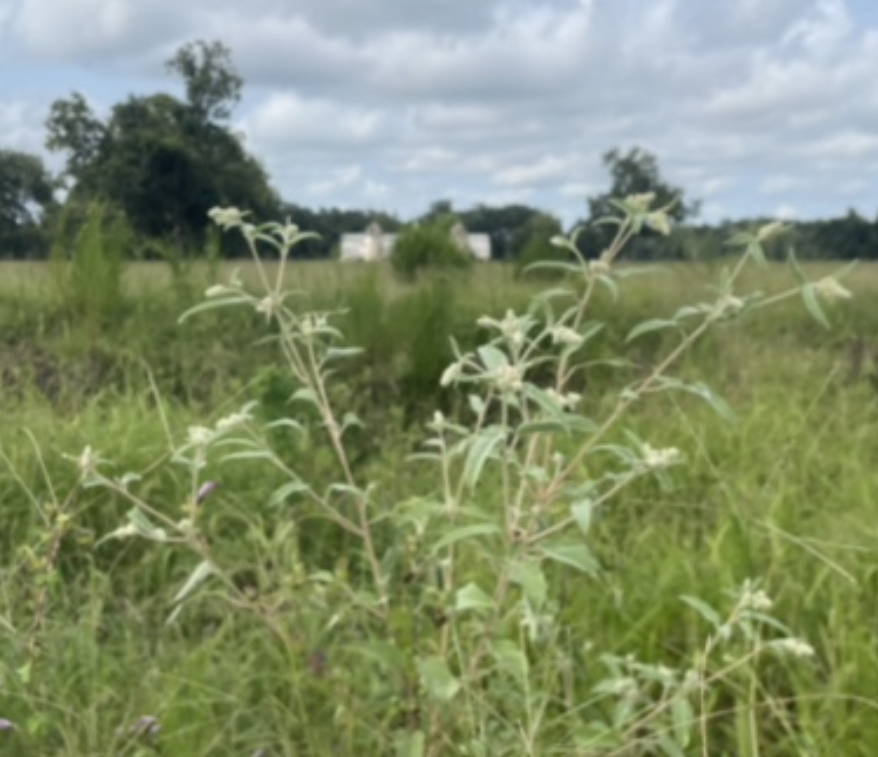 |
| l'herbe cabri |
vendredi le 4
duty on the Gallery, mass at 8 am to welcome two Religious of the Sacred Heart back to Grand Coteau, gouter of chocolate chip cookies under the link afterward.
samedi le 5
workshop on vineraire at Monique's prairie land, Birria pizza and Horchata in Opelousas with the boys
dimanche le 6
taught a Louisiana French class online, Monique's party, painting, Creole Renaissance Festival in Rayne to see J. Paul and the Zydeco Nubreeds and Keith Frank and the Soileau Zydeco Band
lundi le 7
two neighbor women called for herbs, I gave them freshly dug lizard's tail from Frozard Community Garden, elderberry pith for the eyes, manglier, sweet olive flower oil, vineraire
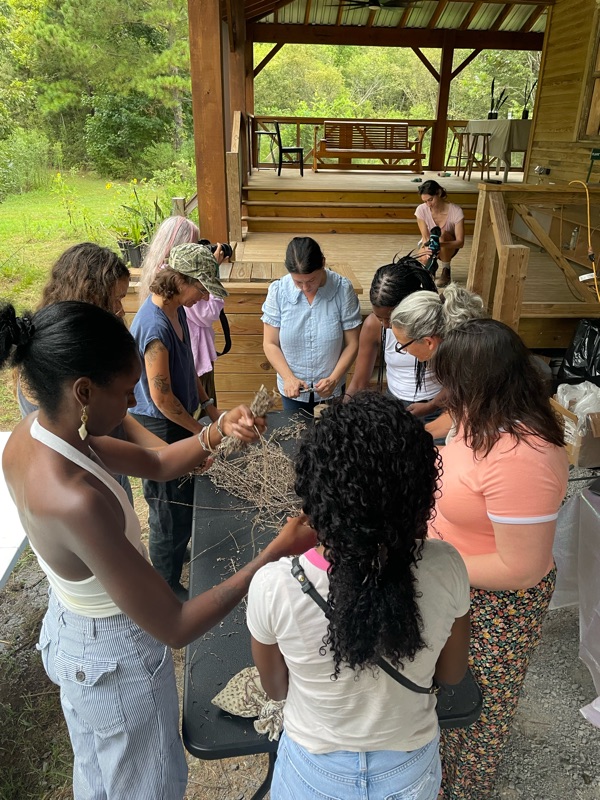
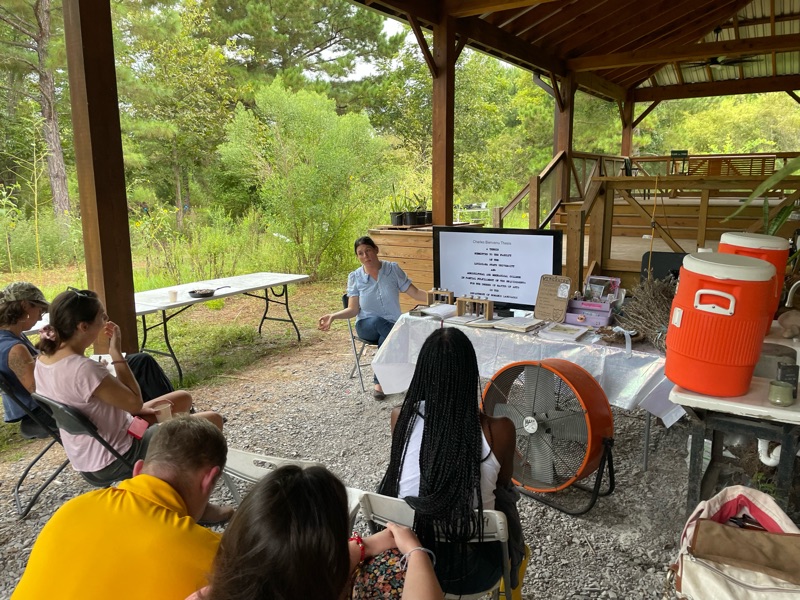
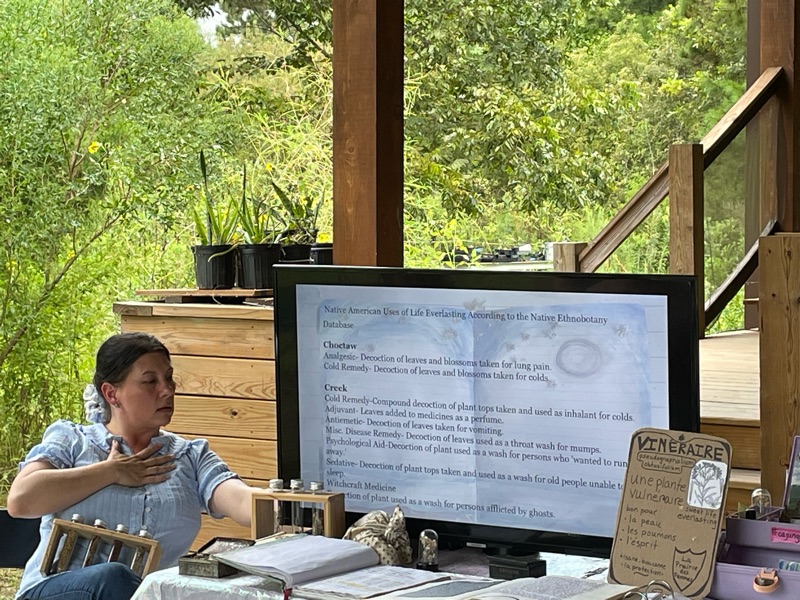
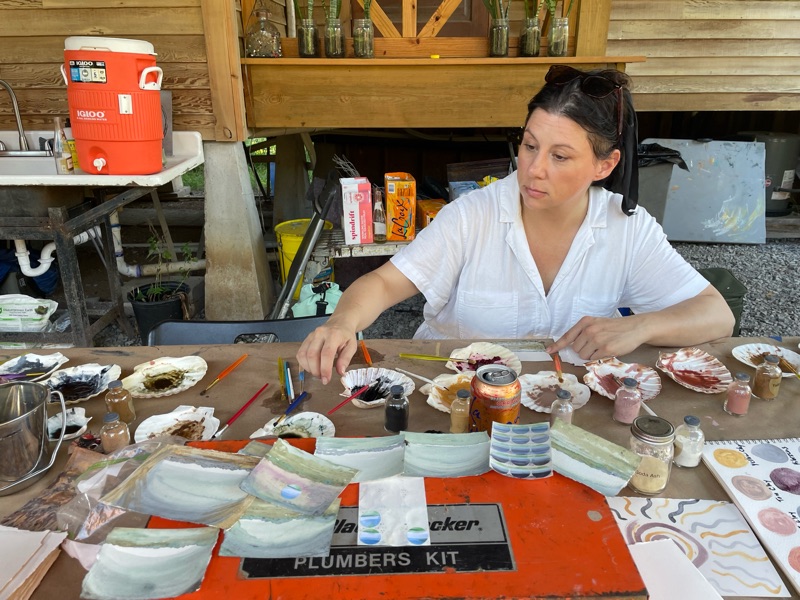
I spent this Labor Day weekend here in the Prairie participating in Monique Verdin's annual land celebration here at her land in the Prairie.
On Saturday I gave a workshop on vineraire to a group of women and we made smudges and drank iced mint tea.
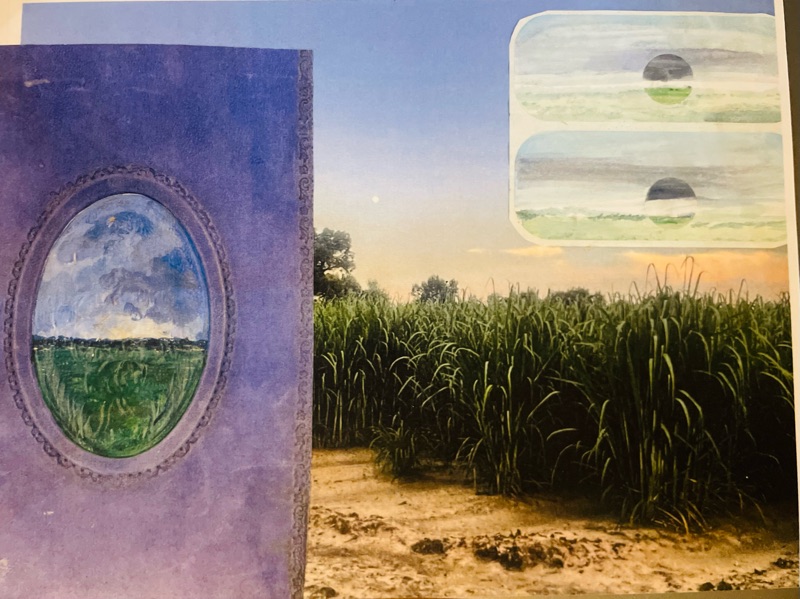
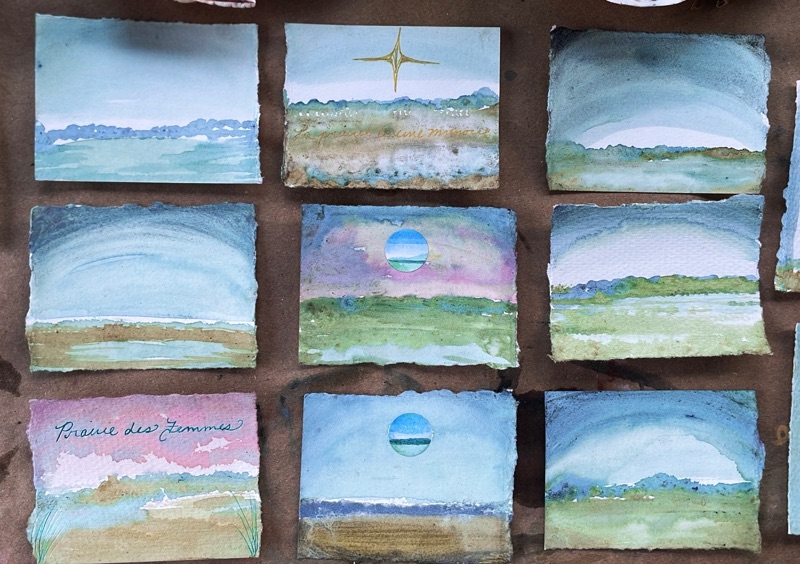
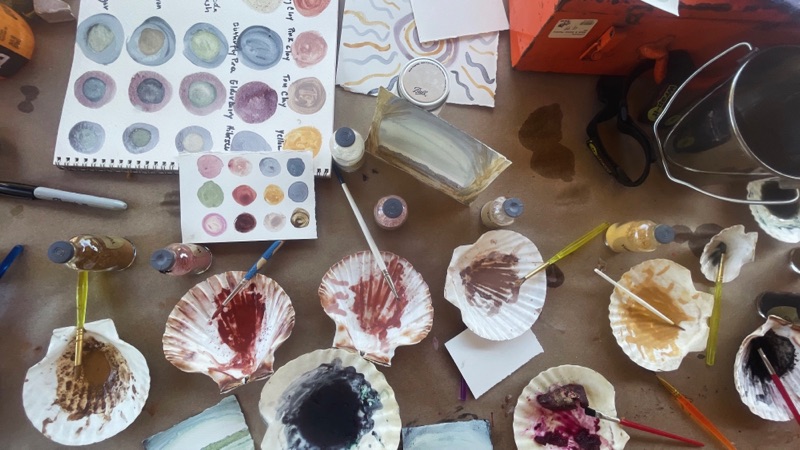
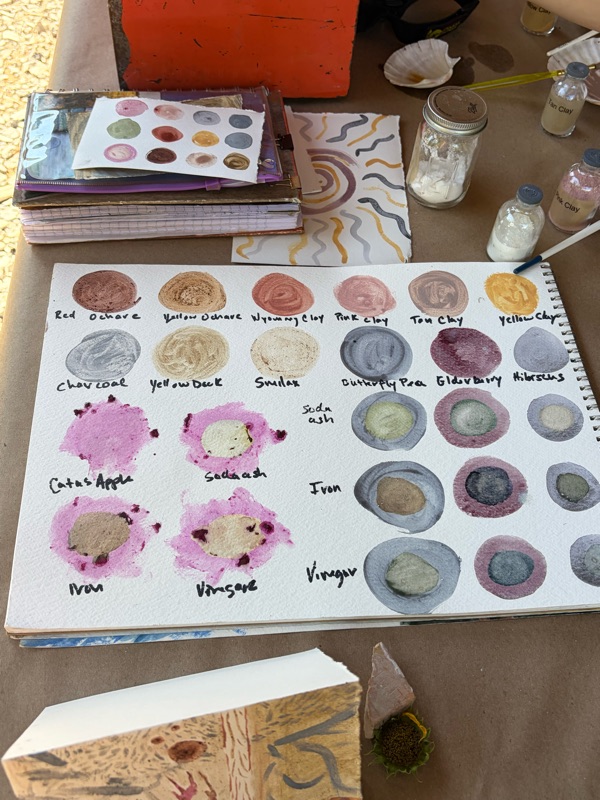
On Sunday we had a party with lots of good food. Joey made white beans and sausage on the braise and there was so much watermelon and fresh boiled shrimp I ate until I couldn't anymore. The most special part besides the superlative group of herbalists, artists, writers, producers, professors and generally lovely friends Monique brings together so often was the earth pigment paints hand made and provided by Tammy Greer. Like Monique she is a member of the United Houma Nation and specializes in making paints and dyes with natural materials. She generously allowed us to paint with her assortment of powders we reconstituted with water. There were red and yellow ochres and pink clays from far north. We used blue butterfly pea powder, charcoal, smilax, elderberry, prickly pear, hibiscus and yellow dock.




.png)

.png)