Monday, May 27, 2024

Vinéraire Part 5: Traiteurs from Down the Bayou

Part 1: Rabbit Tobacco 

Part 2: The Bottleneck 

Part 3: Critical Mass of Plant Medicine

Part 4: The Identification Process

Bilingual author and up the road neighbor Jonathan Olivier who runs Frozard Comunity Garden had always been an ally. In 2021 he wrote an article for Bitter Southerner Magazine about plant medicine. In the article he talked about this rabbit tobacco, and the information he gathered was pivotal in answering a question as well as raising one. In my own independent identification process I was down to two contenders: pearly everlasting and sweet everlasting. Jonathan's article documented the story of native faith healers, namely Madame Teresa Dardar of the Pointe-au-Chien Indian Tribe in Pointe-aux-Chênes, Louisiana. It stated:  


   “One [hard to find plant] is vinéraire, or pearly everlasting.

Although it isn’t native to the Southeast, oral histories show

it has been commonly used in tea in Louisiana and was cultivated

by indigenous people. ”


And there it was, my smoking gun: the French name: vinéraire. As a collector of oral histories for la Prairie des Femmes, I knew there was an element of error that must be taken into consideration. While it was true that pearly everlasting is not native to the southeast, i.e. Louisiana, fragrant sweet everlasting is. As I stood in my vinéraire patch 40 miles from the gulf, I asked myself why the natives of down the bayou would trade far away pearly everlasting when they had something locally and more fragrant growing natively right here. It was another meeting with Jonathan where I gathered that the people he interviewed were unclear on what the plant was ( I understood why after all the tracas I had been through to Id it) because since the hurricanes Hilda and Ida, saltwater intrusion had made this sensitive plant just a memory to the traiteurs of down the bayou.

Part 6: A Vulnerary Plant

Part 7: Big Bill as the Voice of God

Part 8: Life Everlasting

Part 9: The Prairie has a memory.


Venéraire Part 4: The Identification Process

 Part 1: Rabbit Tobacco 

Part 2: The Bottleneck 

Part 3: Critical Mass of Plant Medicine

The ID Process

I identify plants for my own purposes by smell. I was always a tire-feuille (leaf puller) and when the native knowledge came to me, it worked because I had known plants by smell since I was a child.  The smell of a plant tells me much of what I need to know, but I would’t use a plant seriously or on anyone else without a level of certainty that comes with formal identification experience.  My main tool of identification was the Vermillionville Healer’s Guide. I also used Richard Guidry’s Les Arbres de la Louisiane, The Charles Bienvenue thesis, elders of my community, comparison, books, Native Ethnobotany website, google searches and plant ID apps that were becoming more popular and reliable. My identification process could go on for days, weeks, months or years, and always had multiple levels depending on the season and environmental conditions. I liked to know the plant in all her seasons. I knew the old names and remedies, could feel the plant’s energy and hypothesize the uses, but as a teacher I knew the Latin names were a code that I had to know. All in all, I had reliable instincts.


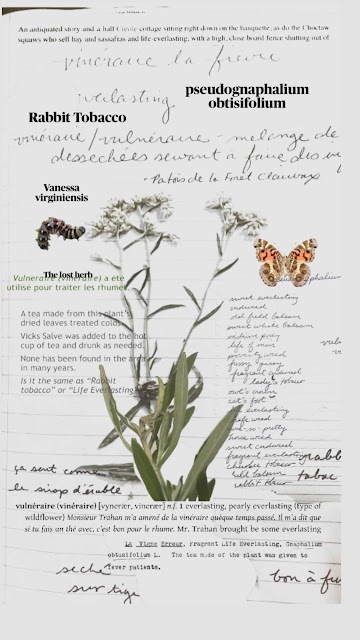
When identifying the rabbit tobacco I had to take into consideration all of the common names both in French and English and a few Latin names that had changed and evolved over the years.  These plants are in the aster family and all take the common names of rabbit tobacco, everlasting or cudweed. Sometimes one specimen had all three common names depending on area. 


 There was pearly everlasting (anaphalis margaritacea) and prairie everlasting (antennaria neglecta). The plant in my field was fragrant white rabbit tobacco,  pseudoghaphalium obtusifolium, and not the early rabbit tobacco (gamochaeta purpurea) that was so common to this place. The Healer’s guide listed patte de chat (gnaphalium purpurea) and herbe dentale (gamochaeta purpurea) as two separate plants. I was confused because they seemed like the same plant and their latin names are synonymous. Neither of these was my pseudognaphalium obsusifolium, so I began to realize she wasn’t listed in my main sources.


According to the North Carolina Plant Extension:


Pseudognaphalium obtusifolium 


Common Name(s): 

Previously known as: 


  • Gnaphalium obtusifolium

  • Gnaphalium obtusifolium var. praecox

  • Pseudognaphalium


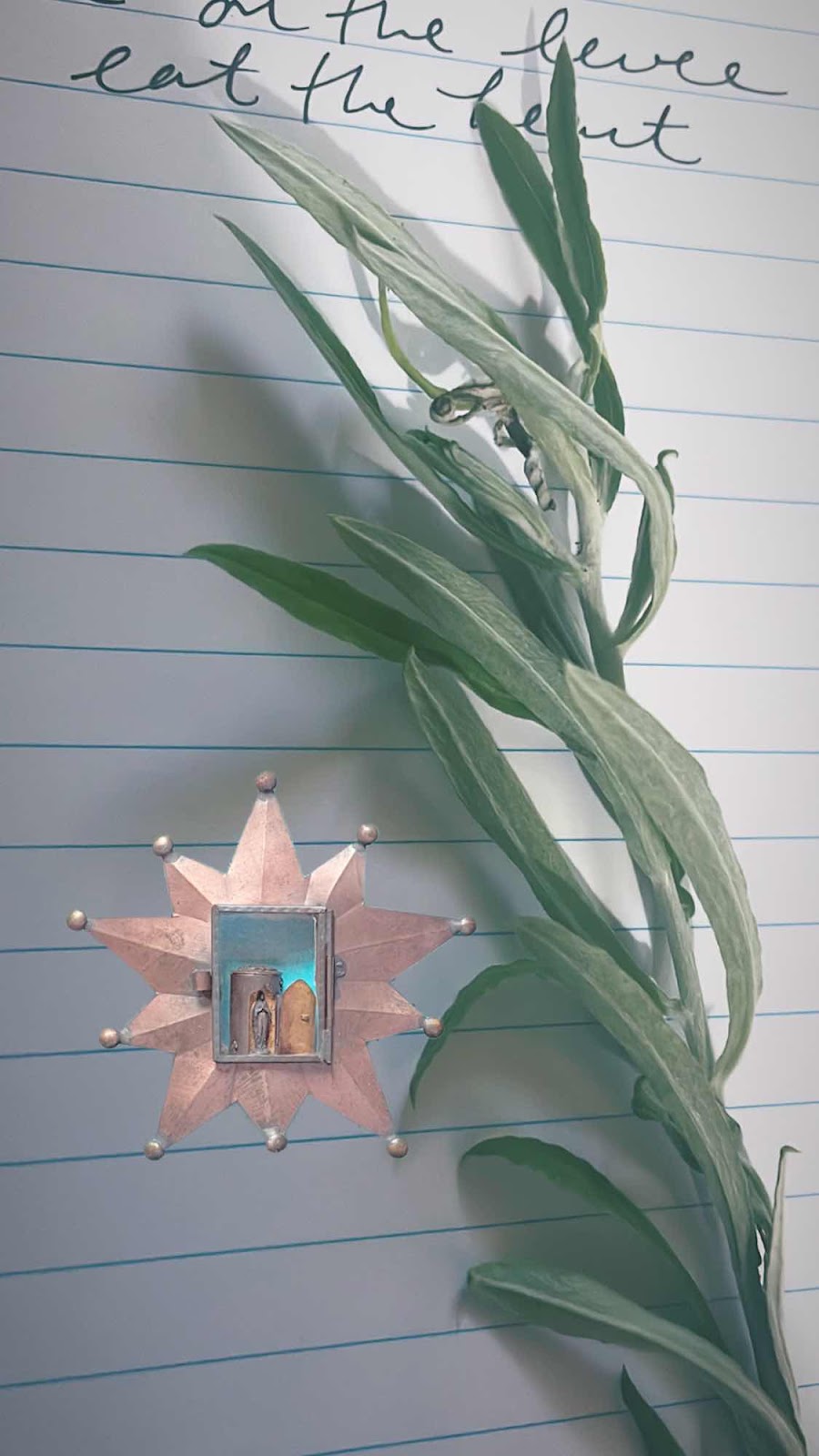
While I was still trying to decide exactly what I had, I used it, made teas, smudges, carried it in an acorn locket around my neck, and sat with it morning, noon and night. I flagged and celebrated every new plant I found. She beamed and I was happy to keep my promise to her.


In 2021 I had three plants that I tended and weeded around for the first time. In 2022 that number was over 200 volunteer-only plants. I identified the American Painted Lady butterfly (vanessa virginiensis) and larvae on the plants. This manicuring of the plant mirrored the self care I was also giving myself at the time, because my life was about to change drastically and I had no idea.

Part 4: The Identification Process

Part 5: Traiteurs from Down the Bayou

Part 6: A Vulnerary Plant

Part 7: Big Bill as the Voice of God

Part 8: Life Everlasting

Part 9: The Prairie has a memory.

Sunday, May 26, 2024

Venéraire 3: Critical Mass Plant Medicine


Part 1: Rabbit Tobacco 

Part 2: The Bottleneck 

Over the years I worked at finding, identifying, collecting and using the plants mentioned in the Vermillionville Healer’s Guide until I came to a critical mass of knowledge. I am not a traditional gardener, but I am surrounded by natives. 

    In 2009 my Beau Chene students brought me manglier in Dollar Store bags and expounded on its bitterness (Manglier: It's nasty). I recognized it as the most plentiful plant in my field and began using it as they directed. I dug up a Mamou plant (coral bean) from our camp in the Chicot woods. If the people on La Tasse de Cafe Radio Program spoke of a remedy or plant, I spent time looking for it in my own yard and then used it as they did. Neighbor Chat-tigre spoke of the flasiro (fleur de sureau)  being good for fever. Tante Kathleen gave me a pamphlet on Spanish moss and wax myrtle and using the methods listed there I made tarabi cordage and pucks of bayberry wax. Mentors like Bill Fontenot and defunct Richard Guidry gave me seed, advised me and warned me about certain plants and their toxicity. Their sternness was part of my learning the boundaries and the acceptable behaviors surrounding this work.  I became familiar with the plants, their French and Mobilian Choctaw names and the old names of the maladies they treated. I was taught the prayers in this time by my family and Mr. Verbis Soileau of Point Blue. I used myself as a subject for any experimentation (Big Bill called me the herbal adventurer). I still didn’t think of myself as someone who knew about plants, but what I did know was, like the prayers, in French.

     It was in the nearing of this critical mass of plant familiarity that I set out to find a few elusive plants, namely herb à vers (womseed), herbe à malo (lizard’s tail) and the fragrant rabbit tobacco. I would set an intention, drive around the prairie or walk the swamp and let my eyes scan. I knew the other plants so well that I was able to zoom in on the unfamiliar ones, and it was this way that I found them all within 1/2 mile of my house.

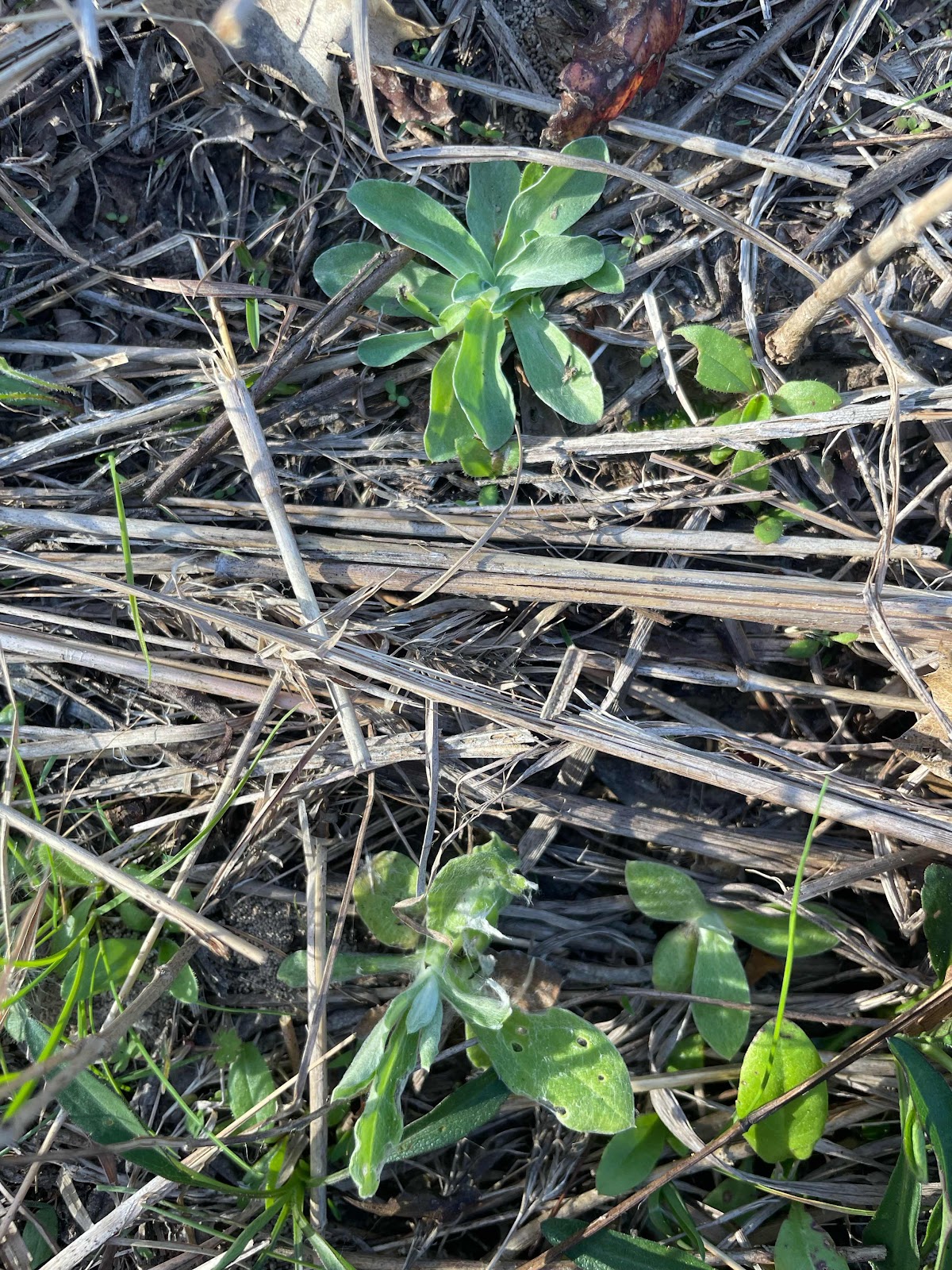
    It took three attempts to find the rabbit tobacco again, but when I set my eyes to scanning, I recognized an unfamiliar plant, a pale stranger on the edge of the western tree line. The smell wasn't as strong as it is when in bloom, but after a few days of comparing and identification I was sure it was pseudoghaphalium obtousifolium, fragrant rabbit tobacco. There were three separate plants at the western edge. It was September 2022 and I promised this plant I would protect and keep her safe and let her grow. I cleared the overgrowth from around her in a fit and she was thankful that after so many years, someone was paying attention.


    That very day I began carrying this plant around with me. I kept dried bundles in my journals and often picked a little before I went anywhere. I used it instinctively as an amulet and protector. The day I began to announce the French morning show "Bonjour Louisiane" on 88.7 FM  KRVS I had it with me. In that time, I had also paired it with the copal resin that I had harvested from the sweet gum trees. Together the copal resin and the fragrant rabbit tobacco protected me from some terrible predicaments. 

    The more I shared it with people, some were incredulous and some told me it was only found in north Louisiana.  Some told me I had purple cudweed (patte de chat), and they were right, I had purple/pennsylvania cudweed by the thousands on the property, but the fragrant rabbit tobacco was only there by the dozens and had a completely different smell, texture and growing season. I noticed the similarities, but there were stark differences also namely that purple cudweed does not smell pleasant or at all. They were, however, cousins, and has similar healing properties. 

    I had identified it confidently by smell and through other resources, plant identification apps, as well as other people who started coming to the land to see her. I had begun searching out possible French names and native uses, but because of the maple smell, there was no question of what it was. I sat with my little patch daily. I was content that it was my medicine. 


Part 4: The Identification Process

Part 5: Traiteurs from Down the Bayou

Part 6: A Vulnerary Plant

Part 7: Big Bill as the Voice of God

Part 8: Life Everlasting

Part 9: The Prairie has a memory.


Friday, May 24, 2024

Vinéraire Part 2: The Bottleneck


Read First: Part 1: Rabbit Tobacco 

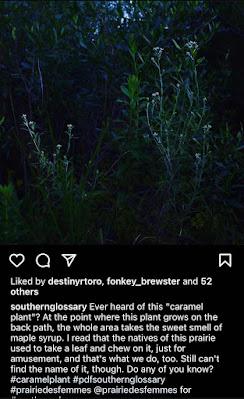
In 2011 I found one veneraire plant growing in the back western corner of our field and made daily walks to check on its caramel scent that hung in the understory. I did a little work at identification and found online references of native tribes using it in different ways and chewing it for “fun”. This pleased me because there was indeed something fun about chewing on a plant that smelled like dessert. The plant was such a curiosity to me that I photographed her with Denny Culbert’s good camera and when I was asked to curate an Instagram account called Southern Glossary for a week, I used the platform to ask a wider audience to help with identification, to no real avail.


    At the time I didn't know, but this plant roamed like the natives of the prairie did. When I went back the next year to check on her in the corner, she was gone, and as I was in the throes of young motherhood, lost her for years. In 2019 I was absentmindedly picking herbs in the pasture when I pulled one and realized it was the plant I looked for. That began another push in finding and identification of all of the plants in the Vermllionville Healer’s guide, a personal hobby I had started around 2007.

Mom will tell you I was always in the coves and canals around our house and in the Chicot woods. She’d tease me by calling me "white witch" and I’d roll my eyes. But when a person like me who has an interest in picking berries, gathering nuts and smelling leaves learns their ancestral language, there is a similar gathering that occurs. 

    I am a self-taught Louisiana French speaker and I gathered this language from every corner of every mouth that I could. For years I have used the language in writing and art to heal the wound left in myself and in our society from the cultural breakdown and loss of French. It's a vulnerable place to put one's self in, at the feet of our elders, making all the mistakes children make as adults relearning who we were. I have made all the mistakes there are to make, being over confident in my ability only to be humbled at the near unintelligible French of one of my Louisiana countrymen, but these experiences were necessary and helped me grow into not just someone who speaks French, but a citizen of Louisiana and steward of her sometimes cruel beauty.

    There has been a bottleneck in the transmission of language in Louisiana, so the majority of Cajun and Creole speakers have not adequately passed on the language or the cultural information and it must be said that learning Louisiana French/ Cajun/ Creole is not just learning a language, but learning the history of Louisiana and her environment. Within the language there is native information that is not efficiently translated, or at all, into English. It does not exist in English. Much of the information held in Louisiana dialects are about the seasons, weather, animals and useful plants. French names mirror the Choctaw word and point to use. There is so much loss in the transmission of our language. As I learned and became more fluent I understood this profoundly, I took it on. I was persistent in asking and seeking out my elders who held the language, fueled by the passing of the generations and the loss of so many characters. They offered information and I meticulously recorded it, on paper and in the audio that I can keep in my mind and on file. Much information was passed to me because I positioned myself at the mouth of this bottleneck, with a big enough understanding to catch what flowed out. Yet as an orphan of this culture, I felt like a perpetual child in my acquisition of the language. For every two things I knew, there was a dozen things I didn't know. Thankfully I can be a fast learner when I'm enthralled with something.

    I spent years teaching French and then transcribing my hometown French radio call-in show “La Tasse de Cafe Radio Program” on 92.5FM KVPI out of Ville Platte, Louisiana. Every morning I made my coffee, tended to the babies and sat with the radio. (Click here for a few archives) The same voices I heard as a child were now completely intelligible and the things they were saying were adding to my understanding of my home in a way I thought impossible s a child. Much of the information I transcribed from the years 2011-2021 from “La Tasse"' were plant, land, family, town lore and remedy information with a bit of old fashioned Americana mixed in.  I kept illustrated journals of my findings on La Tasse and after so many years and through this documentation I was able to understand a larger expanse of the territory and my position in it. In the anses and points of this world there are wonderful things if you can access the place and navigate the land. For me, finding the venéraire was the culmination of years of gathering for a vulnerary balm that could heal so many wounds.

Thursday, May 23, 2024

Vinéraire Part 1

 Pseudognaphalium Obsusifolium

        I had never lived in the country before my wedding day in summer 2006 when I moved permanently out to the Prairie des Femmes. We picked a spot about ten acres back in an overgrown sweet potato field for our house because it was nearest to the only cypress tree in the tree line. The prairie was like the wild bush to me, a city girl from the Chataignier side of Ville Platte.

    The fields of my new home were full of wildflowers. I couldn't decide which season had more, the spring or the Louisiana autumn, which is like a second spring and showier. Thanks to Louisiana’s mild winters we are rarely if ever without access to some flower and I learned them all. 


     There was blue vervain and goldenrod, white boneset and blue mist flower. There were low plants like the common rabbit tobacco (purple cudweed), healing plantain, aromatics like the sassafras, bay laurel, and anise farouche that I loved to pick and smell on our walks. There were bitter bushes like the medicinal manglier for tea and wax myrtle for dark green winter bouquets and to render balsam-scented wax from their dusty berries. There were wild edibles such as the dandelion, thistle, dewberry, blackberry, mulberry and black cherry for cherry bounce. We planted one thousand native trees, cedar, cypress, copal, persimmon, live oak and pecan in a ring around the property. It protected our little prairie and not only created habitat, but also a buffer at the edges. Over the years due to this care, the back pasture feels like a dome in the way it echos sound and memory.


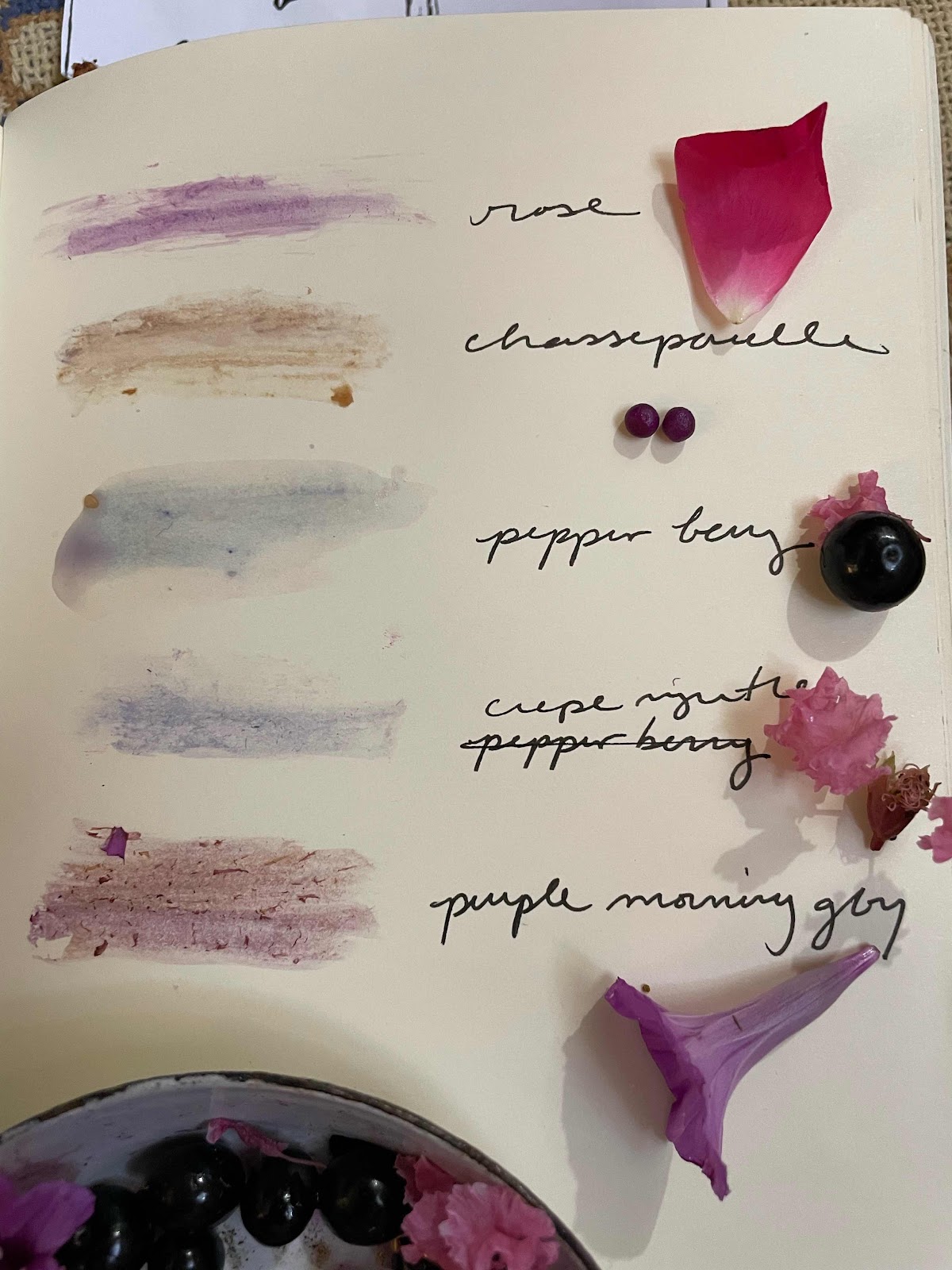
    In the yard we grow fig, orange, satsuma, lemon, plum and peach trees. There is a large elderberry that has volunteered after my foraging, and she shades our porch and gives us medicine twice a year in reciprocity for keeping her feet wet. One day I remember seeing that the medicinal plants were pushing their way thorough and over every crack in our shabby fence, and how we let them in. Honeysuckle and peppervine, vermilion irises, morning glory, trumpet flower, chaspareille, and dewberry all grow along a fence line, the leaves and tendrils waving wildly. There were plants who introduced themselves through sight and some through scent.The more I listened the more the plants spoke to me, usually by smell.


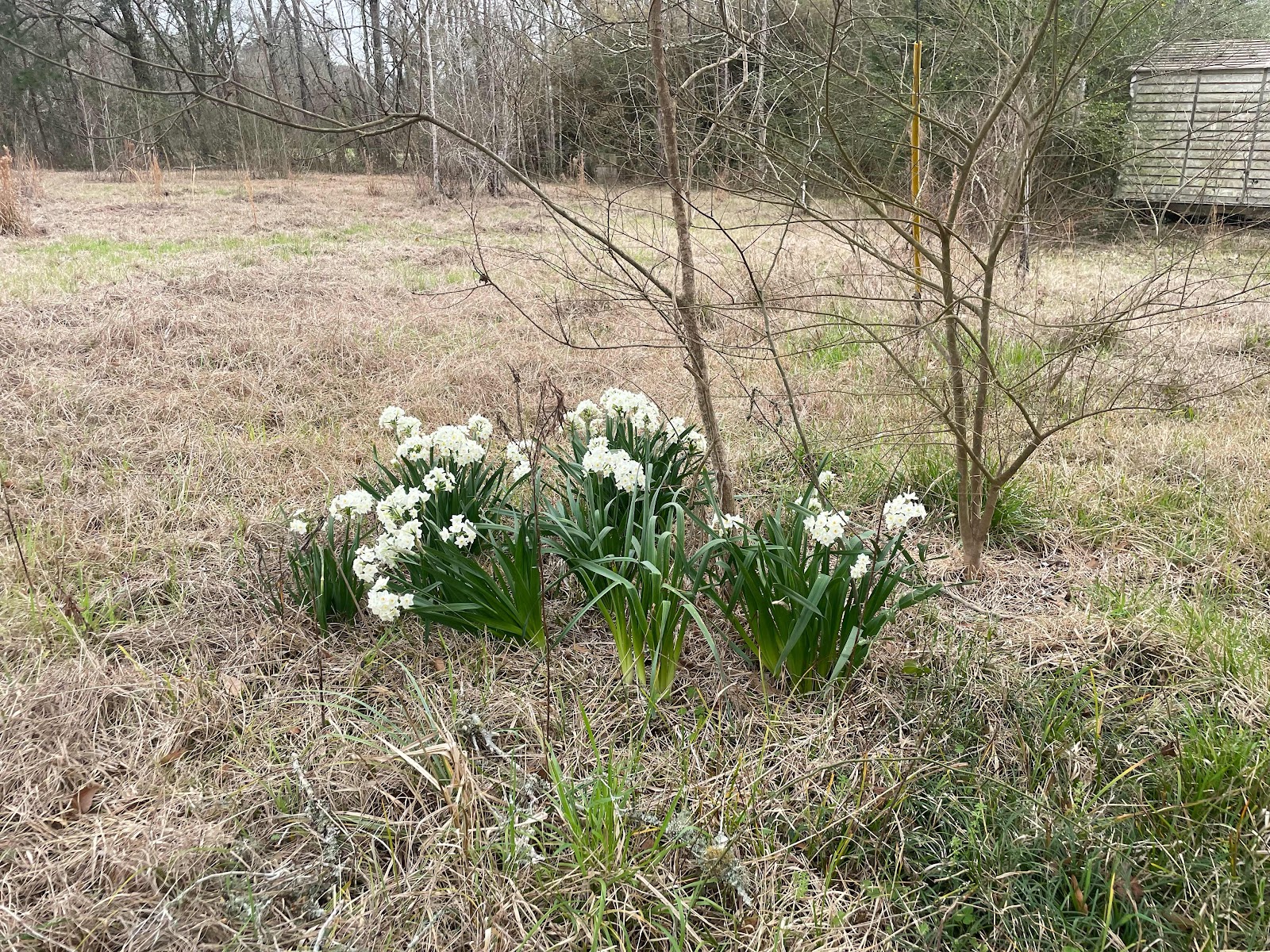
    I knew the bounty of this place, despite that it had been an overworked sweet potato field left to go fallow. The more I honored the land, the more the plants grew. The more I listened, the more I heard. Louis talked to the trees, admiring them and willing their growth. He taught me the patterns and I learned to admire them as he did. The more edge and diversity we allowed, the more birds came to our land. I remember the day a painted bunting came and stayed, coming back to roost every summer and teaching me its call, flight patterns, charms. I could differentiate bird songs, identify trees and their patterns against the sky. I can tell you where in the prairie the old homesteads were by the irises and narcissus that push up in the early spring, by the wisteria that hangs wildly to the canopy, leaving violet trails through the dark wood. The more I watched the moon, ritualized the seasons, listened to the coyotes, collected rain water, learned the names, the more I could hear myself. Unknown instincts and memories told me to give offerings and return all fertility to the earth. In the silence of the place I could hear, and the ancestors of this  land knew I was trying my best to steward it and honor their memory. This, too, made the land flourish.


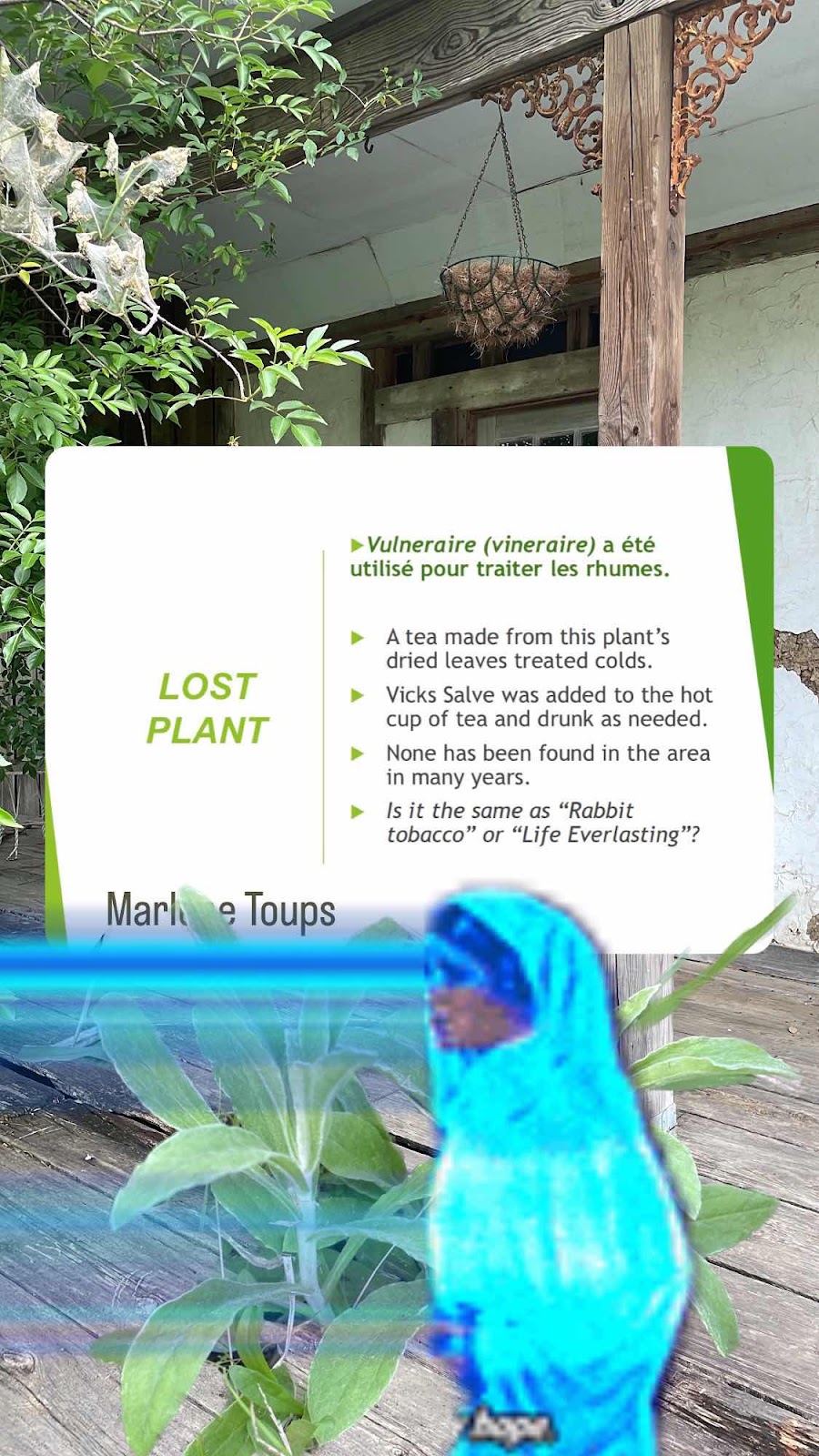
      During my walks in the afternoon there were patches of still warm and cool air and in this way, caught in the stillness, a smell like herbal maple syrup. I let my nose investigate and after some days of discernment, I found the unassuming little plant, life everlasting, known in Louisiana as vinéraire.


Monday, November 13, 2023

The luck of a skinny calf

J’ai la chance d'un veau maigre. 

Don't Bouder? A note on the boudin etymology


In recent years Billeaud’s Meat and Grocery has used an ingenious marketing tool: the power of bilingual community slang, to sell the rice and meat sausage we know as boudin

When I was little we bought boudin behind the counter of gas stations and meat markets. Seeing it prepared fresh at the boucherie was rare for me. Most people lost familiarity with the vocabulary that surrounds the making of it. With English rapidly replacing French (we already about lost gratons for cracklins!), we sometimes absorb only figurative meaning of words. For example I knew a gueppe was a mean woman, and it took me years to learn that it actually meant "wasp". In childhood “to pout” was known as “boo-day” (bouder - to make boudin). When I  pouted, my uncles would grab my protruding bottom lip and exclaim, “gimme dat boudin!!” I was insulted by their flagrant disregard of my emotional angst, invasion of personal space and bemused at how they savored the imaginary “boudin” they would thank me for making for them. 

Fast forward 30 years and all the kids like me who were mocked, boudin-bottom lips stolen,  can now reminisce on these memories when they see The Billeaud’s billboards and t-shirts that exclaim, “Don’t boo-day, eat boudin!”.

I would like to take this opportunity to thank business like Billeaud’s who advertise with our special brand of franglais. It’s heart warming and makes me want to buy their smoked meats. But if you will allow me,  may I remind the general public that although boudin does make us happy, that that if one does not “bouder” (literally: to make boudin) then there will be no boudin to be had. Then we’ll all be pouting! 

Sunday, April 23, 2023

Woman of the Prairie

Photography by Paul Kieu 


Ashlee Eastin Wilson

 Ashlee Eastin Wilson is an artist, musician, writer, Cajun radio announcer and teacher from Ville Platte, Louisiana. She is an autodidact in Louisiana (Cajun/Creole) French and is known for her documentation of the folklore of native Evangeline Parish and the locale Prairie des Femmes in Saint Landry Parish through her bilingual commonplace books.


Ashlee was raised in Ville Platte, Louisiana and graduated from the University of Louisiana at Lafayette in Secondary English Education. An anglophone by birth, she became fluent in French by attending University Saint Anne in Nova Scotia. She is a diarist and draws inspiration from hundreds of handmade journals and books that she createsShe taught English literature and French for over a decade in the Louisiana public school system, namely Beau Chêne High School and the Academy of the Sacred Heart at Grand Coteau. With grants procured by her French student’s work, she was able to furnish her classroom with sets of the Dictionary of Louisiana French as well as other cultural titles. 

Ashlee dedicated years to careful documentation of the radio program La Tasse de Café on 92.5 KVPI, transcribing stories, local folklore, word play and herbal remedies, as well as modern commercials and snippets of modern Louisiana French life. This work culminated with being hired by KVPI as the youngest female host to announce the news in French, the Tasse de Cafe Radio Program, and even hosting the world-famous Saturday morning French broadcast from Fred’s Lounge in Mamou. The written and recorded documentation from these years serves as the source for her current work in self-taught folklore. Additionally this work prepared her to act as the French announcer for “Bonjour, Louisiane” a morning French music and news program at KRVS in Lafayette, Louisiana. She replaced the long-time host Pete Bergeron who initiated the program and held the position for 40 years. 
She serveed on the board of directors for the Council for the Development of French in Louisiana (CODOFIL) from (2009-2012) and as a Louisiana ambassador to the Center des Francophonie des Ameriques in Montreal in 2010.

In 2012 she began the Prairie des Femmes blog that became an early online resource for authentic information about Louisiana language and culture. The blog began as daily documentation of the place known in French as Prairie des Femmes (Women’s Prairie) and research on the origin of this place name. It grew to include photography, memes, writing, French transcriptions, recordings, folklore, music, lessons, and more. It was one of the first websites to offer visual media in Louisiana French and incorporate local folklore and music lyrics into modern media for a younger audience wishing to learn.  Ashlee uses her knowledge of modern American culture and blends it organically with the archaic knowledge found in Louisiana French. She has served the community by providing bilingual announcements at the Lafayette Regional Airport, translating the Opelousas Travelers Guide to French, appearing on radio and podcasts such as Louisiane en Vers and Charrer Veiller, as well by hosting the monthly French table in Opelousas as well as the Arnaudville French Table at Nunu's. 

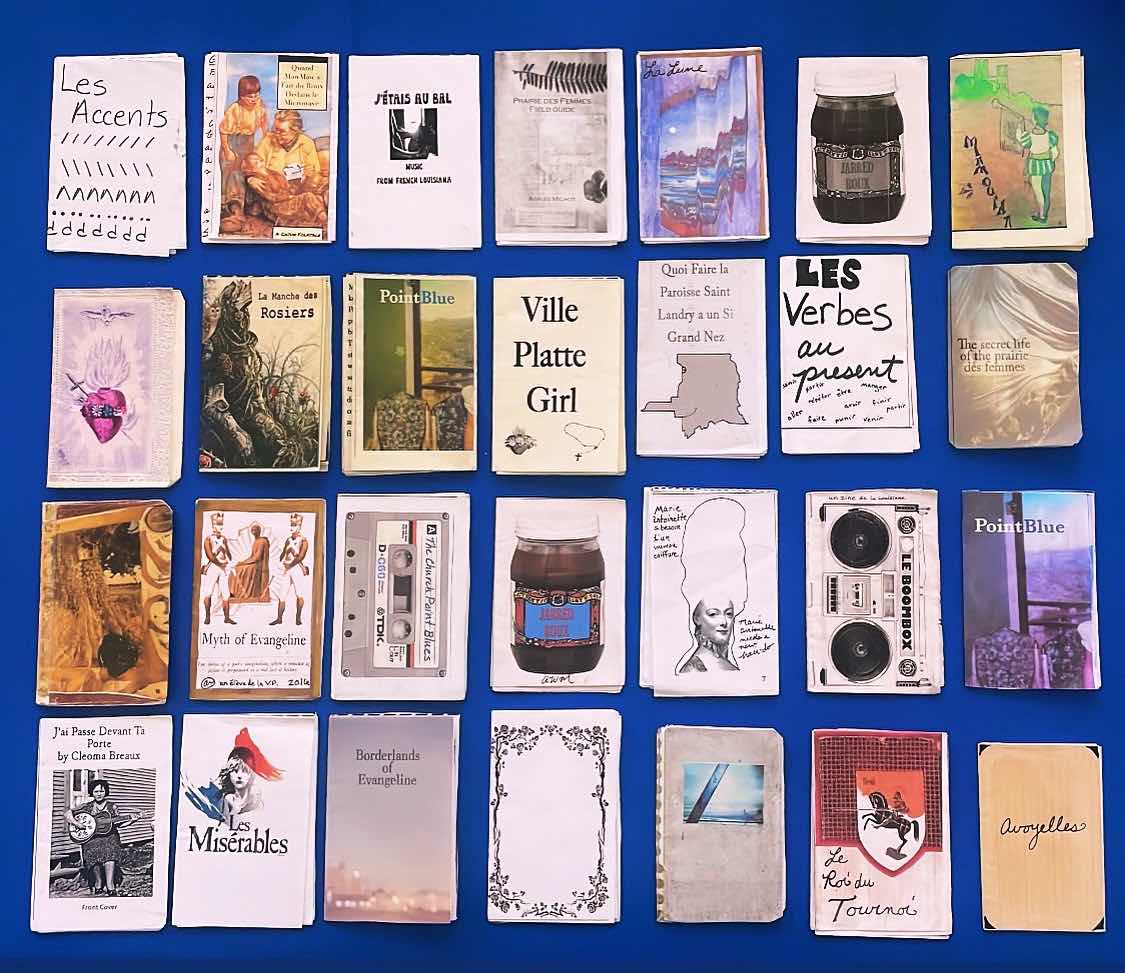
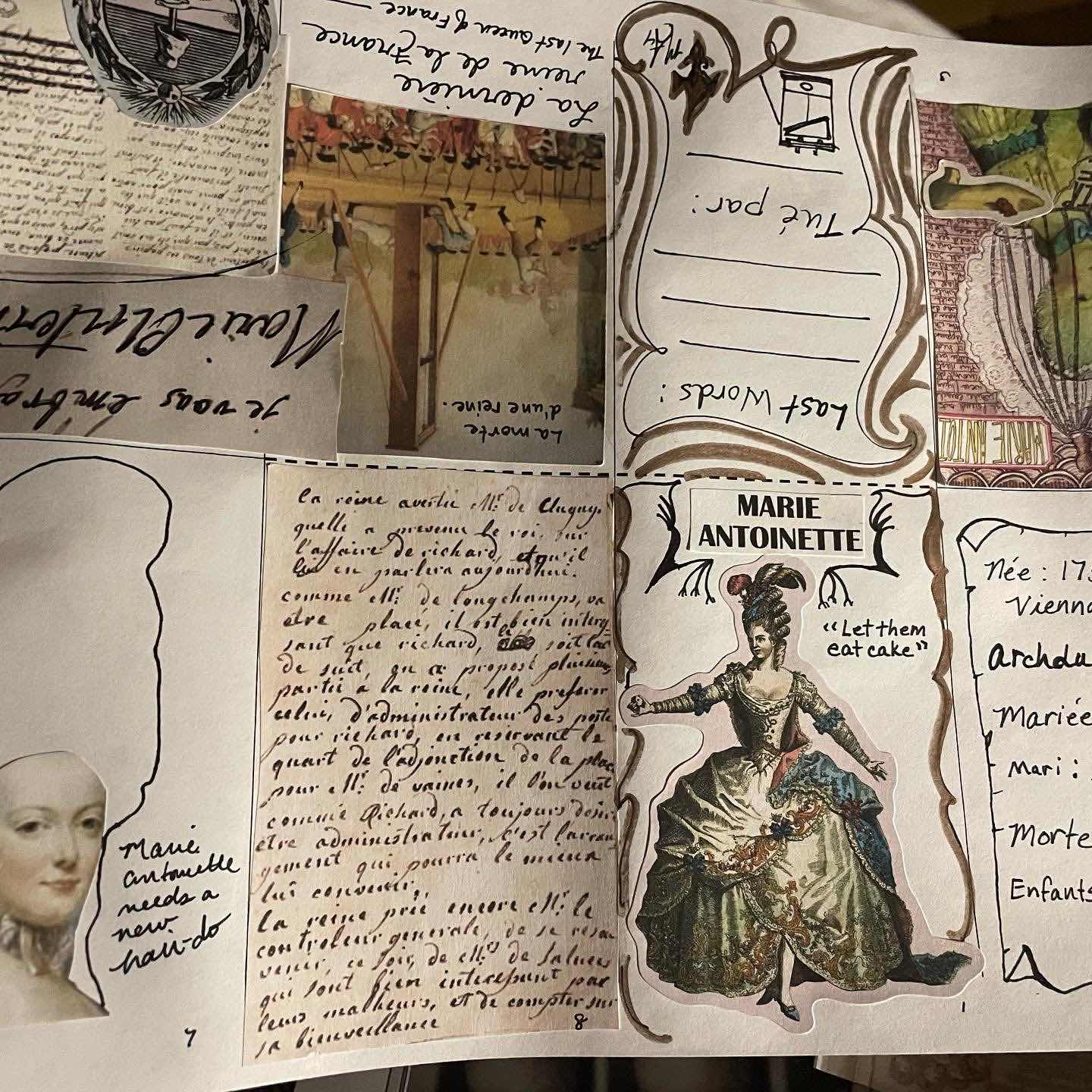
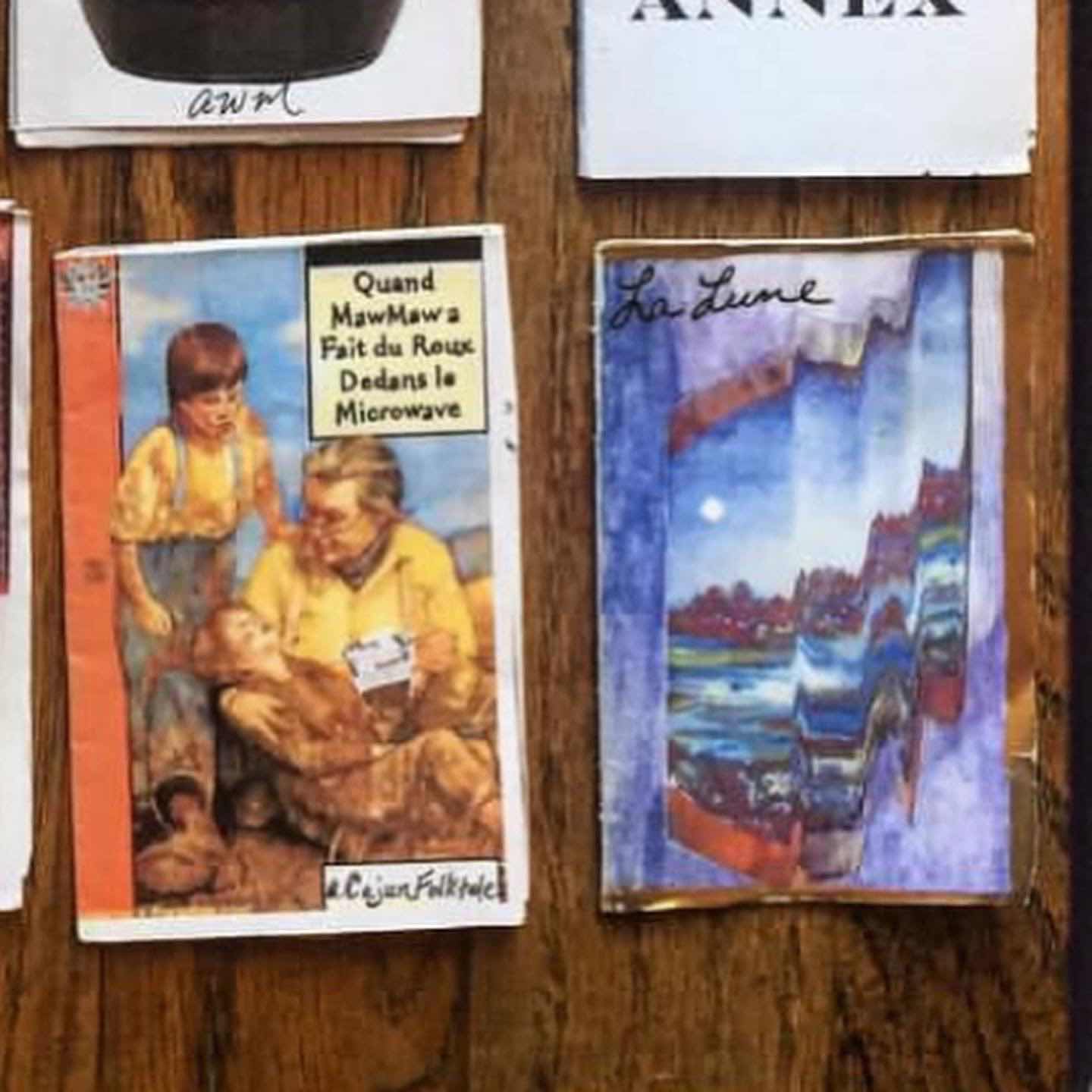
As a writer she has created hundreds of hand decorated journals in Louisiana French, as well as dozens of niche zines. She has published as a guest columnist in local papers such as the Advertiser, Advocate, The Current, Les Bonnes Nouvelles, New Orleans Magazine and Acadiana Profile. Her work has been featured in 64 Parishes, Bitter Southerner, Country Roads Magazine and the New York Times. She published her first work ‘Ô Malheureuse’ on UL Press in 2019, a first of its kind collection of modern Louisiana women’s writings in French. The collection began on the PDF blog and was published by UL Press and released in time for the 2019 Festival Acadiens and Creole dedicated to the contributions of women in Louisiana music.

As a photographer, Ashlee has self published three books, The Plains of Mary, a photo book of Marian yard shrines, Prairie des Femmes: Portraits of a Place, a collection of surreal photographs from the countryside of Acadiana, and finally A Prairie des Femmes Field Guide, a collection of art and writing from the PDF blog. Her work has been featured in Louisiana Cultural Vistas, 64 Parishes, and she has shown her photographs with photographers Denny Culbert and Jo Vidrine. She had thirty of her photos shown as part of Frank Relle’s New Orleans in Photographs exhibit in Moscow in 2014. Her work has also been recognized by photographer Zack Smith’s project « My Louisiana Muse » as well as Nick Slie’s « Cry You One. » In June 2024 her land work, as well as her work with the rare medicinal plant vinéraire was featured in Monique Verdin and Rachel Breunlin's Botanica exhibit at the Cabildo in New Orleans.

Her family and home were featured in the Home and Garden Section of the New York Times in 2012. As recently as 2021 her work was featured by National Geographic and in a documentary that won the CreateLouisiana culture grant, Intention, by Olivia Perillo and Syd Horn. It is a film project that seeks to explore the untold feminine narratives of Cajun and Creole artists and healers.

She is a musician, well known in south Louisiana as a professional triangle player. She also sings and writes in Louisiana French, incorporating modern music with that from the Cajun and Creole archives. Her first original song ‘Maison Blanche’ released on The 78 Project in 2014, and in 2020 Nouveau Electric Records released her ‘Trois Rangs’ on 45rpm vinyl, remixed by Korey Richey (LCD Soundsystem). She has played triangle on the recent PBS documentary American Epic.

In 2024 Ashlee's work for the Prairie des Femmes was included in the exhibition Botanica at the Louisiana State Museum at the Cabildo in New Orleans. In 2025 she showed her paintings, journals and plant research with the medicinal known as vinéraire in Prairie Stories, a collaborative show at the Acadiana Center of the Arts in Lafayette, Louisiana. Prairie Stories  featured a collection of artists and their work on the folkloric and environmental realms of the Louisiana Prairie.  She has spoken at the Louisiana Folklore Society meeting on the Prairie des Femmes Blog and digital folklore, as well as at the Bayou Culture Collaborative meeting where she spoke on her ethnobotany research. Most recently in May 2026 she presented in the Folklife Village's Past to Pixel tent which featured digital folklore at the New Orleans' Jazz fest.

As of 2023 Ashlee is the lower school French teacher at the Academy of the Sacred Heart in Grand Coteau, Louisiana. 

Ashlee raises her sons in the Prairie des Femmes. 


Articles